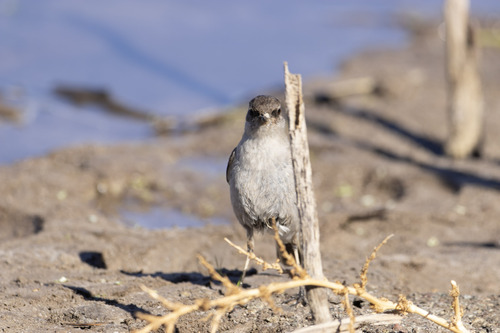
Fire-eyed Diucon

Fire-eyed Diucon

Xolmis pyrope

Silhouette: Edwin Price · PhyloPic

LCLeast ConcernNTVUENCR
Daily sighting probability ~20% · Possible
at Santiago

In 3 days ~40% in a week ~70%

1,263 Verified sightings at Santiago
2,216 In all 4 parks From 2019 to 2026
May Best month
☀️ Diurnal When it's spotted

About the Fire-eyed Diucon

The fire-eyed diucon (Pyrope pyrope) is a passerine bird of South America belonging to the tyrant flycatcher family Tyrannidae. It is found in Argentina and Chile and as a vagrant to the Falkland Islands. The fire-eyed diucon has a complicated taxonomic history. It was formally described in 1830 as "Muscicapa Pyrope". In 1860 it was moved to the newly erected genus Pyrope and then in 1927 to genus Xolmis. In 1970 one author returned it to Pyrope while others retained it in Xolmis. Two genetic studies published in 2020 showed that it did belong to Pyrope. Taxonomic systems began making the change in 2021. However, as of December 2024 BirdLife International's Handbook of the Birds of the World retained the species in Xolmis.

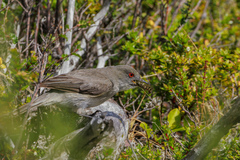
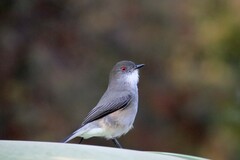
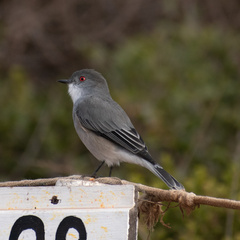
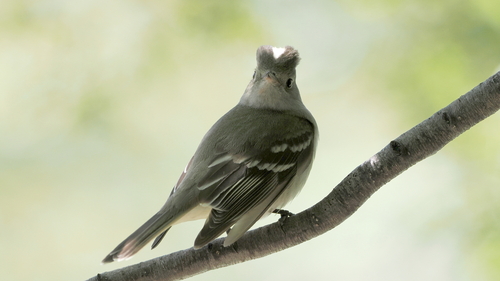
The fire-eyed diucon is the only member of genus Pyrope. The fire-eyed diucon is 18.5 to 21.5 cm (7.3 to 8.5 in) long and weighs 31 to 50 g (1.1 to 1.8 oz). The sexes have the same plumage. Adults of the nominate subspecies have a dark gray crown, face, and upperparts. Their primary coverts and... Wikipedia →

Sounds

Recording0:03

Chile · 2025

© quyksilver · iNaturalist · CC BY-NC 4.0

Recording0:13

Chile · 2026

© rocio quiroga · iNaturalist · CC BY-NC 4.0

Global Distribution

Parks Where Found

# Park Country Daily sighting probability
1 Tierra del Fuego National Park 🇦🇷 Argentina
~50%
2 Vicente Pérez Rosales National Park 🇨🇱 Chile
~50%
3 Torres del Paine National Park 🇨🇱 Chile
~40%
4 Nahuel Huapi National Park 🇦🇷 Argentina
~40%

Cities Where Found

# City Country Daily sighting probability
1 Santiago 🇨🇱 Chile
~20%

Before you go

What are the chances of seeing a Fire-eyed Diucon in Santiago?

Possible

About 20% of wildlife watchers report a Fire-eyed Diucon sighting in Santiago on a given day, based on 1,263 verified sightings from GBIF citizen-science data. It is the 24th most-seen of the 110 birds we can rate there. Over three days the chance rises to about 40%, and over a week to about 70%, if each day is a fresh chance.

When is the best time to see a Fire-eyed Diucon in Santiago?

May

In that month about 40% of wildlife watchers report a Fire-eyed Diucon in Santiago on a given day, against under 5% in February and December, the lowest months. That is one of Santiago's wettest months, with about 45 mm of rain against 5 mm in December.

What time of day is best to see a Fire-eyed Diucon?

Between 2 and 5 pm

Across all the parks we cover, that three-hour window holds the most Fire-eyed Diucon sightings with a recorded time, and about 9 in 10 of them come between 6 am and 6 pm: it is a daytime animal.

Where else can you see a Fire-eyed Diucon?

Only Santiago, in our data

Santiago is the only city on Wallace's Line with enough records to rate Fire-eyed Diucon sightings: about 20% of wildlife watchers there report one on a given day.

Which relatives of the Fire-eyed Diucon live in Santiago?

Same family: Tyrannidae

The closest relatives of the Fire-eyed Diucon that you can see in Santiago (family Tyrannidae, Tyrant Flycatchers) are Tufted Tit-Tyrant (about 50%), White-crested Elaenia (about 30%) and Patagonian Tyrant (about 10%), with each one's daily chance of a sighting.

Where does the Fire-eyed Diucon sighting chance come from?

GBIF citizen-science records

It is estimated from how often the Fire-eyed Diucon is recorded against all the birds logged in Santiago (1,263 verified sightings), calibrated against known sighting rates. Figures are rounded to the nearest 10% because citizen-science data supports honest approximations, not decimals, and months with records from fewer than five people show "—". How it works.

← Back to Santiago