
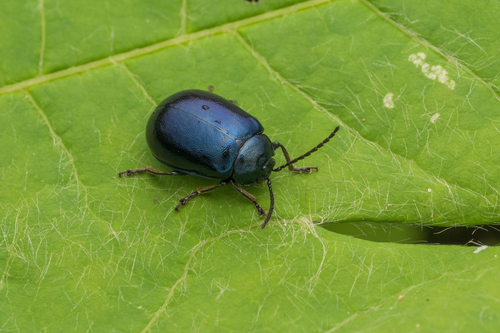
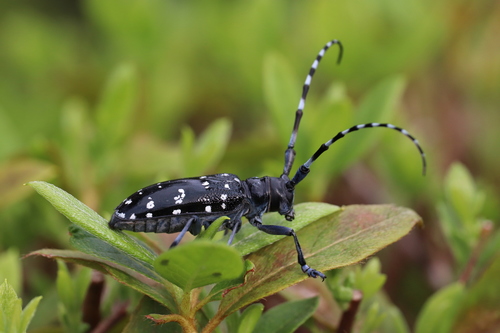
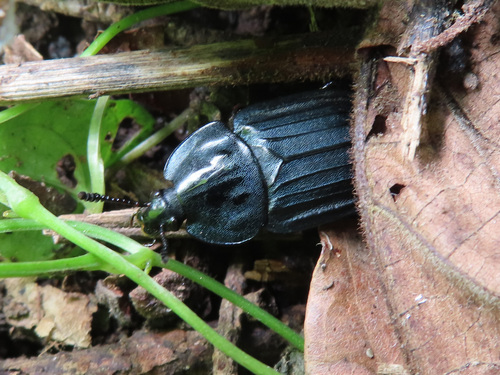
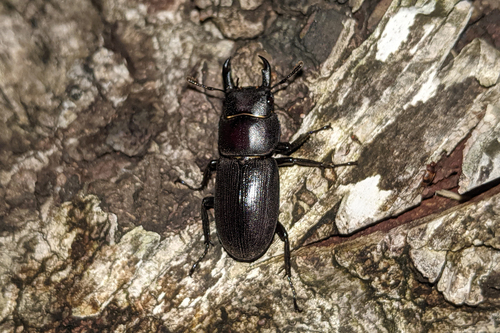

Aiolocaria hexaspilota

Aiolocaria hexaspilota

Aiolocaria hexaspilota

Daily sighting probability ~10% · With luck
at Sapporo

In 3 days ~30% in a week ~50%

5 Verified sightings at Sapporo
19 In all 2 parks From 2019 to 2026
April Best month
☀️ Diurnal When it's spotted

About the Aiolocaria hexaspilota

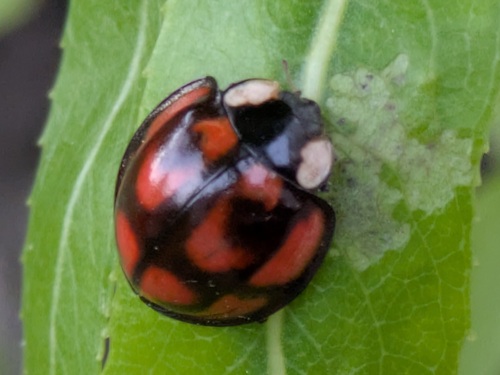
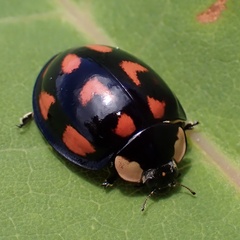
Aiolocaria hexaspilota is a beetle species from the lady beetle family (Coccinellidae); adults can be as large as 13mm long. The species’ scientific name was first given in an 1831 publication by Frederick William Hope. Unaware of its previous identification, Victor Motschulsky was later to call the same species as Aiolocaria mirabilis (in 1860). In most cases of such synonymy, according to the Encyclopedia of Life, “the first name takes priority and is considered to be the valid or accepted name.”

Entomologists Ivo Hodek (Czech Institute of Entomology) and Edward W. Evans (Utah State University) describe the species as “a specialized predator of chrysomelids.” Entomologist G. I. Savoiskaya has observed Aiolocaria hexaspilota actively pursuing larval prey.

Ivo Hodek has also described the species as univoltine (having one brood per year); in early autumn they migrate from sun-exposed forest habitat “to well-insolated slopes of rocky hills or also to buildings.” Seeking winter shelter in rocky crevices or, opportunistically, in human dwellings, the beetles will cluster in aggregations of up to several hundred individuals. Hodek notes that by clustering together they maintain a temperature “much higher than ambient” and that in the spring the adults mate and disperse. Wikipedia →

Global Distribution

Parks Where Found

# Park Country Daily sighting probability
1 Nikko National Park 🇯🇵 Japan
~20%
2 Taroko National Park 🇹🇼 Taiwan
~10%

Cities Where Found

# City Country Daily sighting probability
1 Daejeon 🇰🇷 South Korea
~20%
2 Sapporo 🇯🇵 Japan
~10%
3 Seoul 🇰🇷 South Korea
~10%
4 Tokyo 🇯🇵 Japan
<5%

Before you go

What are the chances of seeing an Aiolocaria hexaspilota in Sapporo?

With luck

About 10% of wildlife watchers report an Aiolocaria hexaspilota sighting in Sapporo on a given day, based on 5 verified sightings from GBIF citizen-science data. It is the 40th most-seen of the 44 insects we can rate there. Over three days the chance rises to about 30%, and over a week to about 50%, if each day is a fresh chance.

When is the best time to see an Aiolocaria hexaspilota in Sapporo?

April and May

In those months about 20% of wildlife watchers report an Aiolocaria hexaspilota in Sapporo on a given day, against under 5% in June to March, the lowest months.

What time of day is best to see an Aiolocaria hexaspilota?

Between 11 am and 2 pm

Across all the parks we cover, that three-hour window holds the most Aiolocaria hexaspilota sightings with a recorded time, and about 9 in 10 of them come between 6 am and 6 pm: it is a daytime animal.

Is Sapporo the best place to see an Aiolocaria hexaspilota?

2nd of 4

Of the 4 cities where we can rate Aiolocaria hexaspilota sightings, Sapporo ranks 2nd at about 10%. The best odds are in Daejeon (South Korea, about 20%).

Where does the Aiolocaria hexaspilota sighting chance come from?

GBIF citizen-science records

It is estimated from how often the Aiolocaria hexaspilota is recorded against all the insects logged in Sapporo (5 verified sightings), calibrated against known sighting rates. Figures are rounded to the nearest 10% because citizen-science data supports honest approximations, not decimals, and months with records from fewer than five people show "—". How it works.

← Back to Sapporo