

Oriental Greenfinch

Oriental Greenfinch

Chloris sinica

Silhouette: Mathieu Pélissié · PhyloPic

LCLeast ConcernNTVUENCR
Daily sighting probability ~40% · Likely
at Sapporo

In 3 days ~80% in a week >90%

207 Verified sightings at Sapporo
82 In 1 park From 2019 to 2026
April Best month
🌅 Crepuscular When it's spotted

About the Oriental Greenfinch

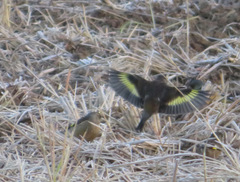
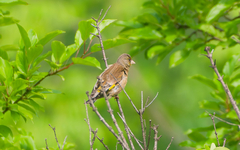
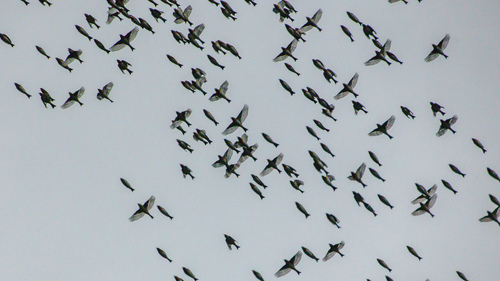
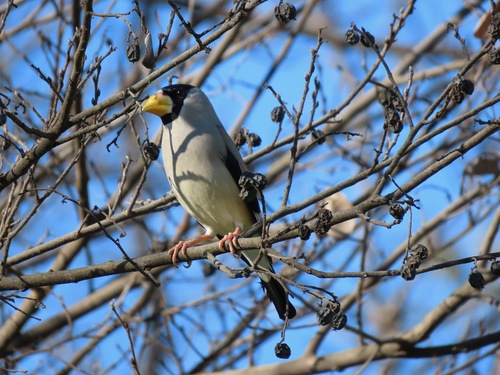
The Oriental greenfinch (Chloris sinica), also known as the grey-capped greenfinch, is a small passerine bird in the finch family Fringillidae that breeds in broadleaf and conifer woodlands of the East Palearctic. In 1760 the French zoologist Mathurin Jacques Brisson included a description of the Oriental greenfinch in his Ornithologie based on a specimen collected in China. He used the French name Le pinçon de la Chine and the Latin Fringilla sinencis. Although Brisson coined Latin names, these do not conform to the binomial system and are not recognised by the International Commission on Zoological Nomenclature. When in 1766 the Swedish naturalist Carl Linnaeus updated his Systema Naturae for the twelfth edition, he added 240 species that had been previously described by Brisson. One of these was the oriental greenfinch. Linnaeus included a brief description, coined the binomial name Fringilla sinica and cited Brisson's work. The type locality was subsequently restricted to Macau in eastern China. The specific name sinica is Medieval Latin for Chinese.

The greenfinches were later placed in the genus Carduelis but when molecular phylogenetic studies found that they were... Wikipedia →

Sounds

Call0:44

Japan · 2026

© Ding Li Yong · XC1141648 · CC BY-NC-ND 4.0

Song0:14

China · 2023

© 雪鼬 · XC819023 · CC BY-NC-SA 4.0

Call0:38

China · 2024

© Dave GUO · XC906348 · CC BY-NC-SA 4.0

Global Distribution

Parks Where Found

# Park Country Daily sighting probability
1 Nikko National Park 🇯🇵 Japan
~20%

More parks will be added in future updates.

Cities Where Found

# City Country Daily sighting probability
1 Sendai 🇯🇵 Japan
~70%
2 Beijing 🇨🇳 China
~60%
3 Nagoya 🇯🇵 Japan
~50%
4 Tianjin 🇨🇳 China
~50%
5 Shijiazhuang 🇨🇳 China
~50%
6 Xining 🇨🇳 China
~40%
7 Jinan 🇨🇳 China
~40%
8 Sapporo 🇯🇵 Japan
~40%
9 Lanzhou 🇨🇳 China
~40%
10 Fukuoka 🇯🇵 Japan
~40%

Zoos & Centres Where Found

# Zoo / Centre Country
1 Beijing Wildlife Park 🇨🇳 China In captivity

Before you go

What are the chances of seeing an Oriental Greenfinch in Sapporo?

Likely

About 40% of wildlife watchers report an Oriental Greenfinch sighting in Sapporo on a given day, based on 207 verified sightings from GBIF citizen-science data. It is the 13th most-seen of the 72 birds we can rate there. Over three days the chance rises to about 80%, and over a week to over 90%, if each day is a fresh chance.

When is the best time to see an Oriental Greenfinch in Sapporo?

April–May and July

In those months about 60% of wildlife watchers report an Oriental Greenfinch in Sapporo on a given day, against about 20% in February and October, the lowest months.

What time of day is best to see an Oriental Greenfinch?

Between 1 and 4 am

Across all the parks we cover, that three-hour window holds the most Oriental Greenfinch sightings with a recorded time, and about 6 in 10 of them come between 6 pm and 6 am: it is most active around dawn and dusk.

Is Sapporo the best place to see an Oriental Greenfinch?

8th of 46

Of the 46 cities where we can rate Oriental Greenfinch sightings, Sapporo ranks 8th at about 40%. The best odds are in Sendai (Japan, about 70%), Beijing (China, about 60%) and Nagoya (Japan, about 50%).

Which relatives of the Oriental Greenfinch live in Sapporo?

Same family: Fringillidae

The closest relatives of the Oriental Greenfinch that you can see in Sapporo (family Fringillidae, Finches, Euphonias, and Allies) are Hawfinch (about 10%) and Eurasian Bullfinch (about 10%), with each one's daily chance of a sighting.

Where does the Oriental Greenfinch sighting chance come from?

GBIF citizen-science records

It is estimated from how often the Oriental Greenfinch is recorded against all the birds logged in Sapporo (207 verified sightings), calibrated against known sighting rates. Figures are rounded to the nearest 10% because citizen-science data supports honest approximations, not decimals, and months with records from fewer than five people show "—". How it works.

← Back to Sapporo