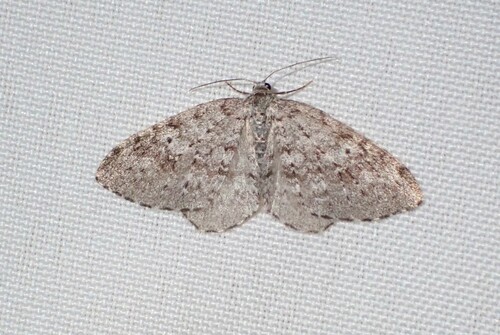
Welsh Wave Moth

Welsh Wave Moth

Venusia cambrica

Daily sighting probability <5% · Rare
at Seattle

In 3 days ~10% in a week ~20%

31 Verified sightings at Seattle
103 In all 5 parks From 2019 to 2026
August Best month
☀️ Diurnal When it's spotted

About the Welsh Wave Moth

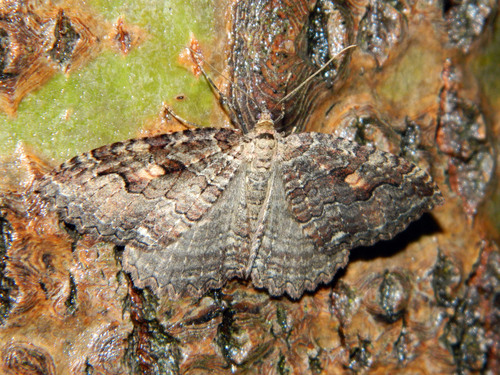
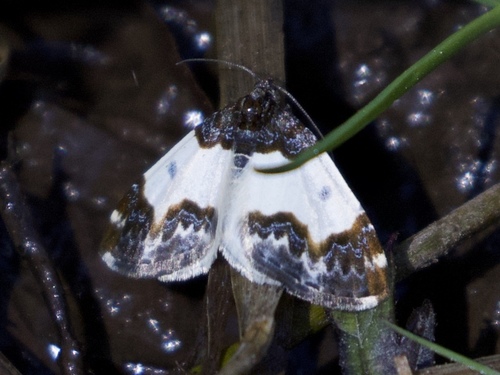
Venusia cambrica, the Welsh wave, is a moth of the family Geometridae. It is found in Europe, western and central Siberia, Altai, Transbaikalia, the Russian Far East, the Korean Peninsula, Japan and in North America, where it can be found across Canada from Newfoundland and Labrador to British Columbia, south in the west to California, south in the east to Georgia.

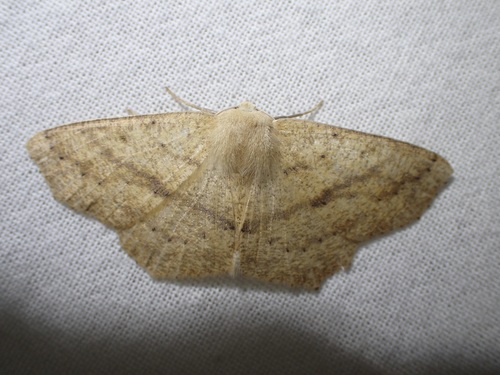
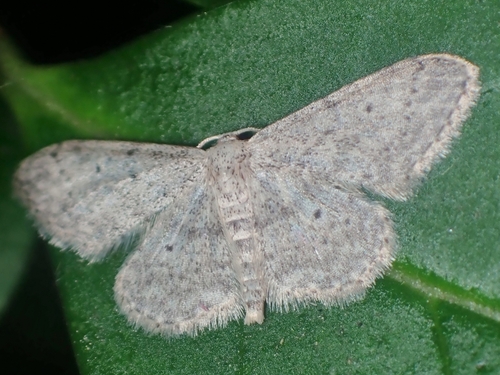
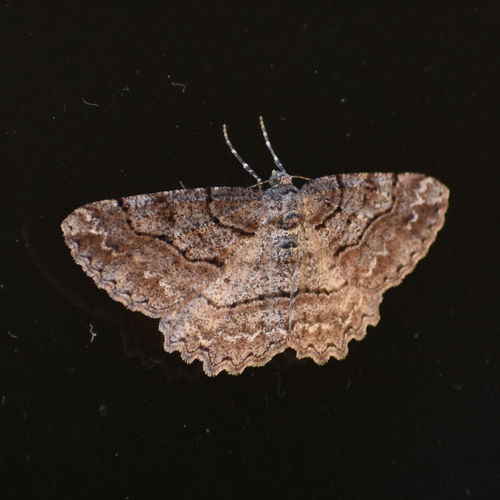
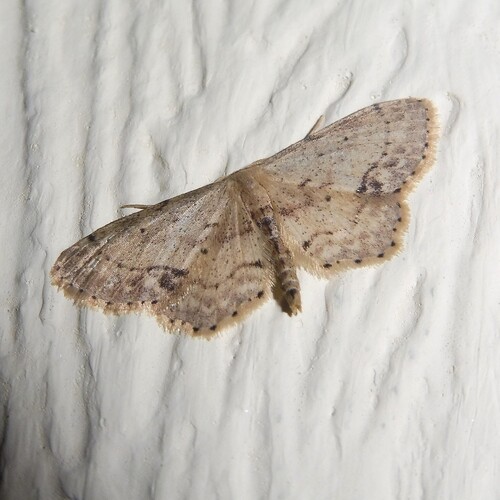
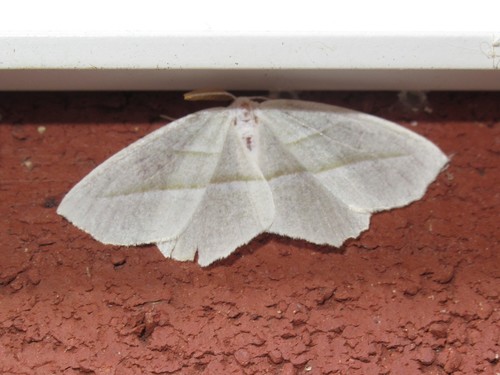
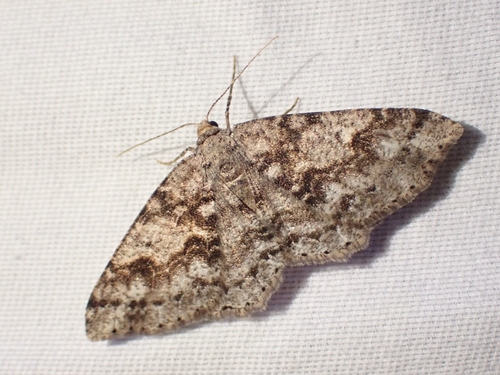
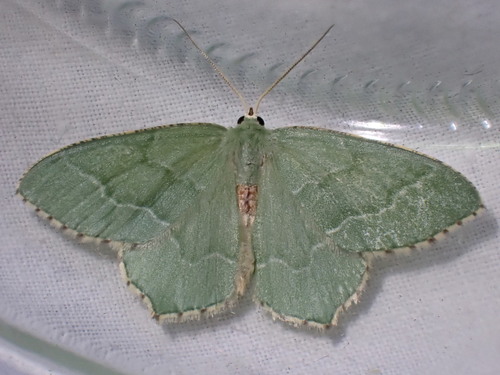
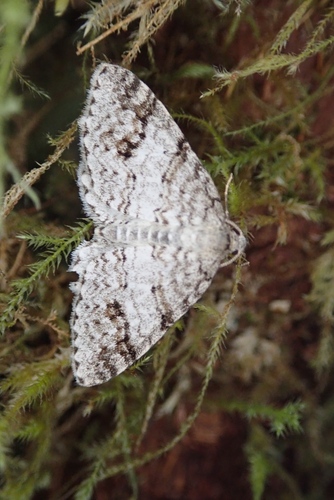
The wingspan is 27–30 mm. The light grey front wing has black and brown cross lines. Two protruding black lines at the outer black cross line, near the middle of the wing, are the most striking characteristic. "Quite distinct. The black marks on the 3rd radial and 1st median distally to the outer line recall Oporinia. English specimens and (according to Herz) the Korean form are on an average rather less white, than those from Scotland and continental Europe. In general the female is slightly larger and paler than the male - ab. pygmaea Tystr. is small with the central area constricted. - ab. latefasciata Strand has the median area very broad, the lines which bound it are parallel, not approximated in the posterior part. - ab. webbi Prout has the markings almcst obliterated excepting at the costal margin and on the median vein and its branches, recalling Oporinia antumnata gueneata See Oporinia gueneata -ab. bradyi Prout has both wings uniformly suffused with dark smoke-colour, and is becoming frequent in the Sheffield district. -ab. lofthousei Prout is a quite different melanotic form from ab. bradyi; forewing suffused with smoke-colour but remaining longitudinally rayed with white in the distal area, hindwing not infuscated. Only known from North Yorkshire. The larva is long and slender, with a few short setae. It is green with large, purple spots on the back and sides.

Adults are on wing from July to August in western Europe, from June to September in New Brunswick and Quebec and from March to August in California. There are two generations per year. The larvae feed on the leaves of Sorbus aucuparia. Other recorded food plants include alder, apple, birch, mountain ash, serviceberry and willow. Wikipedia →
Global Distribution

Parks Where Found

# Park Country Daily sighting probability
1 Pacific Rim National Park Reserve 🇨🇦 Canada
~10%
2 Great Bear Rainforest 🇨🇦 Canada
~10%
3 Cairngorms National Park 🇬🇧 United Kingdom
~10%
4 Great Smoky Mountains National Park 🇺🇸 United States
<5%
5 Olympic National Park 🇺🇸 United States
<5%

Cities Where Found

# City Country Daily sighting probability
1 Seattle 🇺🇸 United States
<5%

Before you go

What are the chances of seeing a Welsh Wave Moth in Seattle?

Rare

Under 5% of wildlife watchers report a Welsh Wave Moth sighting in Seattle on a given day, based on 31 verified sightings from GBIF citizen-science data. It is the 191st most-seen of the 428 insects we can rate there. Over three days the chance rises to about 10%, and over a week to about 20%, if each day is a fresh chance.

When is the best time to see a Welsh Wave Moth in Seattle?

August

In that month about 10% of wildlife watchers report a Welsh Wave Moth in Seattle on a given day, against under 5% in September to July, the lowest months. That is one of Seattle's driest months, with about 30 mm of rain against 190 mm in November.

What time of day is best to see a Welsh Wave Moth?

Between 5 and 8 am

Across all the parks we cover, that three-hour window holds the most Welsh Wave Moth sightings with a recorded time, and about 8 in 10 of them come between 6 am and 6 pm: it is a daytime animal.

Where else can you see a Welsh Wave Moth?

Only Seattle, in our data

Seattle is the only city on Wallace's Line with enough records to rate Welsh Wave Moth sightings: under 5% of wildlife watchers there report one on a given day.

Where does the Welsh Wave Moth sighting chance come from?

GBIF citizen-science records

It is estimated from how often the Welsh Wave Moth is recorded against all the insects logged in Seattle (31 verified sightings), calibrated against known sighting rates. Figures are rounded to the nearest 10% because citizen-science data supports honest approximations, not decimals, and months with records from fewer than five people show "—". How it works.

← Back to Seattle