Black-Headed Bull Ant

Black-Headed Bull Ant

Myrmecia nigriceps

Endemic
Daily sighting probability <5% · Rare
at Sydney

In 3 days ~10% in a week ~20%

5 Verified sightings at Sydney
22 In all 2 parks From 2019 to 2026
April Best month
☀️ Diurnal When it's spotted

About the Black-Headed Bull Ant

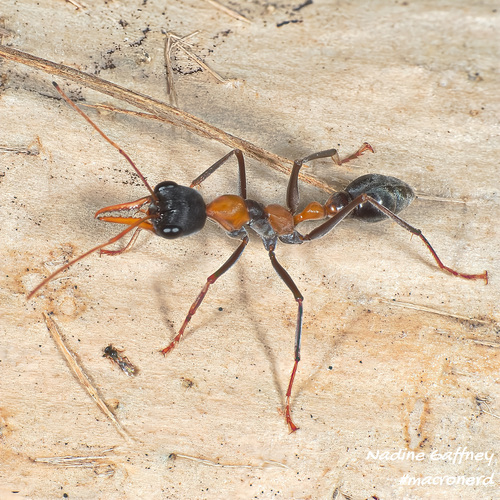
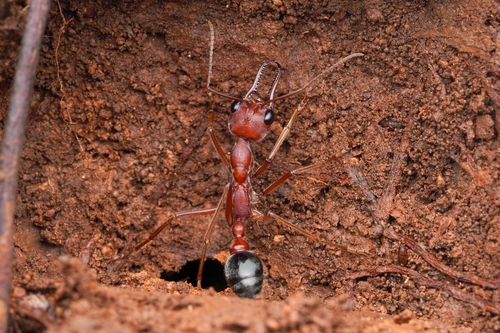
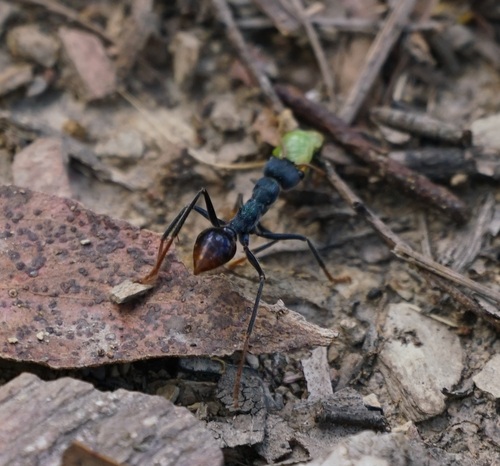
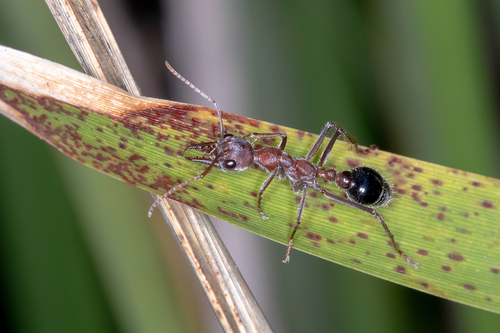
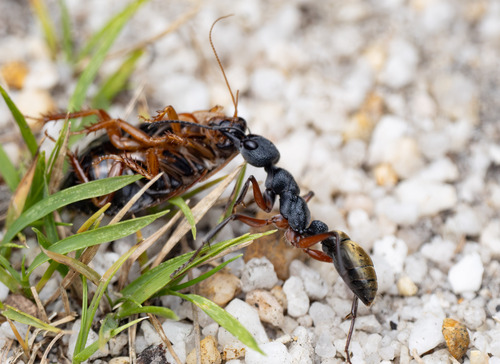
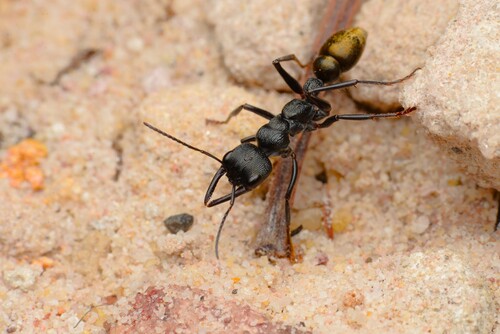
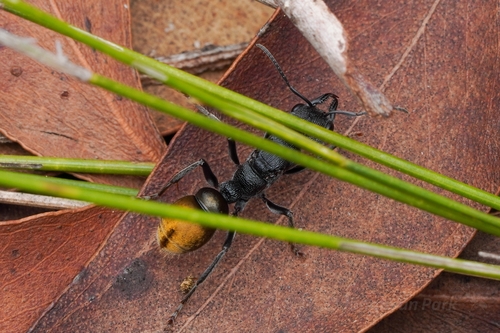
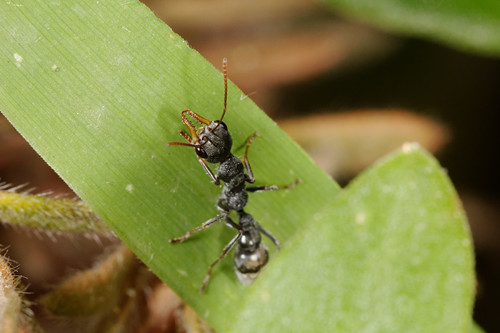
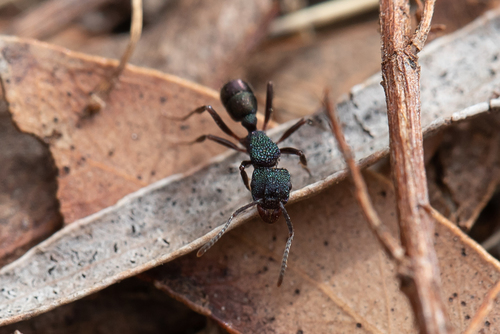
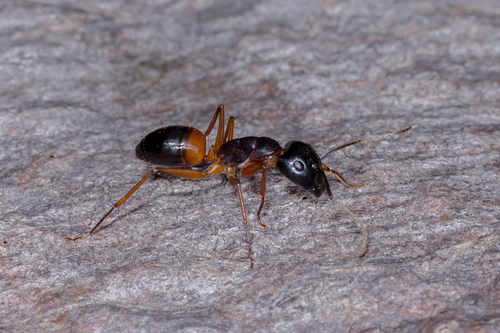
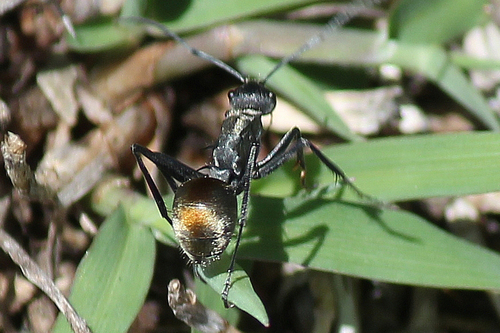
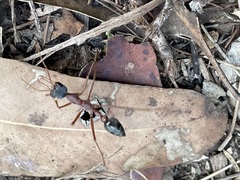
Myrmecia nigriceps, also known as the black-headed bull ant, is a species of ant endemic to Australia. A member of the genus Myrmecia in the subfamily Myrmeciinae, it was first described by Austrian entomologist Gustav Mayr in 1862. These ants are large, varying from 19 to 23 millimetres (0.75 to 0.91 in) in length. However, colonies contain workers that are much smaller, usually half the size of normal workers. The queens are the largest while the males are the smallest, which can be easily identified due to their small mandibles.

Mainly nocturnal M. nigriceps is found in hot hilly areas and woodland, nesting underground in mounds. The ant's diet consists of sweet liquids from flowering plants and invertebrate prey, which are fed to the carnivorous larvae. Spiders are known to eat these ants, and echidnas consume the larvae and pupae. Like other Myrmecia species, M. nigriceps ants possess a powerful and painful sting, and the venom is capable of inducing allergic reactions in sensitive people.

First identified by Gustav Mayr in 1862, Mayr provided the first description of M. nigriceps in his journal Myrmecologische Studien. The species was described under the binomial... Wikipedia →

Global Distribution

Parks Where Found

# Park Country Daily sighting probability
1 Grampians National Park 🇦🇺 Australia
~20%
2 Blue Mountains National Park 🇦🇺 Australia
<5%

Cities Where Found

# City Country Daily sighting probability
1 Sydney 🇦🇺 Australia
<5%

Before you go

What are the chances of seeing a Black-Headed Bull Ant in Sydney?

Rare

Under 5% of wildlife watchers report a Black-Headed Bull Ant sighting in Sydney on a given day, based on 5 verified sightings from GBIF citizen-science data. It is the 666th most-seen of the 742 insects we can rate there. Over three days the chance rises to about 10%, and over a week to about 20%, if each day is a fresh chance.

When is the best time to see a Black-Headed Bull Ant in Sydney?

Any time of year

In every month with enough records, under 5% of wildlife watchers report a Black-Headed Bull Ant in Sydney on a given day, so our monthly data shows no clear season.

What time of day is best to see a Black-Headed Bull Ant?

Between 1 and 4 pm

Across all the parks we cover, that three-hour window holds the most Black-Headed Bull Ant sightings with a recorded time, and about 8 in 10 of them come between 6 am and 6 pm: it is a daytime animal.

Where else can you see a Black-Headed Bull Ant?

Only Sydney, in our data

Sydney is the only city on Wallace's Line with enough records to rate Black-Headed Bull Ant sightings: under 5% of wildlife watchers there report one on a given day.

Which relatives of the Black-Headed Bull Ant live in Sydney?

Same genus: Myrmecia

The closest relatives of the Black-Headed Bull Ant that you can see in Sydney (genus Myrmecia, Bull Ants) are Jumping Jack Ant (about 20%), Giant Bulldog Ant (about 10%) and Australian Jumper Ant (about 10%), with each one's daily chance of a sighting.

Where does the Black-Headed Bull Ant sighting chance come from?

GBIF citizen-science records

It is estimated from how often the Black-Headed Bull Ant is recorded against all the insects logged in Sydney (5 verified sightings), calibrated against known sighting rates. Figures are rounded to the nearest 10% because citizen-science data supports honest approximations, not decimals, and months with records from fewer than five people show "—". How it works.

← Back to Sydney