Cherrynose
Daily sighting probability <5% · Rare
at Sydney

In 3 days ~10% in a week ~20%

5 Verified sightings at Sydney
19 In 1 park From 2019 to 2026
December Best month
☀️ Diurnal When it's spotted

About the Cherrynose

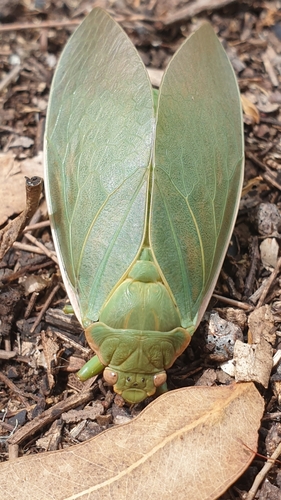
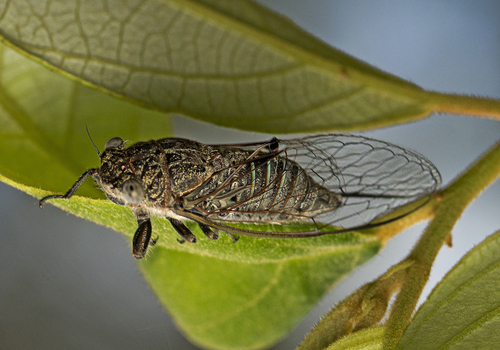
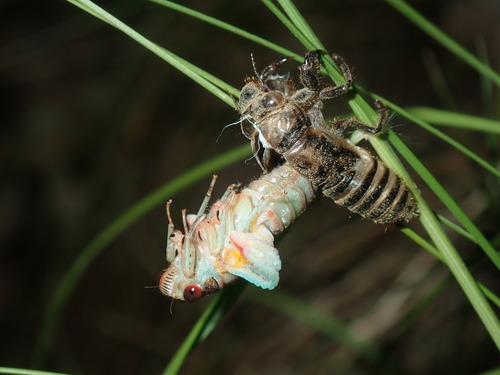
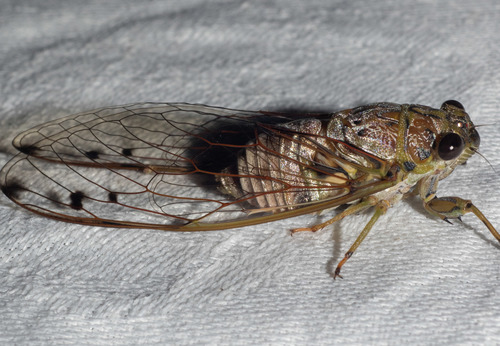
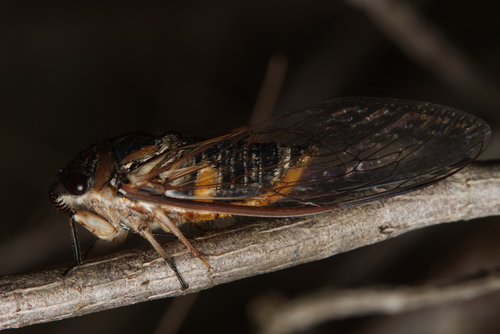
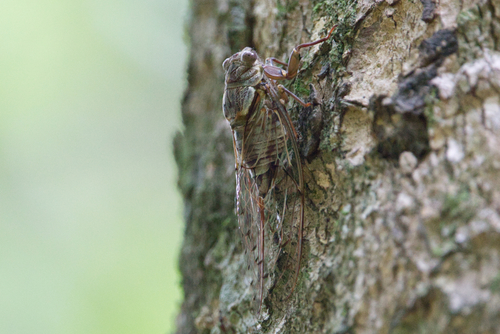
Macrotristria angularis, commonly known as the cherrynose, is an Australian cicada native to eastern Australia, where it is found in sclerophyll forests. German naturalist Ernst Friedrich Germar described the cherrynose in 1834 as Cicada angularis, reporting its type locality incorrectly as Sierra Leone. Swedish entomologist Carl Stål named the genus Macrotristria in 1870, though this was misspelt as Macrotristia and Macrotistria in some later publications. The cherrynose is the type species of the genus.

The cherrynose gets its common name from a red structure that resembles a nose, yet is in fact a structure containing muscles that help the cicada suck xylem from trees with its proboscis. An alternate common name is whiskey drinker.

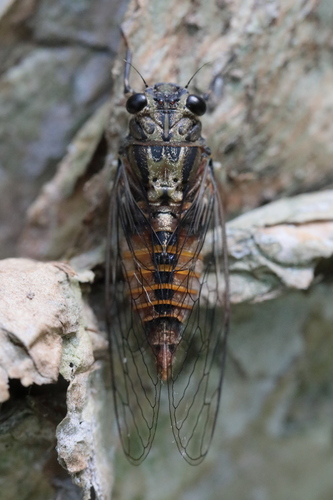
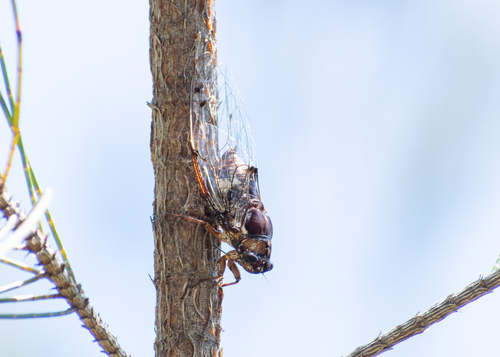
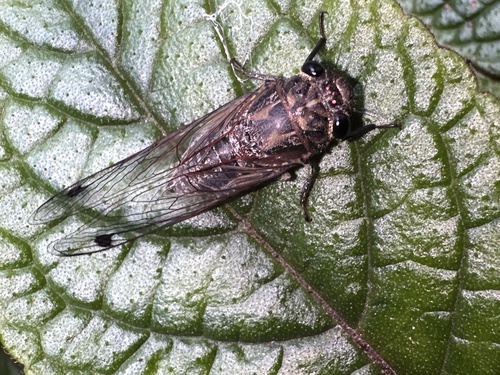
The cherrynose is a medium- to large cicada, the male and female similar in appearance. The head and thorax are black (or red-brown in North and Central Queensland) with orange markings. The postclypeus is red. The underparts are brown to blackish. They have an array of cuticular nanostructures on the transparent panes of their wings - conical protuberances with a spacing and height of about 200 nm, tipped with a spherical... Wikipedia →

Global Distribution

Parks Where Found

# Park Country Daily sighting probability
1 Blue Mountains National Park 🇦🇺 Australia
~10%

More parks will be added in future updates.

Cities Where Found

# City Country Daily sighting probability
1 Sydney 🇦🇺 Australia
<5%

Before you go

What are the chances of seeing a Cherrynose in Sydney?

Rare

Under 5% of wildlife watchers report a Cherrynose sighting in Sydney on a given day, based on 5 verified sightings from GBIF citizen-science data. It is the 666th most-seen of the 742 insects we can rate there. Over three days the chance rises to about 10%, and over a week to about 20%, if each day is a fresh chance.

When is the best time to see a Cherrynose in Sydney?

Any time of year

In every month with enough records, under 5% of wildlife watchers report a Cherrynose in Sydney on a given day, so our monthly data shows no clear season.

What time of day is best to see a Cherrynose?

Between 8 and 11 am

Across all the parks we cover, that three-hour window holds the most Cherrynose sightings with a recorded time, and about 9 in 10 of them come between 6 am and 6 pm: it is a daytime animal.

Where else can you see a Cherrynose?

Only Sydney, in our data

Sydney is the only city on Wallace's Line with enough records to rate Cherrynose sightings: under 5% of wildlife watchers there report one on a given day.

Which relatives of the Cherrynose live in Sydney?

Same family: Cicadidae

The closest relatives of the Cherrynose that you can see in Sydney (family Cicadidae, Typical Cicadas) are Black Prince (about 20%), Silver Princess (about 20%) and Floury Baker (about 20%), with each one's daily chance of a sighting.

Where does the Cherrynose sighting chance come from?

GBIF citizen-science records

It is estimated from how often the Cherrynose is recorded against all the insects logged in Sydney (5 verified sightings), calibrated against known sighting rates. Figures are rounded to the nearest 10% because citizen-science data supports honest approximations, not decimals, and months with records from fewer than five people show "—". How it works.

← Back to Sydney