Floury Baker

Floury Baker

Aleeta curvicosta

Endemic
Daily sighting probability ~20% · Possible
at Sydney

In 3 days ~50% in a week ~80%

715 Verified sightings at Sydney
145 In all 3 parks From 2019 to 2026
January Best month
☀️ Diurnal When it's spotted

About the Floury Baker

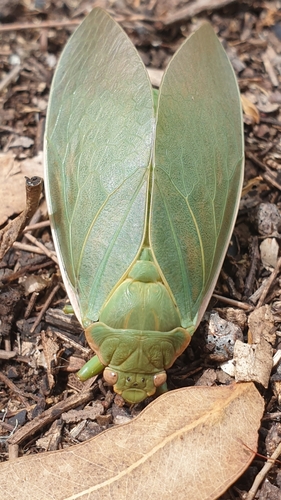
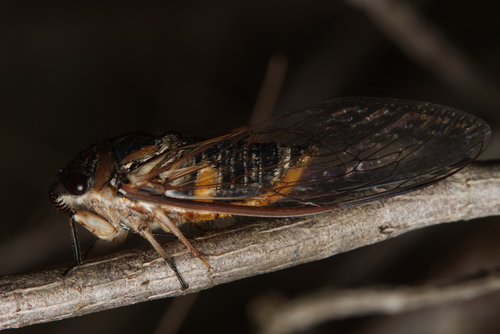
Aleeta is a monotypic genus of cicadas containing the species Aleeta curvicosta (commonly known as the floury baker or floury miller, known until 2003 as Abricta curvicosta), one of Australia's most familiar insects. Native to the continent's eastern coastline, it was described in 1834 by Ernst Friedrich Germar.

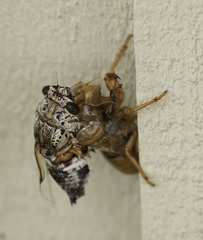
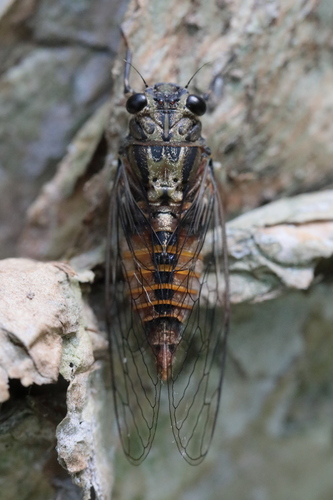
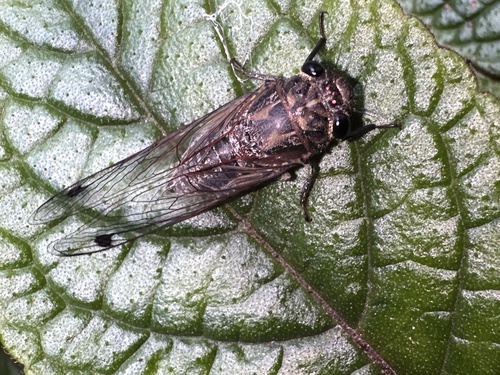
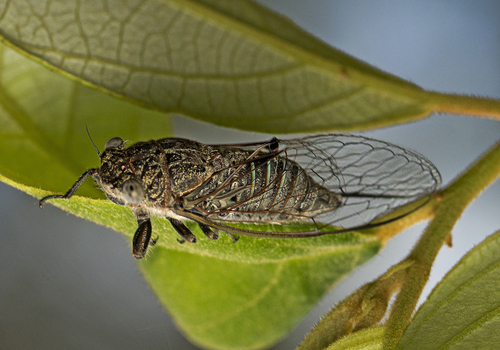
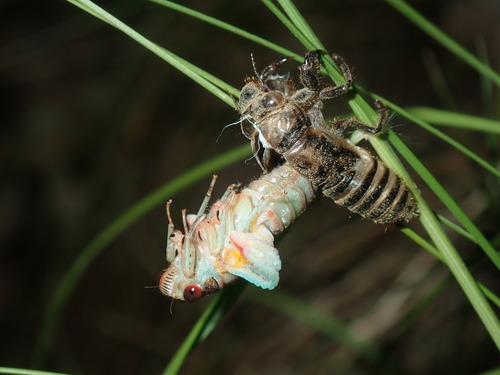
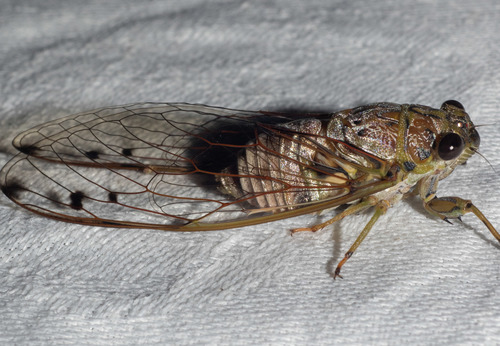
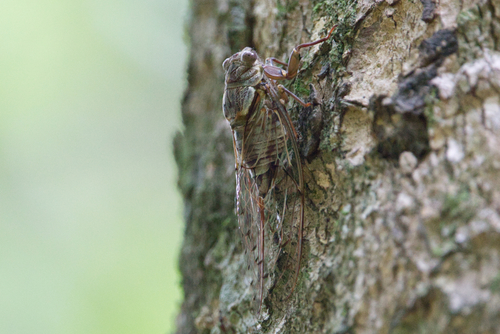
The floury baker's distinctive appearance and loud call make it popular with children. Both the common and genus name are derived from the white, flour-like filaments covering the adult body. Its body and eyes are generally brown with pale patterns including a light-coloured line along the midline of the pronotum. Its forewings have distinctive dark brown patches at the base of two of their apical cells. The female is larger than the male, although species size overall varies geographically, with larger animals associated with regions of higher rainfall. The male has distinctive genitalia and a loud and complex call generated by the frequent buckling of ribbed tymbals and amplified by abdominal air sacs.

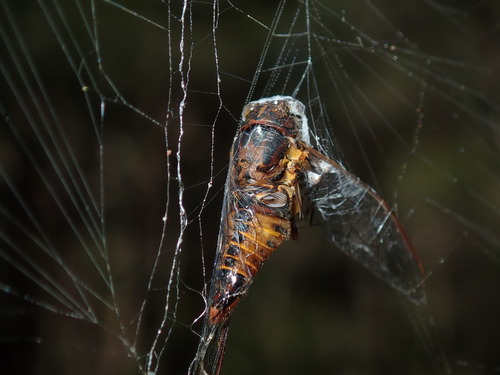
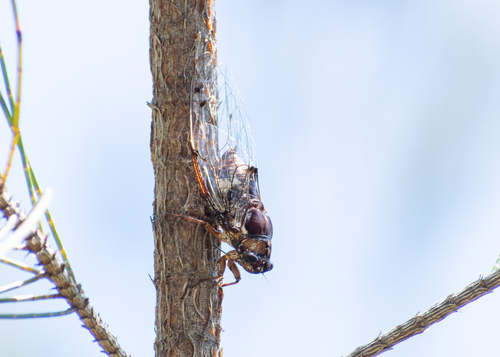
The floury baker is solitary and occurs in low densities. Individuals typically emerge from the soil through a three-month period from late November to late February, and can be encountered until May. The floury baker is found on a wide variety of trees, with some preference for species of paperbark (Melaleuca). It is a relatively poor flier, preyed upon by cicada killer wasps and a wide variety of birds, and can succumb to a cicada-specific fungal disease. Wikipedia →
Global Distribution

Parks Where Found

# Park Country Daily sighting probability
1 Royal National Park 🇦🇺 Australia
~20%
2 Blue Mountains National Park 🇦🇺 Australia
~20%
3 Springbrook National Park 🇦🇺 Australia
~10%

Cities Where Found

# City Country Daily sighting probability
1 Sydney 🇦🇺 Australia
~20%
2 Brisbane 🇦🇺 Australia
~10%

Before you go

What are the chances of seeing a Floury Baker in Sydney?

Possible

About 20% of wildlife watchers report a Floury Baker sighting in Sydney on a given day, based on 715 verified sightings from GBIF citizen-science data. It is the 7th most-seen of the 742 insects we can rate there. Over three days the chance rises to about 50%, and over a week to about 80%, if each day is a fresh chance.

When is the best time to see a Floury Baker in Sydney?

December and January

In those months about 40% of wildlife watchers report a Floury Baker in Sydney on a given day, against under 5% in May to October, the lowest months.

What time of day is best to see a Floury Baker?

Between 9 am and noon

Across all the parks we cover, that three-hour window holds the most Floury Baker sightings with a recorded time, and about 8 in 10 of them come between 6 am and 6 pm: it is a daytime animal.

Is Sydney the best place to see a Floury Baker?

Yes

Of the 2 cities where we can rate Floury Baker sightings, Sydney has the highest daily chance: about 20%. Next come Brisbane (Australia, about 10%).

Which relatives of the Floury Baker live in Sydney?

Same family: Cicadidae

The closest relatives of the Floury Baker that you can see in Sydney (family Cicadidae, Typical Cicadas) are Black Prince (about 20%), Silver Princess (about 20%) and Zipping Ambertail (about 10%), with each one's daily chance of a sighting.

Where does the Floury Baker sighting chance come from?

GBIF citizen-science records

It is estimated from how often the Floury Baker is recorded against all the insects logged in Sydney (715 verified sightings), calibrated against known sighting rates. Figures are rounded to the nearest 10% because citizen-science data supports honest approximations, not decimals, and months with records from fewer than five people show "—". How it works.

← Back to Sydney