White Drummer

White Drummer

Arunta perulata

Endemic
Daily sighting probability <5% · Rare
at Sydney

In 3 days ~10% in a week ~20%

7 Verified sightings at Sydney
6 In 1 park From 2019 to 2026
January Best month
☀️ Diurnal When it's spotted

About the White Drummer

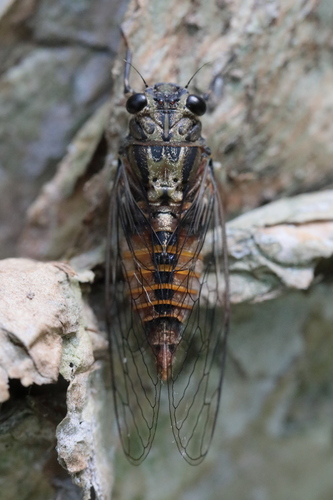
Arunta perulata is a large cicada native to Australia. It is also known as the white drummer cicada. The name floury baker was previously applied to this species, but that name is now specific to Aleeta curvicosta. The white drummer was first described in 1831 by Félix Édouard Guérin-Méneville as Cicada perulata.

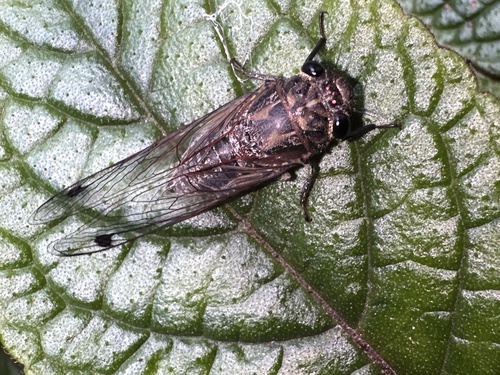
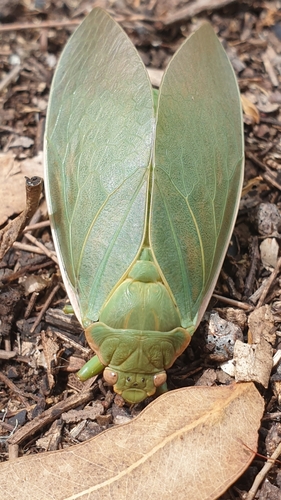
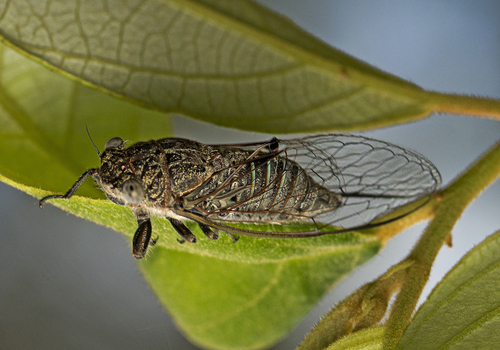
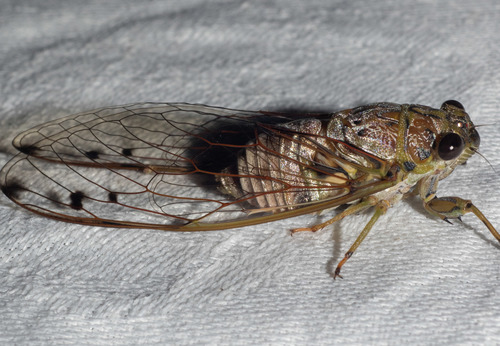
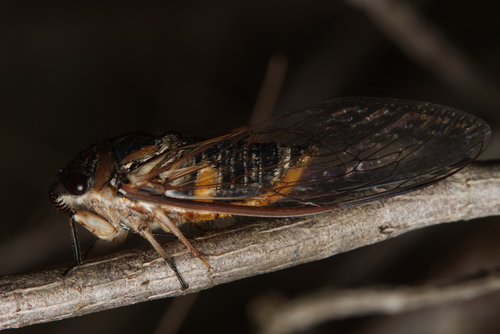
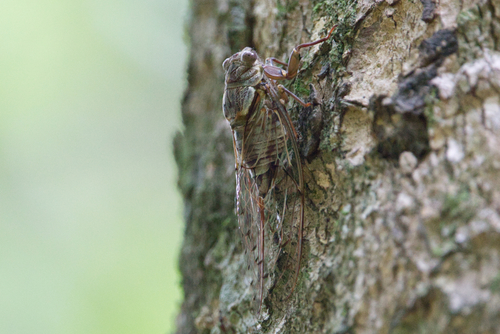
The average body length of the male white drummer is approximately 3.75 cm and the female approximately 3.72 cm. The head is green with prominent dark red-brown markings and green midline along pronotum. The eyes are a dark red-brown. The thorax and abdomen are predominantly dark red-brown. Depressions on the body are covered with yellow velvety fur. The prominent sac-like tymbal covers are white. The wings are clear with reddish brown and yellowish veins, and measure up to 4.97 cm long in males and 4.84 cm long in females. The white drummer has yellow-green legs marked with dark brown and black.

The white drummer make a constant rattle-like call, which can carry over long distances, singing during the day and at dusk. It consists of a series of pulses emitted by the cicada at a rate of 65 per second, with each lasting 2.5-3.5 microseconds followed by an interval of 14 microseconds. The frequency of the call is 5.5-6.5 kHz with a weak harmonic at 12 kHz. Like the related double drummer (Thopha saccata), its sac-like tymbal covers amplify its call.

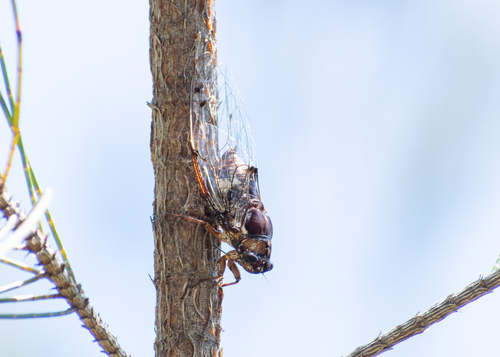
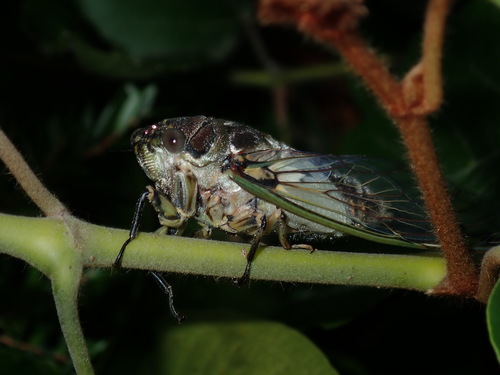
The white drummer is found along Australia's eastern coastline from Cooktown in northern Queensland to Narooma in southern New South Wales. It has also been collected from far northern Cape York. The preferred habitat of the white drummer is swampy forest and mangroves, with the cicadas perching on trees such as sheoak (Casuarina equisetifolia), swamp oak (C. glauca), coast banksia (Banksia integrifolia) and coast wattle (Acacia sophorae). Adults appear in December and January.

Female cicadas lay eggs exclusively on live branches. Wikipedia →
Global Distribution

Parks Where Found

# Park Country Daily sighting probability
1 Booderee National Park 🇦🇺 Australia
~10%

More parks will be added in future updates.

Cities Where Found

# City Country Daily sighting probability
1 Sydney 🇦🇺 Australia
<5%

Before you go

What are the chances of seeing a White Drummer in Sydney?

Rare

Under 5% of wildlife watchers report a White Drummer sighting in Sydney on a given day, based on 7 verified sightings from GBIF citizen-science data. It is the 666th most-seen of the 742 insects we can rate there. Over three days the chance rises to about 10%, and over a week to about 20%, if each day is a fresh chance.

When is the best time to see a White Drummer in Sydney?

Any time of year

In every month with enough records, under 5% of wildlife watchers report a White Drummer in Sydney on a given day, so our monthly data shows no clear season.

What time of day is best to see a White Drummer?

Between 11 am and 2 pm

Across all the parks we cover, that three-hour window holds the most White Drummer sightings with a recorded time, and nearly all of them come between 6 am and 6 pm: it is a daytime animal.

Where else can you see a White Drummer?

Only Sydney, in our data

Sydney is the only city on Wallace's Line with enough records to rate White Drummer sightings: under 5% of wildlife watchers there report one on a given day.

Which relatives of the White Drummer live in Sydney?

Same family: Cicadidae

The closest relatives of the White Drummer that you can see in Sydney (family Cicadidae, Typical Cicadas) are Black Prince (about 20%), Silver Princess (about 20%) and Floury Baker (about 20%), with each one's daily chance of a sighting.

Where does the White Drummer sighting chance come from?

GBIF citizen-science records

It is estimated from how often the White Drummer is recorded against all the insects logged in Sydney (7 verified sightings), calibrated against known sighting rates. Figures are rounded to the nearest 10% because citizen-science data supports honest approximations, not decimals, and months with records from fewer than five people show "—". How it works.

← Back to Sydney