Yellow-bellied Three-toed Skink

Yellow-bellied Three-toed Skink

Saiphos equalis

Silhouette: David Orr · PhyloPic

LCLeast ConcernNTVUENCR Endemic
Daily sighting probability ~10% · With luck
at Sydney

In 3 days ~20% in a week ~40%

60 Verified sightings at Sydney
25 In all 2 parks From 2019 to 2026
December Best month
☀️ Diurnal When it's spotted

About the Yellow-bellied Three-toed Skink

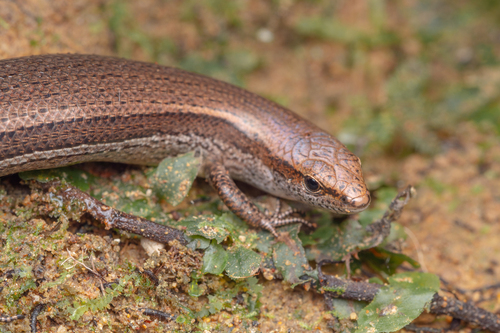
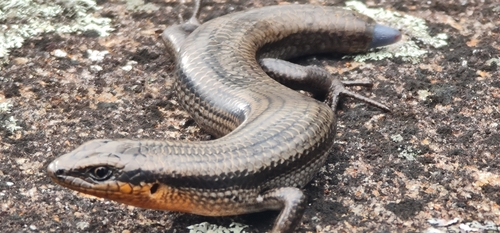
Saiphos equalis, commonly known as the yellow-bellied three-toed skink or simply three-toed skink, is a species of burrowing skink found in eastern Australia. It is the only species classified under the genus Saiphos. The lizard has attracted scientific attention due to its dual reproduction habits of producing young via eggs in coastal populations, or via live young in colder mountain regions.

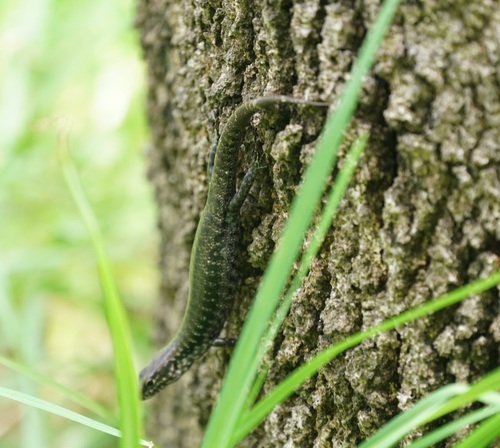
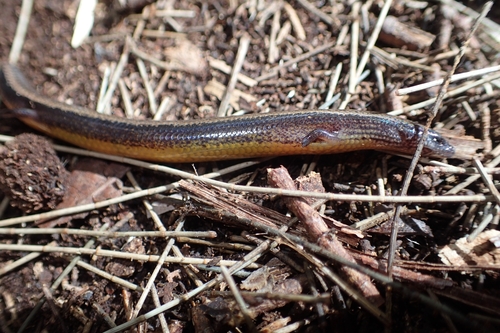
Saiphos equalis grows to a length of 18 cm (7.1 in) including the tail. It has a brown back and an orange belly. The skink is active at night, and feeds on insects. Along the coastal lowlands of Australia, the skink has been observed laying eggs and giving birth to live young for reproduction. Individuals of the species in the lowlands lay eggs (oviparous), while its neighbors to the north in the mountains are almost exclusively giving birth to live young (viviparous).

Saiphos equalis was originally described by the British zoologist John Edward Gray in 1825 as Seps equalis. In 1831, Gray reclassified it under a genus he separately established, Saiphos. Saiphos equalis is now considered to be the only member of the genus Saiphos. It belongs to... Wikipedia →
Global Distribution

Parks Where Found

# Park Country Daily sighting probability
1 Royal National Park 🇦🇺 Australia
~10%
2 Blue Mountains National Park 🇦🇺 Australia
~10%

Cities Where Found

# City Country Daily sighting probability
1 Sydney 🇦🇺 Australia
~10%

Before you go

What are the chances of seeing a Yellow-bellied Three-toed Skink in Sydney?

With luck

About 10% of wildlife watchers report a Yellow-bellied Three-toed Skink sighting in Sydney on a given day, based on 60 verified sightings from GBIF citizen-science data. It is the 24th most-seen of the 39 reptiles we can rate there. Over three days the chance rises to about 20%, and over a week to about 40%, if each day is a fresh chance.

When is the best time to see a Yellow-bellied Three-toed Skink in Sydney?

February–March, May–June and August–December

In those months about 10% of wildlife watchers report a Yellow-bellied Three-toed Skink in Sydney on a given day, against under 5% in January, April and July, the lowest months.

What time of day is best to see a Yellow-bellied Three-toed Skink?

Between 10 am and 1 pm

Across all the parks we cover, that three-hour window holds the most Yellow-bellied Three-toed Skink sightings with a recorded time, and about 9 in 10 of them come between 6 am and 6 pm: it is a daytime animal.

Where else can you see a Yellow-bellied Three-toed Skink?

Only Sydney, in our data

Sydney is the only city on Wallace's Line with enough records to rate Yellow-bellied Three-toed Skink sightings: about 10% of wildlife watchers there report one on a given day.

Which relatives of the Yellow-bellied Three-toed Skink live in Sydney?

Same family: Scincidae

The closest relatives of the Yellow-bellied Three-toed Skink that you can see in Sydney (family Scincidae, Skinks) are Eastern Water Skink (about 40%), Common Bluetongue (about 30%) and Elegant Snake-eyed Skink (about 30%), with each one's daily chance of a sighting.

Where does the Yellow-bellied Three-toed Skink sighting chance come from?

GBIF citizen-science records

It is estimated from how often the Yellow-bellied Three-toed Skink is recorded against all the reptiles logged in Sydney (60 verified sightings), calibrated against known sighting rates. Figures are rounded to the nearest 10% because citizen-science data supports honest approximations, not decimals, and months with records from fewer than five people show "—". How it works.

← Back to Sydney