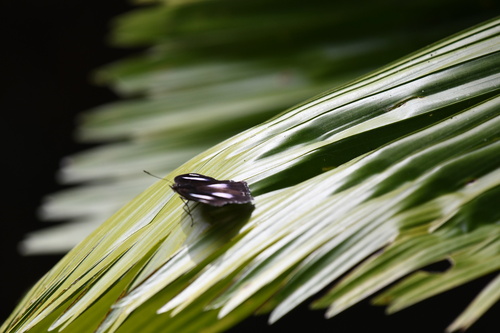
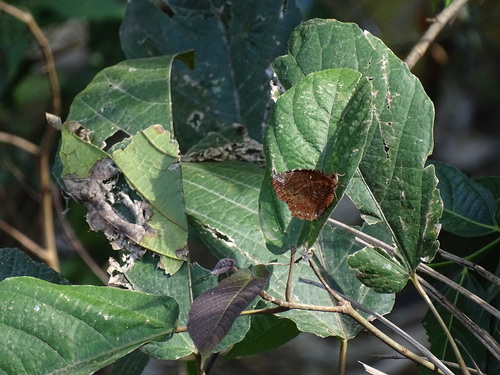
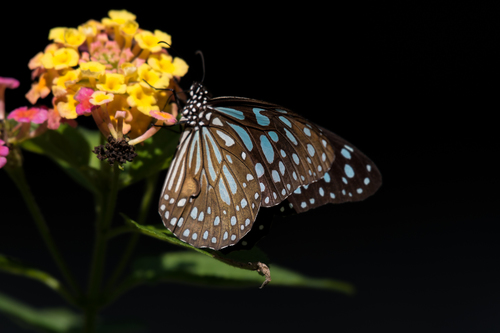
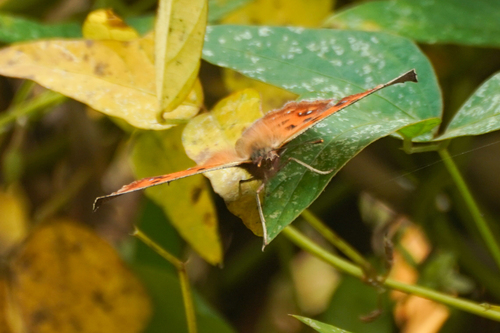
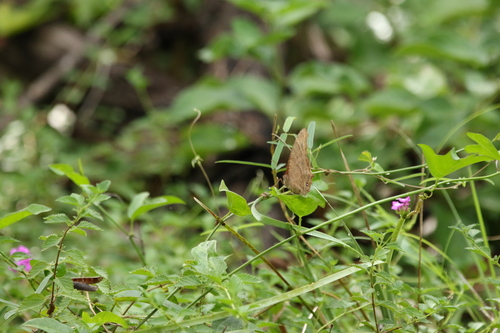
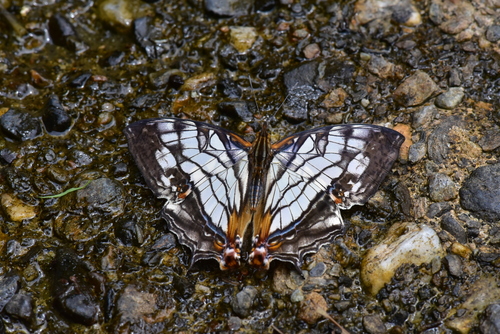
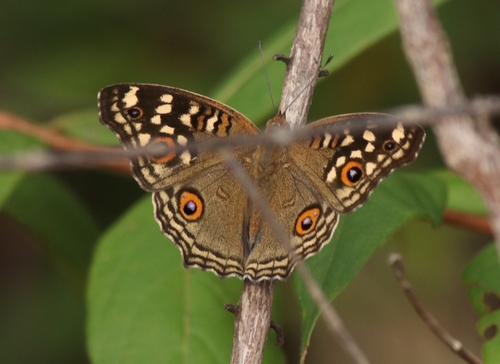
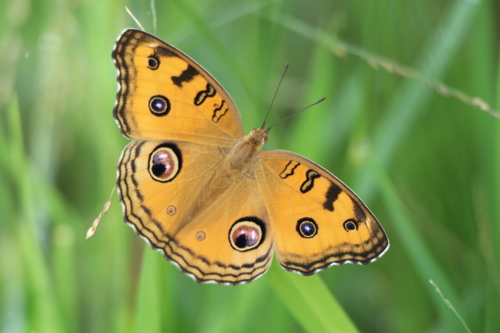
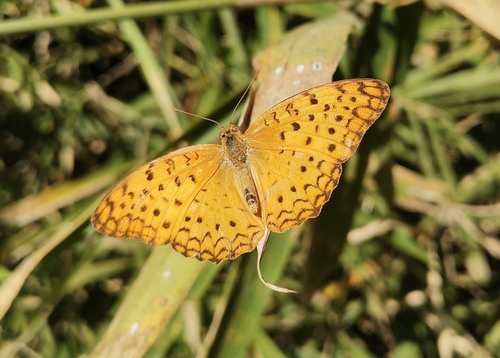
White-Edged Blue Baron

White-Edged Blue Baron

Euthalia phemius

Daily sighting probability ~10% · With luck
at Taichung

In 3 days ~30% in a week ~60%

17 Verified sightings at Taichung
7 In 1 park From 2019 to 2026
June Best month
☀️ Diurnal When it's spotted

About the White-Edged Blue Baron

Euthalia phemius, the white-edged blue baron, is a species of butterfly of the family Nymphalidae. It is found in Sikkim, Assam, Myanmar, and southern China (S.Yunnan, including Hong Kong, Peninsular Malaya and Indo-China.

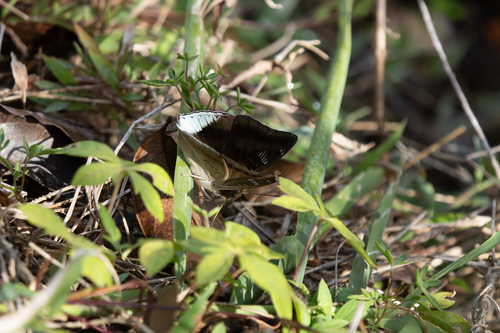
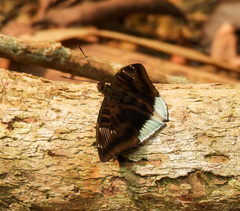
The wingspan of the moths is 60 to 85 millimeters. The species is characterized by marked sexual dimorphism. Both sexes share a brownish base colour on the upper sides of the wings. In males, a radiating whitish line pattern stands out in the postdiscal region of the forewings, as well as a light blue region above the inner margin of the hindwings, which is edged in white. In English, the species is therefore called the White-edged Blue Baron The anal angle is pointed. Females differ by a white band running from the middle of the leading edge of the forewings to the inner angle, and by the absence of the blue region on the hindwings. The undersides of the wings of both sexes are ochre to reddish-brown and replicate the white markings of the forewings.

Mature caterpillars are green. It resembles a twig of the foodplant. Spiky outgrowths extend laterally from each body segment. The dorsal line is yellow. Euthalia phemius primarily inhabits moist deciduous forests.They fly throughout the year, but are most active in June and July. They like to feed on damp soil to obtain moisture and minerals. The caterpillars feed on the leaves of the lychee tree (Litchi chinensis ) or mango ( Mangifera indica ). Wikipedia →
Global Distribution

Parks Where Found

# Park Country Daily sighting probability
1 Namdapha National Park 🇮🇳 India
~30%

More parks will be added in future updates.

Cities Where Found

# City Country Daily sighting probability
1 Nanning 🇨🇳 China
~20%
2 Tuen Mun 🇨🇳 China
~20%
3 Xiamen City 🇨🇳 China
~10%
4 Taichung 🇹🇼 Taiwan
~10%
5 Taipei 🇹🇼 Taiwan
~10%
6 Hong Kong 🇨🇳 China
~10%
7 Guangzhou 🇨🇳 China
~10%
8 Zhuhai [Macau] 🇨🇳 China
~10%

Before you go

What are the chances of seeing a White-Edged Blue Baron in Taichung?

With luck

About 10% of wildlife watchers report a White-Edged Blue Baron sighting in Taichung on a given day, based on 17 verified sightings from GBIF citizen-science data. It is the 64th most-seen of the 197 insects we can rate there. Over three days the chance rises to about 30%, and over a week to about 60%, if each day is a fresh chance.

When is the best time to see a White-Edged Blue Baron in Taichung?

June and October

In those months about 30% of wildlife watchers report a White-Edged Blue Baron in Taichung on a given day, against under 5% in January–April, August–September and November, the lowest months.

What time of day is best to see a White-Edged Blue Baron?

Between 10 am and 1 pm

Across all the parks we cover, that three-hour window holds the most White-Edged Blue Baron sightings with a recorded time, and nearly all of them come between 6 am and 6 pm: it is a daytime animal.

Is Taichung the best place to see a White-Edged Blue Baron?

4th of 8

Of the 8 cities where we can rate White-Edged Blue Baron sightings, Taichung ranks 4th at about 10%. The best odds are in Nanning (China, about 20%), Tuen Mun (China, about 20%) and Xiamen City (China, about 10%).

Which relatives of the White-Edged Blue Baron live in Taichung?

Same family: Nymphalidae

The closest relatives of the White-Edged Blue Baron that you can see in Taichung (family Nymphalidae, Brush-footed Butterflies) are Great Eggfly (about 20%), Plain Tiger Butterfly (about 20%) and Common Palmfly (about 20%), with each one's daily chance of a sighting.

Where does the White-Edged Blue Baron sighting chance come from?

GBIF citizen-science records

It is estimated from how often the White-Edged Blue Baron is recorded against all the insects logged in Taichung (17 verified sightings), calibrated against known sighting rates. Figures are rounded to the nearest 10% because citizen-science data supports honest approximations, not decimals, and months with records from fewer than five people show "—". How it works.

← Back to Taichung