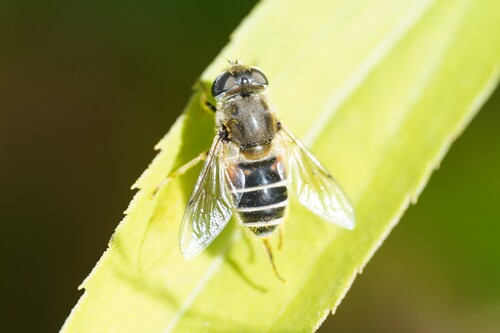
About the Long-Tailed Dance Fly
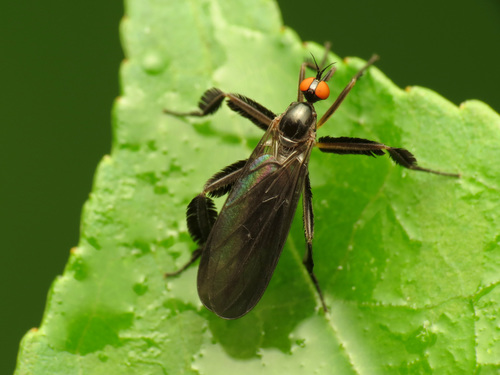
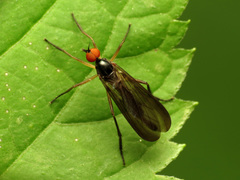
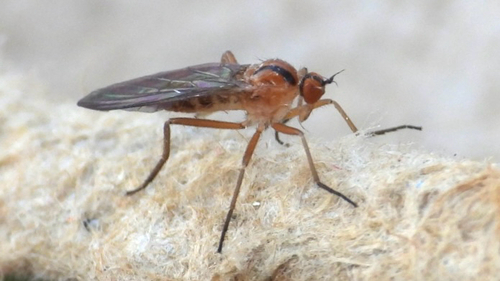
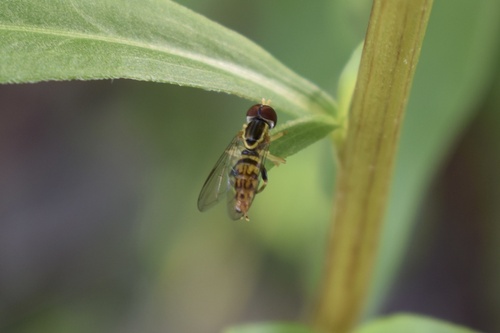
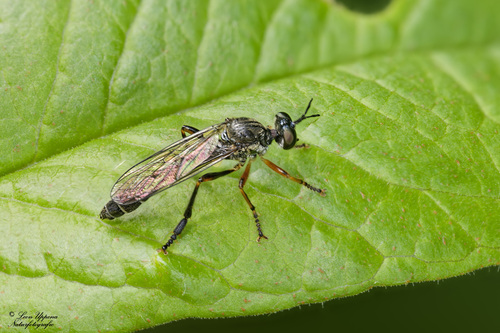
Rhamphomyia longicauda, the long-tailed dance fly, is a species of fly commonly found in eastern North America that belongs to the family Empididae and part of the superfamily of dance flies Empidoidea. It is included in the subgenus Rhamphomyia. This species of fly is most known for sex role reversal during courtship, as females put on exaggerated displays and congregate in leks to attract males. Females cannot hunt for food, so they receive protein from nuptial gifts brought to them by males. Female dependence on males for nutrition is the principal cause for sex role reversal in this species of fly.
While this fly species is termed the long-tailed dance fly and its Latin nomenclature resembles the same meaning (Rhamphomyia = "crooked fly;" longicauda = longtailed), the "tail" actually references the male genitalia, which forms an elbowed erection towards the rear of the abdomen.
Common to many male Diptera, the dorsal section of the eyes is larger than the ventral section. The lengthened dorsal section, in addition to shortened wings, aids the male's ability to approach the female from beneath during mating.
Females have black scales that... Wikipedia →