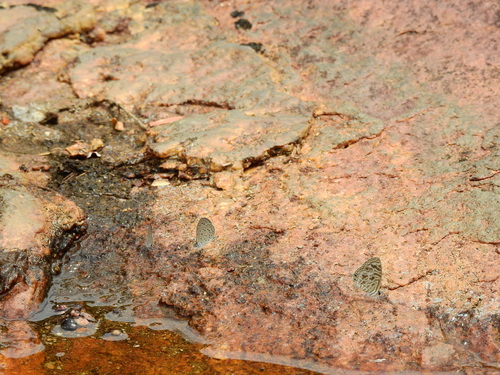
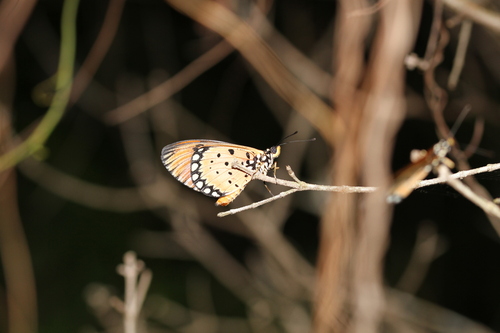
Small Salmon Arab

Small Salmon Arab

Colotis amata

Daily sighting probability ~20% · Possible
at Vadodara

In 3 days ~40% in a week ~70%

5 Verified sightings at Vadodara
86 In all 6 parks From 2019 to 2026
June Best month
☀️ Diurnal When it's spotted

About the Small Salmon Arab

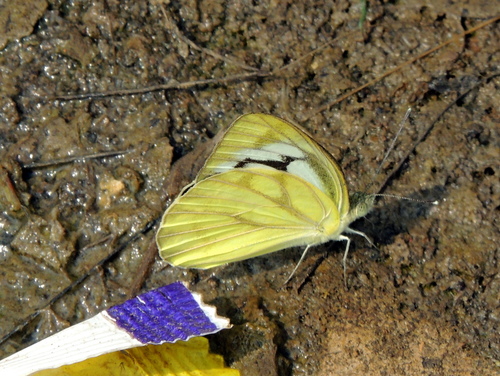
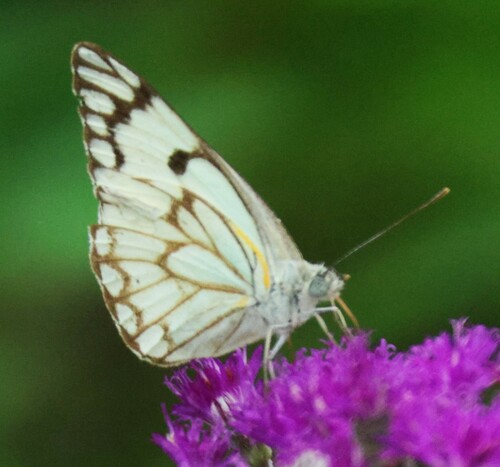
Colotis amata, the Small Salmon Arab, is a small butterfly in the family Pieridae. It is primarily found in South Asia in countries like India, Pakistan and Sri Lanka. Similar populations across Arabian Peninsula, Africa and Madagascar were earlier treated as being conspecific. However, based on later studies, they have been split and now regarded as a different species Colotis calais.

The male's upperside has a salmon-pink ground colour. The costa on the forewing is black and thickly overlaid with greyish or pinkish scales; a black spot at apex of cell, which may be large and quadrate or smaller and lunate; termen broadly black, with an enclosed double transverse series of spots of the ground colour the inner series consists of a large spot in interspace 1, two very small spots in interspaces 2 and 3, one in each, and four larger anterior spots placed in a curve; the spots in the outer series are variable in number, but generally there is one in each interspace, these are more or less linear in shape. Hindwing: a band on costal margin extended to just within the upper margin of the cell, covered with dense black specialized scales; this black band joined onto a... Wikipedia →

Global Distribution

Parks Where Found

# Park Country Daily sighting probability
1 Berenty Reserve 🇲🇬 Madagascar
~50%
2 Keoladeo National Park 🇮🇳 India
~30%
3 Liwonde National Park 🇲🇼 Malawi
~20%
4 Namib-Naukluft National Park 🇳🇦 Namibia
~10%
5 Etosha National Park 🇳🇦 Namibia
~10%
6 Kruger National Park 🇿🇦 South Africa
~10%

Cities Where Found

# City Country Daily sighting probability
1 Surat 🇮🇳 India
~30%
2 Vasai-Virar 🇮🇳 India
~30%
3 Karachi 🇵🇰 Pakistan
~20%
4 Mumbai 🇮🇳 India
~20%
5 Coimbatore 🇮🇳 India
~20%
6 Ahmedabad 🇮🇳 India
~20%
7 Vadodara 🇮🇳 India
~20%
8 Dubai 🇦🇪 United Arab Emirates
~10%
9 Mysuru 🇮🇳 India
~10%
10 Salem 🇮🇳 India
~10%

Before you go

What are the chances of seeing a Small Salmon Arab in Vadodara?

Possible

About 20% of wildlife watchers report a Small Salmon Arab sighting in Vadodara on a given day, based on 5 verified sightings from GBIF citizen-science data. It is the 58th most-seen of the 64 insects we can rate there. Over three days the chance rises to about 40%, and over a week to about 70%, if each day is a fresh chance.

When is the best time to see a Small Salmon Arab in Vadodara?

June

In that month about 40% of wildlife watchers report a Small Salmon Arab in Vadodara on a given day, against under 5% in October to May, the lowest months. That is one of Vadodara's wettest months, with about 140 mm of rain against almost none in January.

What time of day is best to see a Small Salmon Arab?

Between 10 am and 1 pm

Across all the parks we cover, that three-hour window holds the most Small Salmon Arab sightings with a recorded time, and nearly all of them come between 6 am and 6 pm: it is a daytime animal.

Is Vadodara the best place to see a Small Salmon Arab?

7th of 13

Of the 13 cities where we can rate Small Salmon Arab sightings, Vadodara ranks 7th at about 20%. The best odds are in Surat (India, about 30%), Vasai-Virar (India, about 30%) and Karachi (Pakistan, about 20%).

Which relatives of the Small Salmon Arab live in Vadodara?

Same family: Pieridae

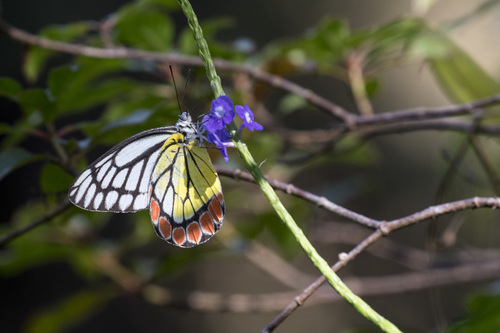
The closest relatives of the Small Salmon Arab that you can see in Vadodara (family Pieridae, Whites, Yellows, and Sulphurs) are Mottled Emigrant (about 30%), Common Jezebel (about 30%) and Common Gull (butterfly) (about 20%), with each one's daily chance of a sighting.

Where does the Small Salmon Arab sighting chance come from?

GBIF citizen-science records

It is estimated from how often the Small Salmon Arab is recorded against all the insects logged in Vadodara (5 verified sightings), calibrated against known sighting rates. Figures are rounded to the nearest 10% because citizen-science data supports honest approximations, not decimals, and months with records from fewer than five people show "—". How it works.
← Back to Vadodara