Nodding Thistle Receptacle Weevil

Nodding Thistle Receptacle Weevil

Rhinocyllus conicus

Daily sighting probability <5% · Rare
at Vancouver

In 3 days ~10% in a week ~20%

16 Verified sightings at Vancouver
9 In 1 park From 2019 to 2026
June Best month
☀️ Diurnal When it's spotted

About the Nodding Thistle Receptacle Weevil

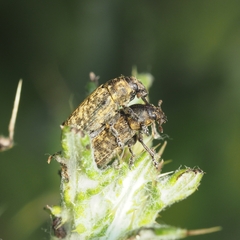
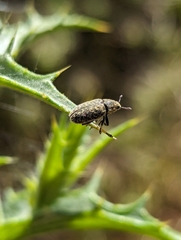
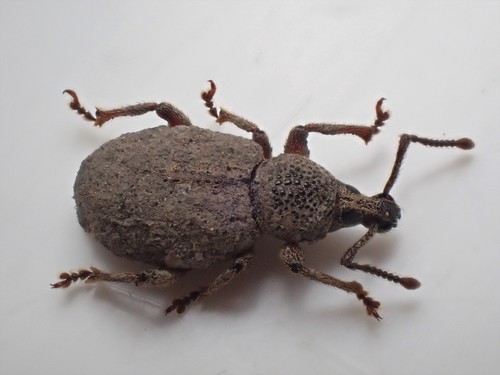
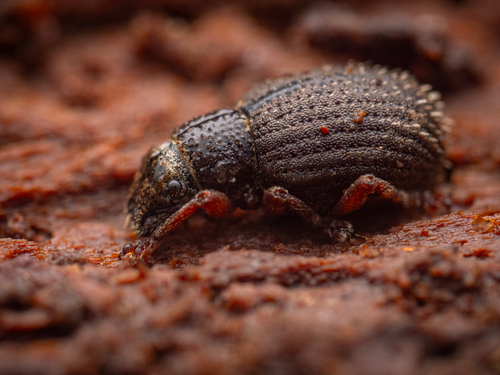
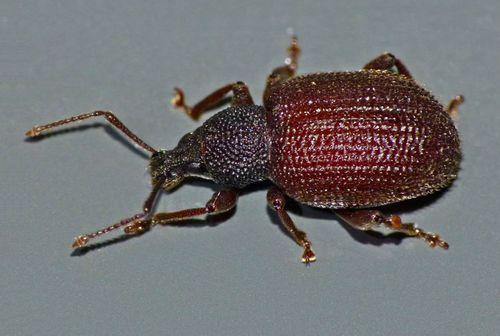
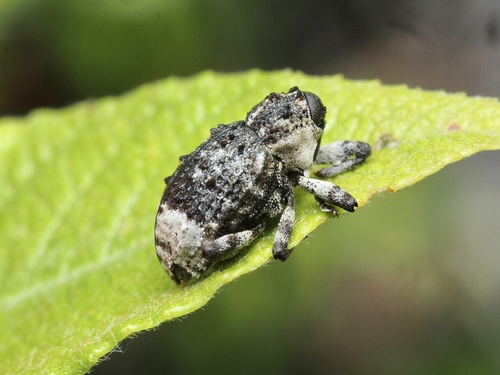
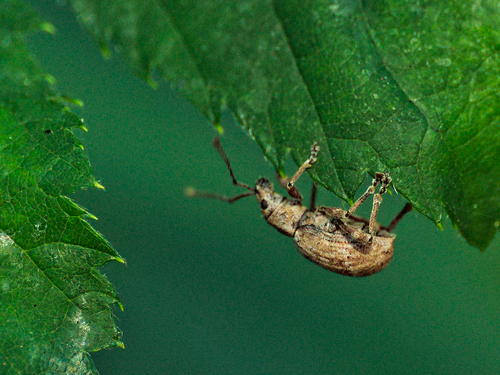
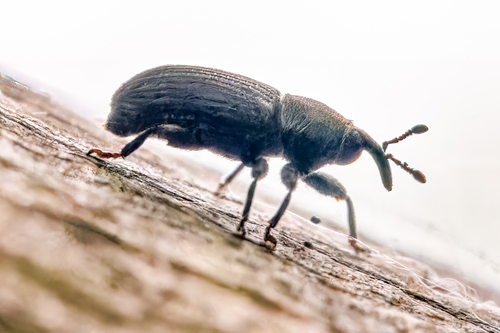
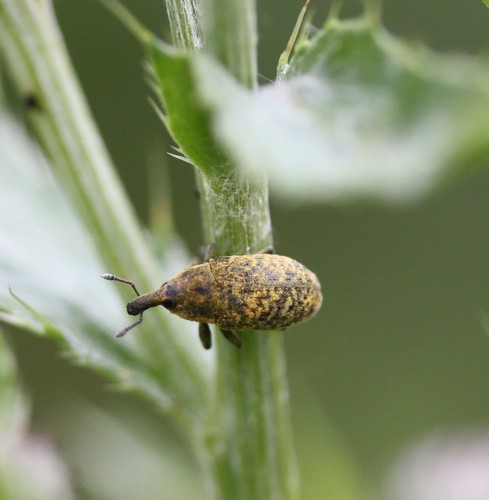
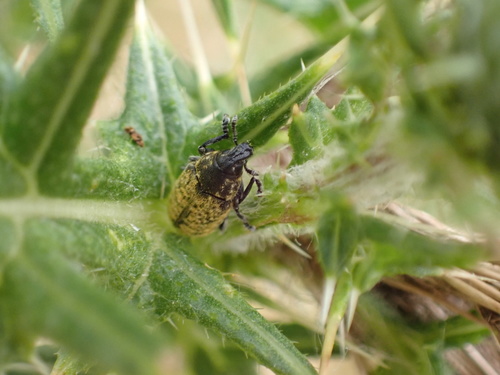
Rhinocyllus conicus is a species of true weevil. It is best known as a controversial agent of biological pest control which has been used against noxious thistles in the genera Carduus, Cirsium, Onopordum, and Silybum. The adult weevil is black and covered in a thin black and yellowish mottled coat of hairs. It is a short-snouted beetle up to 6 millimeters in total body length. The female lays over 100 eggs on or near the bracts of the thistle flower head. She covers the eggs with masticated plant tissue to protect them from predators. When the white larva emerges from its egg it burrows into the flower head and feeds on the flower parts and developing seeds. As it grows it deposits frass and chewed plant tissue on the walls of its chamber, producing a rigid protective shell in which it will pupate. Pupation takes up to two weeks and when the weevil emerges as an adult it remains inside the chamber for a few more weeks before tunneling out of the plant.

Damage to the plant occurs mainly from larval destruction of the flower head, which prevents seed production. Some larvae tunnel through the upper stem instead of chambering in a flower head; this can also be destructive to the plant. Adults do some damage as well when they feed on the foliage. Thistles which reproduce only via seed, such as musk thistle, are controlled well by this weevil and its seed head destroying larvae. Some thistles are able to reproduce vegetatively, and while they are impacted as well, they can sometimes survive.

This weevil is native to Eurasia and North Africa. It was first introduced to the United States for thistle biocontrol in 1969, and it is now widely established in that country. The weevil was found to be very effective in reducing the spread of invasive thistles, particularly musk thistle, but also welted, Italian, bull, milk, and other thistles. However, the weevil will also readily attack native thistles of genus Cirsium, in some cases contributing to population decline. It is for this reason that this weevil is no longer recommended for distribution as a biocontrol agent. Further releases of the weevil are prohibited in many areas. Wikipedia →
Global Distribution

Parks Where Found

# Park Country Daily sighting probability
1 Great Otway National Park 🇦🇺 Australia
~10%

More parks will be added in future updates.

Cities Where Found

# City Country Daily sighting probability
1 Madrid 🇪🇸 Spain
~10%
2 Birmingham 🇬🇧 United Kingdom
<5%
3 Buenos Aires 🇦🇷 Argentina
<5%
4 Melbourne 🇦🇺 Australia
<5%
5 Sacramento 🇺🇸 United States
<5%
6 Seattle 🇺🇸 United States
<5%
7 Vancouver 🇨🇦 Canada
<5%
8 Paris 🇫🇷 France
<5%
9 Portland 🇺🇸 United States
<5%
10 Denver 🇺🇸 United States
<5%

Before you go

What are the chances of seeing a Nodding Thistle Receptacle Weevil in Vancouver?

Rare

Under 5% of wildlife watchers report a Nodding Thistle Receptacle Weevil sighting in Vancouver on a given day, based on 16 verified sightings from GBIF citizen-science data. It is the 244th most-seen of the 482 insects we can rate there. Over three days the chance rises to about 10%, and over a week to about 20%, if each day is a fresh chance.

When is the best time to see a Nodding Thistle Receptacle Weevil in Vancouver?

June

In that month about 10% of wildlife watchers report a Nodding Thistle Receptacle Weevil in Vancouver on a given day, against under 5% in July to May, the lowest months. That is one of Vancouver's driest months, with about 45 mm of rain against 210 mm in November.

What time of day is best to see a Nodding Thistle Receptacle Weevil?

Between 4 and 7 pm

Across all the parks we cover, that three-hour window holds the most Nodding Thistle Receptacle Weevil sightings with a recorded time, and about 7 in 10 of them come between 6 am and 6 pm: it is a daytime animal.

Is Vancouver the best place to see a Nodding Thistle Receptacle Weevil?

7th of 16

Of the 16 cities where we can rate Nodding Thistle Receptacle Weevil sightings, Vancouver ranks 7th at under 5%. The best odds are in Madrid (Spain, about 10%), Birmingham (United Kingdom, under 5%) and Buenos Aires (Argentina, under 5%).

Which relatives of the Nodding Thistle Receptacle Weevil live in Vancouver?

Same family: Curculionidae

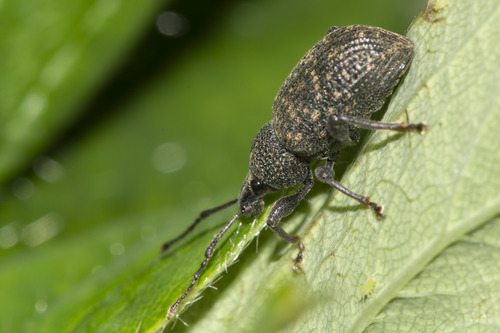
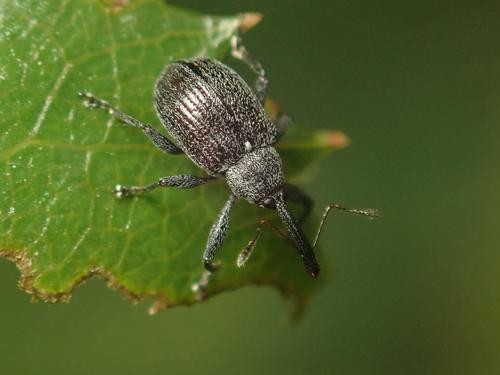
The closest relatives of the Nodding Thistle Receptacle Weevil that you can see in Vancouver (family Curculionidae, True Weevils) are Black Vine Weevil (about 10%) and Strawberry Blossom Weevil (about 10%), with each one's daily chance of a sighting.

Where does the Nodding Thistle Receptacle Weevil sighting chance come from?

GBIF citizen-science records

It is estimated from how often the Nodding Thistle Receptacle Weevil is recorded against all the insects logged in Vancouver (16 verified sightings), calibrated against known sighting rates. Figures are rounded to the nearest 10% because citizen-science data supports honest approximations, not decimals, and months with records from fewer than five people show "—". How it works.

← Back to Vancouver