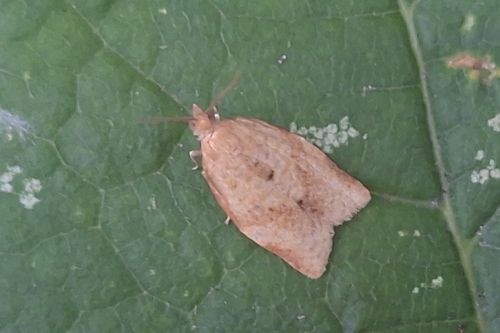
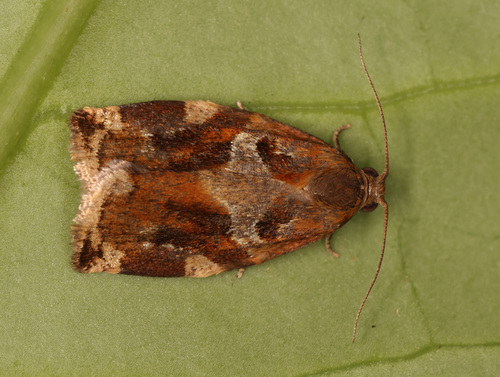
Maple Leaftier Moth

Maple Leaftier Moth

Acleris forsskaleana

Daily sighting probability <5% · Rare
at Vienna

In 3 days ~10% in a week ~20%

16 Verified sightings at Vienna
48 In all 2 parks From 2019 to 2026
June Best month
☀️🌙 Day & Night When it's spotted

About the Maple Leaftier Moth

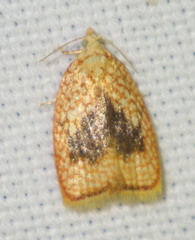
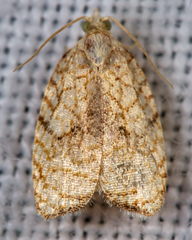
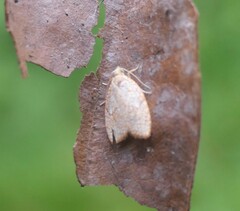
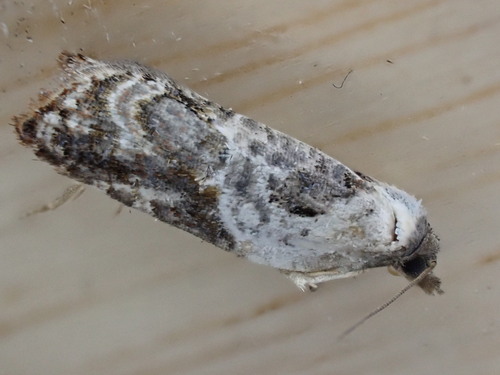
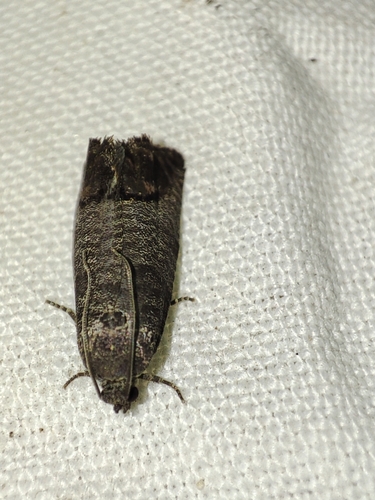
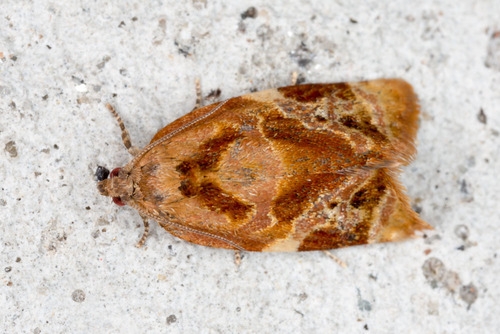
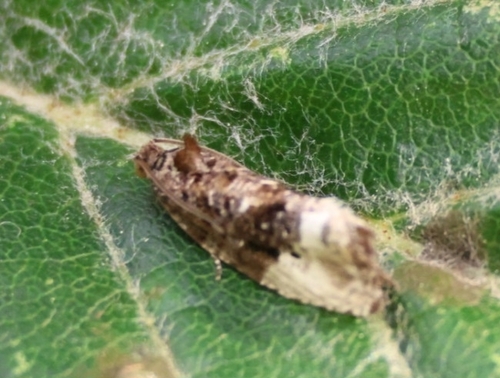
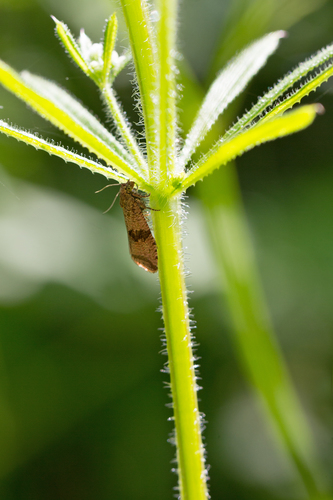
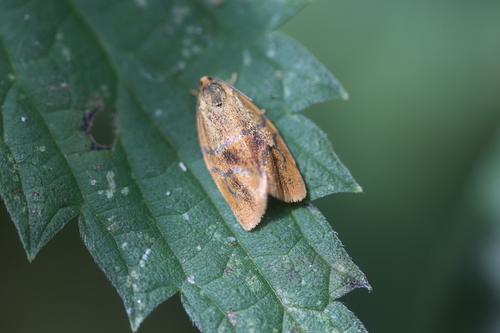
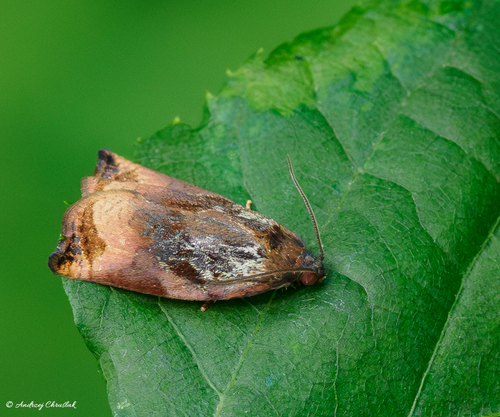
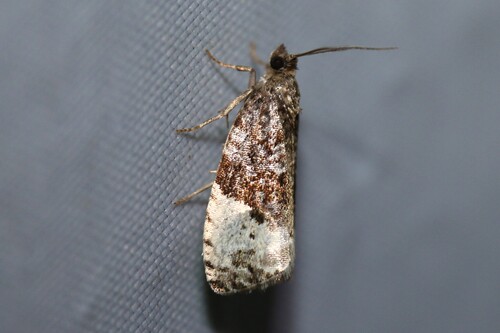
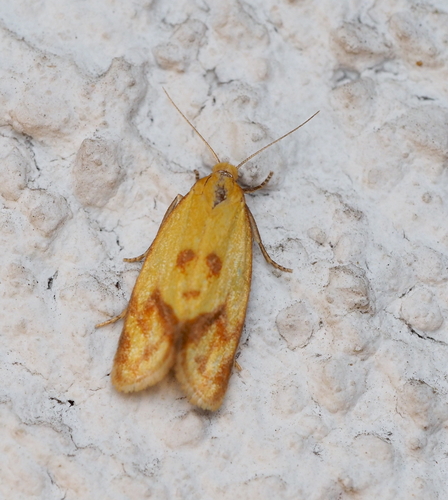
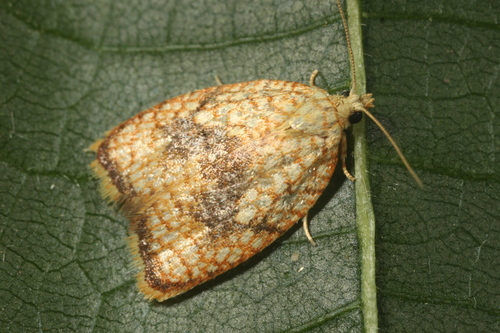
Acleris forsskaleana, the maple leaftier moth, is a moth of the family Tortricidae. It is found in Europe and North America in woodlands and gardens. The wingspan is 12–17 mm. The ground colour of the forewings is yellowish underlying a reticulated darker pattern and a greyish suffusion across the disc.It has a dark, V-shaped transverse line and dark outer edge, otherwise numerous, narrow, brown transverse lines. Together with the brownish wing veins, these form the net pattern. The larva is yellowish, partially transparent so that the dark greenish intestines shine through. The head capsule is barely darker than the rest of the larva.

Julius von Kennel provides a full description. Meyrick -Forewings suboblong, 7 to apex; pale yellowish, sharply reticulated with ferruginous orange, somewhat mixed with dark fuscous; a dark fuscous oblique stria from middle of costa, meeting a variable sometimes obsolete fuscous dorsal blotch, containing two small black scale tufts; a dark fuscous terminal streak. Hindwings whitishyellowish, more or less fuscous-tinged posteriorly.Larva pale yellow; head and plate of 2 greenish-tinged

The moth flies from June to September from dusk onwards. The main food plants in Europe are field maple (Acer campestre) and sycamore (A. pseudoplatanus); the larvae can also be found on Norway maple (A. platanoides). The name honours Peter Forsskål. Wikipedia →
Global Distribution

Parks Where Found

# Park Country Daily sighting probability
1 Bavarian Forest National Park 🇩🇪 Germany
~10%
2 Wadden Sea National Park 🇩🇪 Germany
~10%

Cities Where Found

# City Country Daily sighting probability
1 Kharkiv 🇺🇦 Ukraine
~10%
2 Budapest 🇭🇺 Hungary
~10%
3 London 🇬🇧 United Kingdom
~10%
4 Liverpool 🇬🇧 United Kingdom
~10%
5 Kyiv 🇺🇦 Ukraine
<5%
6 Birmingham 🇬🇧 United Kingdom
<5%
7 Amsterdam 🇳🇱 Netherlands
<5%
8 Toronto 🇨🇦 Canada
<5%
9 Montreal 🇨🇦 Canada
<5%
10 Boston 🇺🇸 United States
<5%

Before you go

What are the chances of seeing a Maple Leaftier Moth in Vienna?

Rare

Under 5% of wildlife watchers report a Maple Leaftier Moth sighting in Vienna on a given day, based on 16 verified sightings from GBIF citizen-science data. It is the 666th most-seen of the 1406 insects we can rate there. Over three days the chance rises to about 10%, and over a week to about 20%, if each day is a fresh chance.

When is the best time to see a Maple Leaftier Moth in Vienna?

June

In that month about 10% of wildlife watchers report a Maple Leaftier Moth in Vienna on a given day, against under 5% in July to May, the lowest months. That is one of Vienna's wettest months, with about 90 mm of rain against 40 mm in February.

What time of day is best to see a Maple Leaftier Moth?

Between 11 pm and 2 am

Across all the parks we cover, that three-hour window holds the most Maple Leaftier Moth sightings with a recorded time, and about half of them come between 6 am and 6 pm: it is seen both by day and at night.

Is Vienna the best place to see a Maple Leaftier Moth?

13th of 21

Of the 21 cities where we can rate Maple Leaftier Moth sightings, Vienna ranks 13th at under 5%. The best odds are in Kharkiv (Ukraine, about 10%), Budapest (Hungary, about 10%) and London (United Kingdom, about 10%).

Where does the Maple Leaftier Moth sighting chance come from?

GBIF citizen-science records

It is estimated from how often the Maple Leaftier Moth is recorded against all the insects logged in Vienna (16 verified sightings), calibrated against known sighting rates. Figures are rounded to the nearest 10% because citizen-science data supports honest approximations, not decimals, and months with records from fewer than five people show "—". How it works.

← Back to Vienna