About the Marbled Beauty
The marbled beauty (Cryphia domestica) is a moth of the family Noctuidae. The species was first described by Johann Siegfried Hufnagel in 1766. It is an abundant species throughout most of Europe east to the Urals, and it is probably the most common lichenivorous moth of the Palearctic realm.
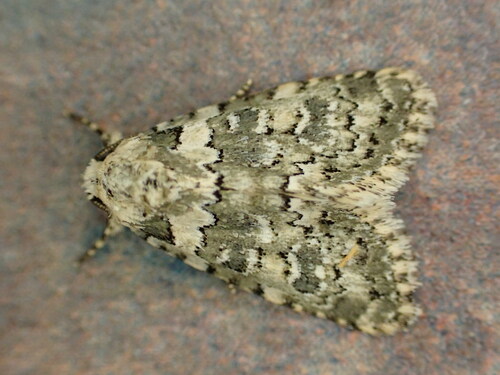
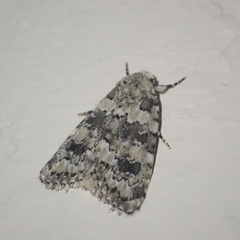
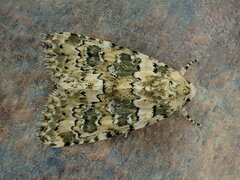
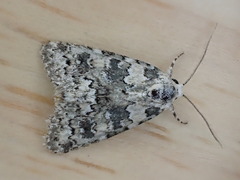
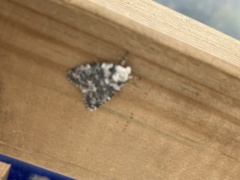
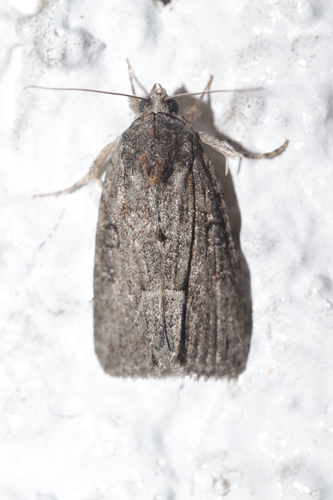
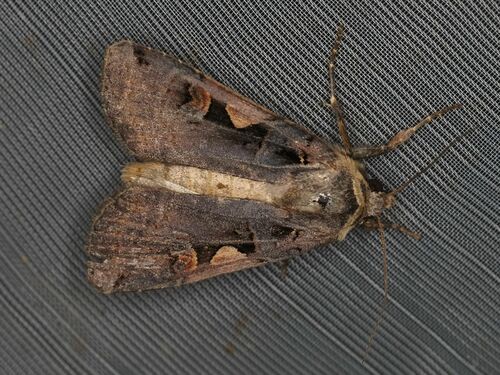
This is quite a small species with a wingspan of 22–30 mm. The forewings are white with dark grey cryptic markings, giving excellent camouflage against the lichens on which the eggs are laid. The intensity of the markings vary considerably, with darker individuals predominating in urban areas, an example of industrial melanism. A significant proportion of individuals also have orange or yellow markings. The hindwings are whitish with a broad grey band at the margin. The adults fly at night in July and August [1] and are attracted to light.
It is found across Europe, where it occurs as far south as Sicily and in the north to Gotland. The eastern distribution is uncertain but it may reach central Asia. It rises over 2000 metres above sea level in the Alps. Forewing cream white with slaty-grey markings; orbicular and claviform (club shaped) stigmata... Wikipedia →