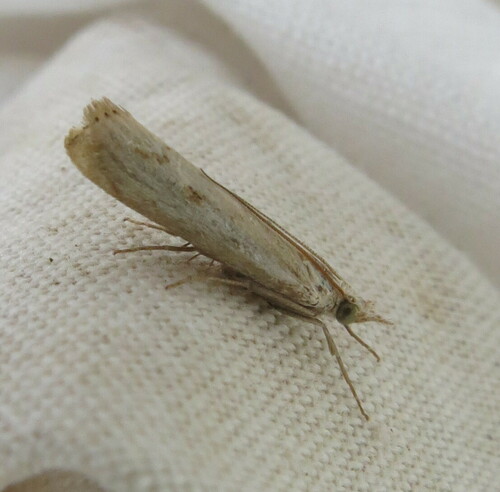
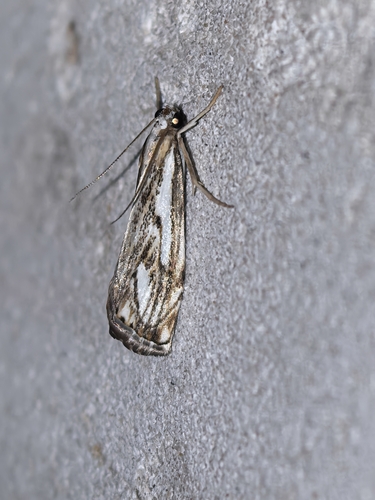
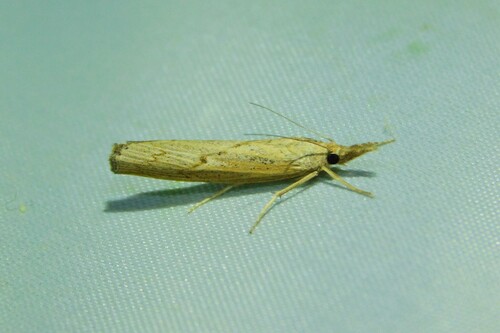
Ringed China-Mark

Ringed China-Mark

Parapoynx stratiotata

Daily sighting probability <5% · Rare
at Vienna

In 3 days ~10% in a week ~20%

12 Verified sightings at Vienna
11 In 1 park From 2019 to 2026
August Best month
🌙 Nocturnal When it's spotted

About the Ringed China-Mark

Parapoynx stratiotata, the ringed china-mark, is a moth of the family Crambidae. The species was first described by Carl Linnaeus in his 1758 10th edition of Systema Naturae. It is found in Europe where the distribution area extends in the north to the British Isles including Ireland and in the south to Sardinia, Sicily and Greece. The species is also found across the Palearctic in North Africa, Lebanon, Turkey, Azerbaijan, Kyrgyzstan, Uzbekistan and China..

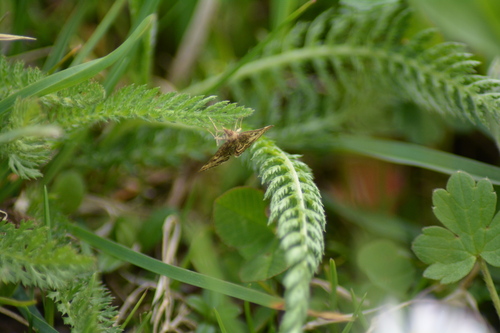
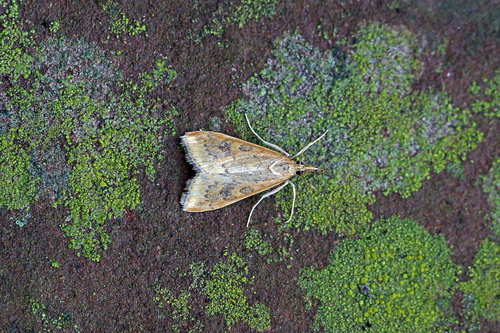
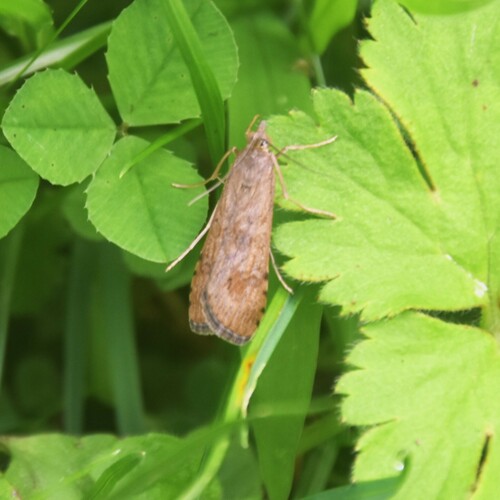
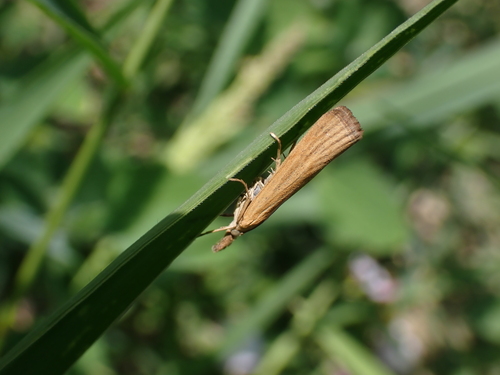
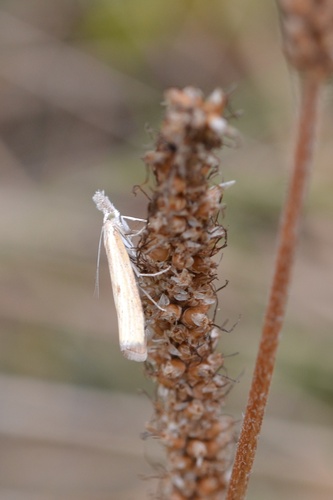
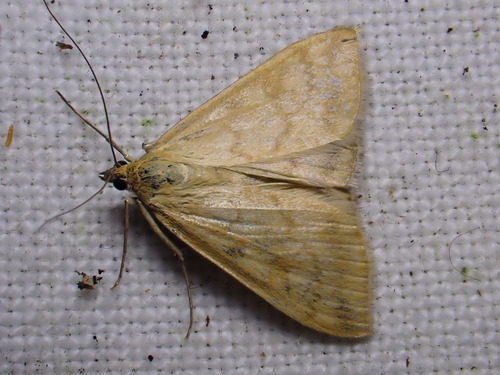
The wingspan is 20–24 mm for the males and 28–30 mm for the females. The forewings are pale ochreous brownish, sometimes partly suffused with white in disc; lines white, first indistinct, posteriorly partly edged with dark brown, second sinuate, anteriorly suffusedly edged with dark brown; a white discal spot, edged with dark fuscous; a white subterminal streak. Hindwings are white; a thick dark fuscous postmedian line; a fine dark subterminal line; termen yellow-tinged. The larva with eight series of groups of fleshy filaments, serving as branchiae; whitish-ochreous or pale greenish, slightly purplish freckled; dorsal line rather dark grey; head pale brown.

The moth flies from May to September depending on the location. The larvae feed on Nymphaea alba, Potamogeton, Callitriche, Ceratophyllum demersum, Elodea canadensis, Nuphar lutea and Stratiotes. Wikipedia →

Global Distribution

Parks Where Found

# Park Country Daily sighting probability
1 Camargue 🇫🇷 France
~10%

More parks will be added in future updates.

Cities Where Found

# City Country Daily sighting probability
1 Brussels 🇧🇪 Belgium
<5%
2 London 🇬🇧 United Kingdom
<5%
3 Berlin 🇩🇪 Germany
<5%
4 Helsinki 🇫🇮 Finland
<5%
5 Copenhagen 🇩🇰 Denmark
<5%
6 Vienna 🇦🇹 Austria
<5%
7 Moscow 🇷🇺 Russia
<5%

Before you go

What are the chances of seeing a Ringed China-Mark in Vienna?

Rare

Under 5% of wildlife watchers report a Ringed China-Mark sighting in Vienna on a given day, based on 12 verified sightings from GBIF citizen-science data. It is the 895th most-seen of the 1406 insects we can rate there. Over three days the chance rises to about 10%, and over a week to about 20%, if each day is a fresh chance.

When is the best time to see a Ringed China-Mark in Vienna?

August

In that month about 10% of wildlife watchers report a Ringed China-Mark in Vienna on a given day, against under 5% in September to July, the lowest months. That is one of Vienna's wettest months, with about 85 mm of rain against 40 mm in February.

What time of day is best to see a Ringed China-Mark?

Between 9 pm and midnight

Across all the parks we cover, that three-hour window holds the most Ringed China-Mark sightings with a recorded time, and nearly all of them come between 6 pm and 6 am: it is mostly seen at night.

Is Vienna the best place to see a Ringed China-Mark?

Among the best

Of the 7 cities where we can rate Ringed China-Mark sightings, Vienna ranks 6th at under 5%, level with the leaders once rounded. The best odds are in Brussels (Belgium, under 5%), London (United Kingdom, under 5%) and Berlin (Germany, under 5%).

Which relatives of the Ringed China-Mark live in Vienna?

Same family: Crambidae

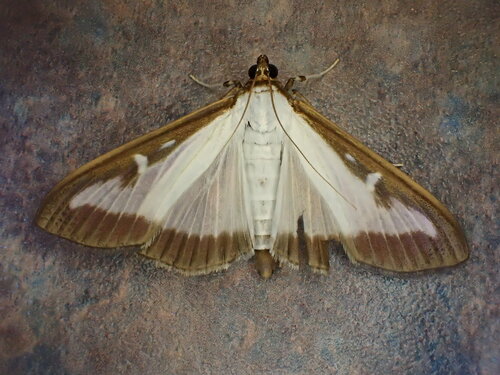
The closest relatives of the Ringed China-Mark that you can see in Vienna (family Crambidae, Crambid Snout Moths) are Box Tree Moth (about 10%), Straw-Barred Pearl (about 10%) and Rusty Dot Pearl (about 10%), with each one's daily chance of a sighting.

Where does the Ringed China-Mark sighting chance come from?

GBIF citizen-science records

It is estimated from how often the Ringed China-Mark is recorded against all the insects logged in Vienna (12 verified sightings), calibrated against known sighting rates. Figures are rounded to the nearest 10% because citizen-science data supports honest approximations, not decimals, and months with records from fewer than five people show "—". How it works.

← Back to Vienna