

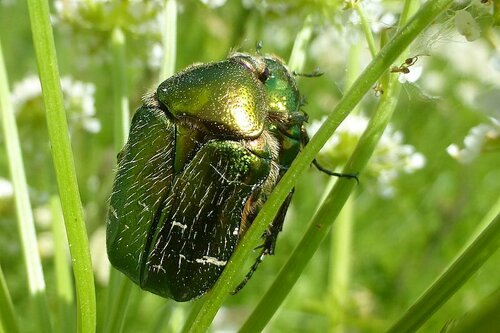
Spanish Fly

Spanish Fly

Lytta vesicatoria

Daily sighting probability <5% · Rare
at Vienna

In 3 days ~10% in a week ~20%

17 Verified sightings at Vienna
57 In all 2 parks From 2019 to 2026
June Best month
☀️ Diurnal When it's spotted

About the Spanish Fly

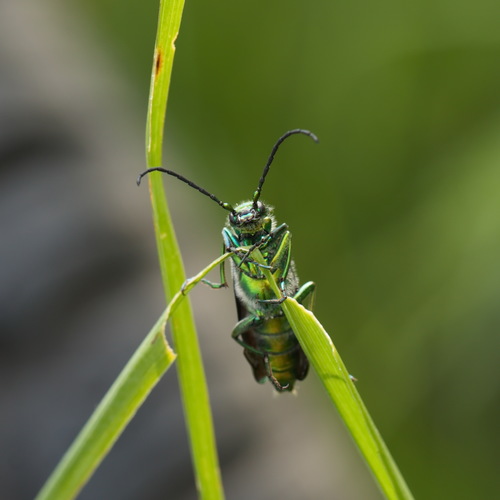
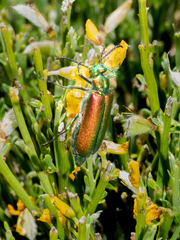
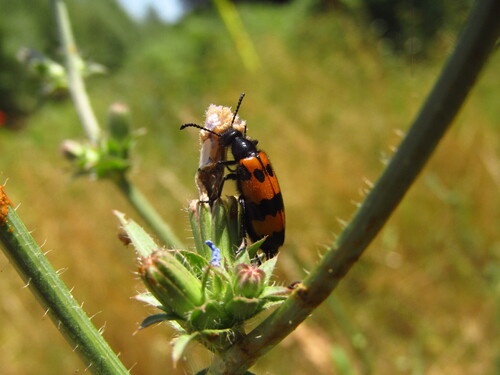
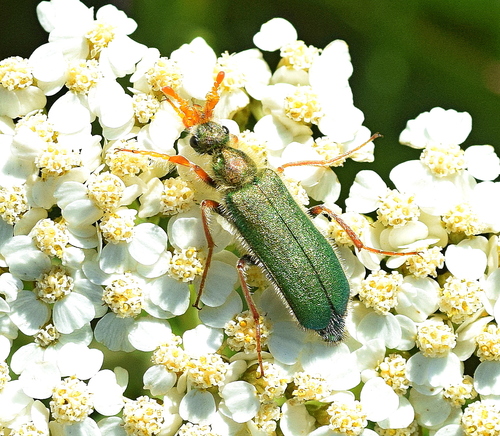
Lytta vesicatoria, also known as the Spanish fly, is an aposematic emerald-green beetle in the blister beetle family (Meloidae). It is distributed across Eurasia. The species and others in its family were used in traditional apothecary preparations as "Cantharides". The insect is the source of the terpenoid cantharidin, a toxic blistering agent once used as an exfoliating agent, anti-rheumatic drug and an aphrodisiac. The substance has also found culinary use in some blends of the North African spice mix ras el hanout. Its various supposed benefits have been responsible for accidental poisonings.

The generic name is from the Greek λύττα (lytta), meaning martial rage, raging madness, Bacchic frenzy, or rabies. The specific name is derived from Latin vesica, bladder. Lytta vesicatoria was formerly named Cantharis vesicatoria, although the genus Cantharis is in an unrelated family, Cantharidae, the soldier beetles. It was classified there erroneously until the Danish zoologist Johan Christian Fabricius corrected its name in his Systema entomologiae in 1775. He reclassified the Spanish fly as the type species of the new genus Lytta, in the family Meloidae.

Before... Wikipedia →

Global Distribution

Parks Where Found

# Park Country Daily sighting probability
1 Sierra de Guadarrama National Park 🇪🇸 Spain
~10%
2 Pyrénées National Park 🇫🇷 France
<5%

Cities Where Found

# City Country Daily sighting probability
1 Kyiv 🇺🇦 Ukraine
~10%
2 Almaty 🇰🇿 Kazakhstan
~10%
3 Novosibirsk 🇷🇺 Russia
<5%
4 Vienna 🇦🇹 Austria
<5%

Before you go

What are the chances of seeing a Spanish Fly in Vienna?

Rare

Under 5% of wildlife watchers report a Spanish Fly sighting in Vienna on a given day, based on 17 verified sightings from GBIF citizen-science data. It is the 643rd most-seen of the 1406 insects we can rate there. Over three days the chance rises to about 10%, and over a week to about 20%, if each day is a fresh chance.

When is the best time to see a Spanish Fly in Vienna?

June

In that month about 10% of wildlife watchers report a Spanish Fly in Vienna on a given day, against under 5% in July to May, the lowest months. That is one of Vienna's wettest months, with about 90 mm of rain against 40 mm in February.

What time of day is best to see a Spanish Fly?

Between 11 am and 2 pm

Across all the parks we cover, that three-hour window holds the most Spanish Fly sightings with a recorded time, and about 8 in 10 of them come between 6 am and 6 pm: it is a daytime animal.

Is Vienna the best place to see a Spanish Fly?

4th of 4

Of the 4 cities where we can rate Spanish Fly sightings, Vienna ranks 4th at under 5%. The best odds are in Kyiv (Ukraine, about 10%), Almaty (Kazakhstan, about 10%) and Novosibirsk (Russia, under 5%).

Which relatives of the Spanish Fly live in Vienna?

Same family: Meloidae

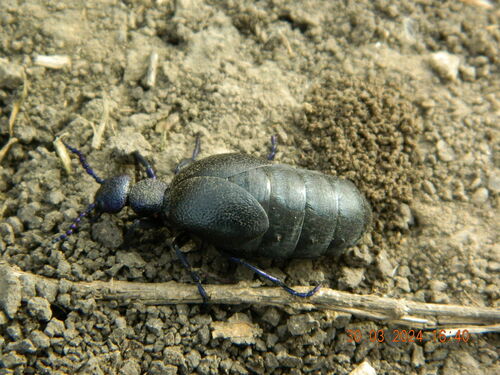
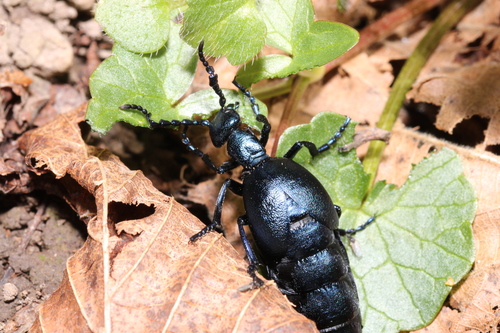
The closest relatives of the Spanish Fly that you can see in Vienna (family Meloidae, Blister Beetles) are Black Oil Beetle (about 10%) and Violet Oil Beetle (about 10%), with each one's daily chance of a sighting.

Where does the Spanish Fly sighting chance come from?

GBIF citizen-science records

It is estimated from how often the Spanish Fly is recorded against all the insects logged in Vienna (17 verified sightings), calibrated against known sighting rates. Figures are rounded to the nearest 10% because citizen-science data supports honest approximations, not decimals, and months with records from fewer than five people show "—". How it works.

← Back to Vienna