



Thatch Tubic

Thatch Tubic

Borkhausenia minutella

Daily sighting probability <5% · Rare
at Vienna

In 3 days ~10% in a week ~30%

36 Verified sightings at Vienna
5 In 1 park From 2019 to 2026
May Best month
🌙 Nocturnal When it's spotted

About the Thatch Tubic

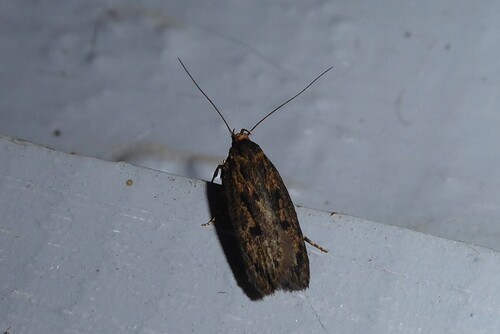
Borkhausenia minutella is a species of moth. Within its superfamily, it is placed within the subfamily Oecophorinae of the "concealer moth" family, Oecophoridae. It is found in Europe, where it is most commonly found in rural landscapes. It is to some extent synanthropic, being regularly found around traditional farms. But apparently, this species is not able to tolerate industrial agriculture well: it has been declining across its range during the 20th century, and it is nowadays rare in the United Kingdom, where it used to be common in past times, having not been seen from about 1966 until found again in Kent in 2017.

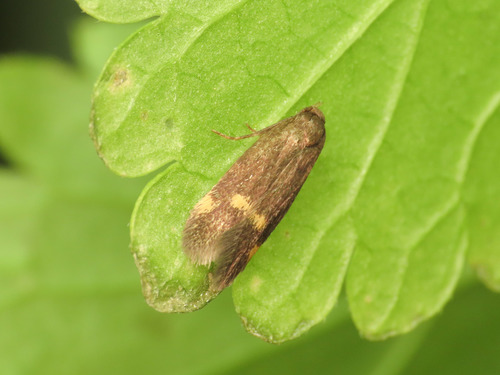
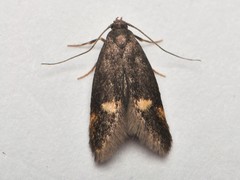
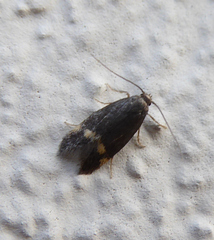
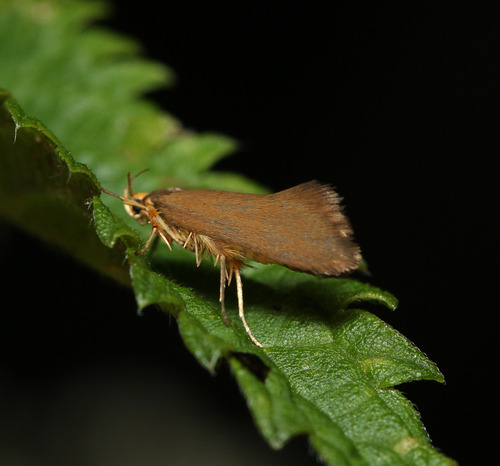
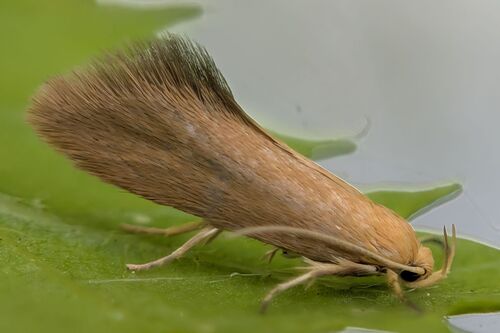
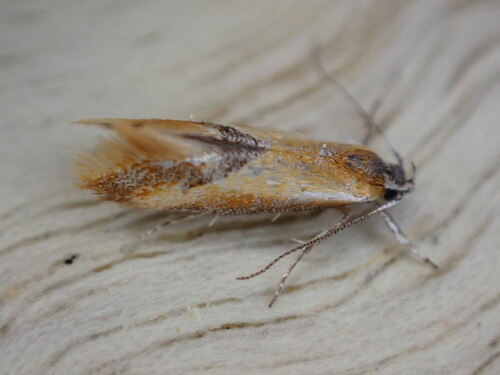
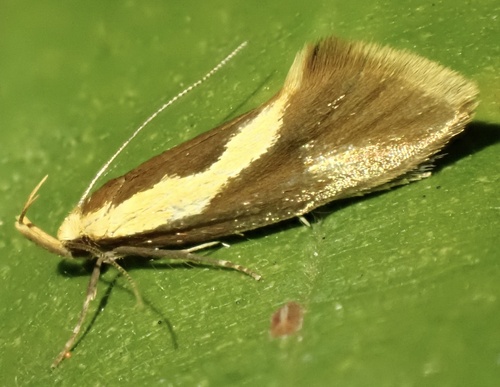
This is a small moth, with a wingspan of 10–14 millimetres (0.39–0.55 in). Its overall coloration is a dark and somewhat metallic slate grey, with two large pale yellow markings on each forewing.Meyrick describes it - Forewings dark fuscous; a transverse ochreous-yellow tornal spot, and a smaller one on costa beyond it. Hindwings grey. Larva whitish; head pale brown; plate of 2 pale 3 yellow- brown.

The adults fly from May to June depending on the location. The caterpillars feed on seeds and other dry plantstuffs such as dried fruit; they have also been recorded in chicken (Gallus gallus) nests. Wikipedia →

Global Distribution

Parks Where Found

# Park Country Daily sighting probability
1 Bavarian Forest National Park 🇩🇪 Germany
<5%

More parks will be added in future updates.

Cities Where Found

# City Country Daily sighting probability
1 Vienna 🇦🇹 Austria
<5%
2 Berlin 🇩🇪 Germany
<5%
3 New York City 🇺🇸 United States
<5%

Before you go

What are the chances of seeing a Thatch Tubic in Vienna?

Rare

Under 5% of wildlife watchers report a Thatch Tubic sighting in Vienna on a given day, based on 36 verified sightings from GBIF citizen-science data. It is the 416th most-seen of the 1406 insects we can rate there. Over three days the chance rises to about 10%, and over a week to about 30%, if each day is a fresh chance.

When is the best time to see a Thatch Tubic in Vienna?

April and May

In those months about 10% of wildlife watchers report a Thatch Tubic in Vienna on a given day, against under 5% in June to March, the lowest months.

What time of day is best to see a Thatch Tubic?

Between 9 pm and midnight

Across all the parks we cover, that three-hour window holds the most Thatch Tubic sightings with a recorded time, and nearly all of them come between 6 pm and 6 am: it is mostly seen at night.

Is Vienna the best place to see a Thatch Tubic?

Yes

Of the 3 cities where we can rate Thatch Tubic sightings, Vienna has the highest daily chance: under 5%. Next come Berlin (Germany, under 5%) and New York City (United States, under 5%).

Where does the Thatch Tubic sighting chance come from?

GBIF citizen-science records

It is estimated from how often the Thatch Tubic is recorded against all the insects logged in Vienna (36 verified sightings), calibrated against known sighting rates. Figures are rounded to the nearest 10% because citizen-science data supports honest approximations, not decimals, and months with records from fewer than five people show "—". How it works.

← Back to Vienna