Mottled Umber

Mottled Umber

Erannis defoliaria

Daily sighting probability ~20% · Possible
at Vienna

In 3 days ~40% in a week ~70%

564 Verified sightings at Vienna
81 In all 6 parks From 2019 to 2026
November Best month
☀️ Diurnal When it's spotted

About the Mottled Umber

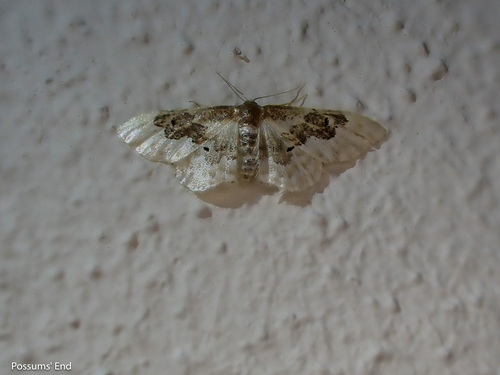
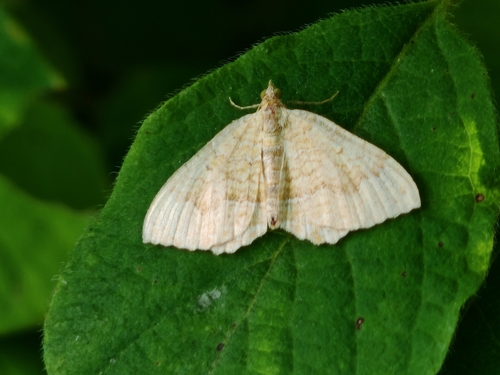
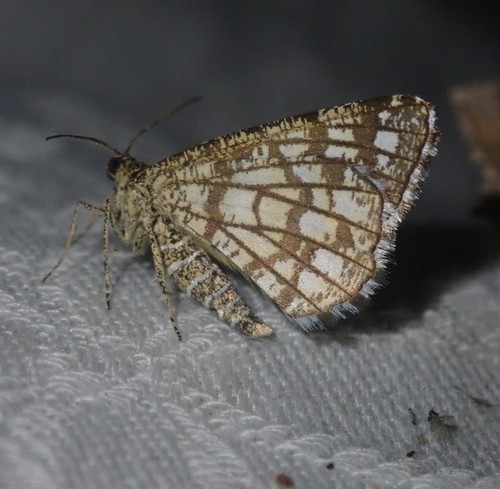
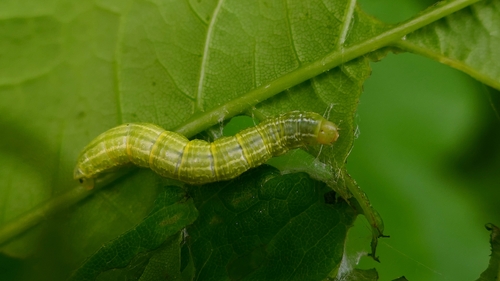
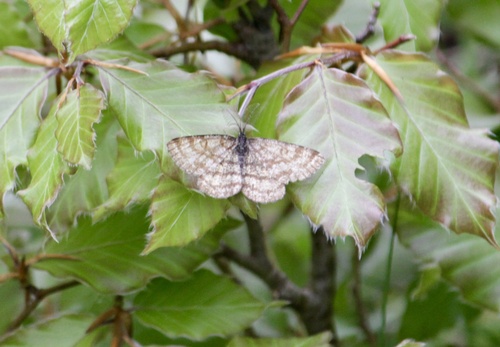
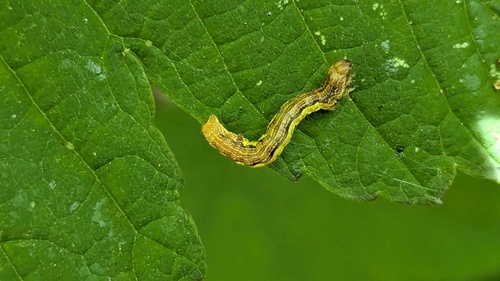
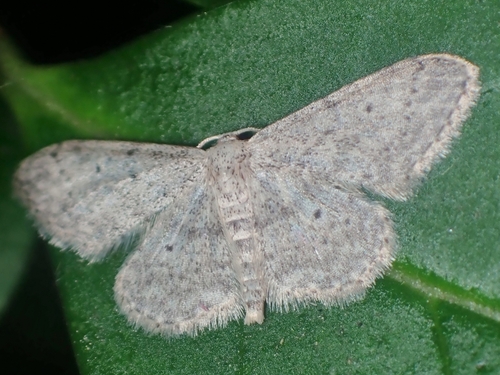
The mottled umber (Erannis defoliaria) is a moth of the family Geometridae. It is common throughout much of the Palearctic region. The species was first described by Carl Alexander Clerck in 1759. Only males of the species have wings, the female is completely wingless. Patterns on wings vary by specimen, the wingspan is 30-40mm. The adults fly from October to December in temperate climates.

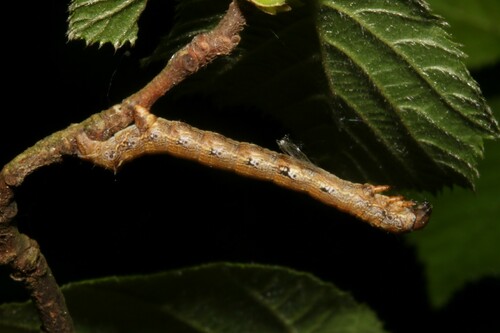
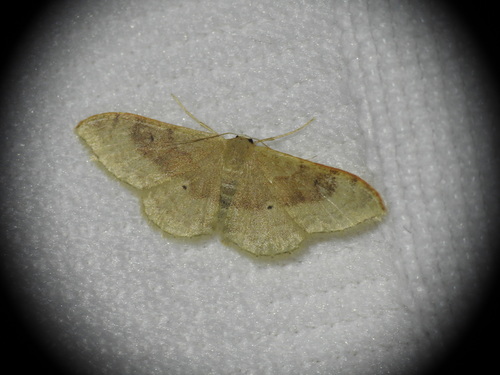
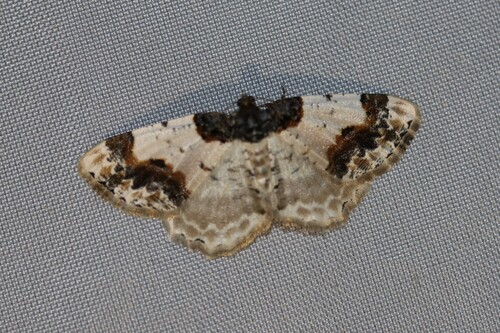
The female of this species is wingless and rather spider-like and can be found on the trunks and stems of its larval food plants. She is white or yellow-and-black patched. The male is fully winged and very variable. The ground colour of the forewing is pale yellow or light yellow ochre and suffused dark grey. The basal and distal fasciae are dark brown. The basal fascia is bordered on the inner side by a brown cloud; the distal fascia has a brown cloud on the outer edge. There is also a brown cloud along the costa. There are two dark brown oblong spots in the upper half of the terminal area. The hindwing is grey white with grey suffusion. There is a grey-black discal spot on both wings. There are numerous and significant deviations from... Wikipedia →

Global Distribution

Parks Where Found

# Park Country Daily sighting probability
1 Bavarian Forest National Park 🇩🇪 Germany
~10%
2 Fertő-Hanság National Park 🇭🇺 Hungary
~10%
3 Snowdonia National Park 🇬🇧 United Kingdom
~10%
4 Cévennes National Park 🇫🇷 France
~10%
5 Wadden Sea National Park 🇩🇪 Germany
~10%
6 Pyrénées National Park 🇫🇷 France
<5%

Cities Where Found

# City Country Daily sighting probability
1 Vienna 🇦🇹 Austria
~20%
2 Kharkiv 🇺🇦 Ukraine
~10%
3 Liverpool 🇬🇧 United Kingdom
~10%
4 Budapest 🇭🇺 Hungary
~10%
5 Paris 🇫🇷 France
~10%
6 Helsinki 🇫🇮 Finland
~10%
7 Prague 🇨🇿 Czechia
~10%
8 Berlin 🇩🇪 Germany
~10%
9 Stockholm 🇸🇪 Sweden
~10%
10 Sofia 🇧🇬 Bulgaria
~10%

Before you go

What are the chances of seeing a Mottled Umber in Vienna?

Possible

About 20% of wildlife watchers report a Mottled Umber sighting in Vienna on a given day, based on 564 verified sightings from GBIF citizen-science data. It is the 22nd most-seen of the 1406 insects we can rate there. Over three days the chance rises to about 40%, and over a week to about 70%, if each day is a fresh chance.

When is the best time to see a Mottled Umber in Vienna?

November

In that month about 60% of wildlife watchers report a Mottled Umber in Vienna on a given day, against under 5% in January–March and June–September, the lowest months.

What time of day is best to see a Mottled Umber?

Between 1 and 4 pm

Across all the parks we cover, that three-hour window holds the most Mottled Umber sightings with a recorded time, and about 9 in 10 of them come between 6 am and 6 pm: it is a daytime animal.

Is Vienna the best place to see a Mottled Umber?

Yes

Of the 25 cities where we can rate Mottled Umber sightings, Vienna has the highest daily chance: about 20%. Next come Kharkiv (Ukraine, about 10%) and Liverpool (United Kingdom, about 10%).

Which relatives of the Mottled Umber live in Vienna?

Same family: Geometridae

The closest relatives of the Mottled Umber that you can see in Vienna (family Geometridae, Geometer Moths) are Small Dusty Wave (about 10%), Willow Beauty (about 10%) and Least Carpet (about 10%), with each one's daily chance of a sighting.

Where does the Mottled Umber sighting chance come from?

GBIF citizen-science records

It is estimated from how often the Mottled Umber is recorded against all the insects logged in Vienna (564 verified sightings), calibrated against known sighting rates. Figures are rounded to the nearest 10% because citizen-science data supports honest approximations, not decimals, and months with records from fewer than five people show "—". How it works.
← Back to Vienna