Early Cellophane Bee

Early Cellophane Bee

Colletes cunicularius

Daily sighting probability ~10% · With luck
at Warsaw

In 3 days ~30% in a week ~60%

82 Verified sightings at Warsaw
24 In all 2 parks From 2019 to 2026
March Best month
☀️ Diurnal When it's spotted

About the Early Cellophane Bee

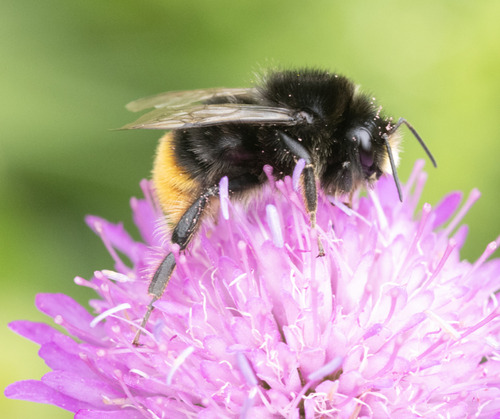
Colletes cunicularius, the vernal colletes or spring mining bee, is a species of solitary bee from the family Colletidae which is widespread in the Palearctic from Britain to the Pacific Ocean which nests in areas of open, sandy soil.

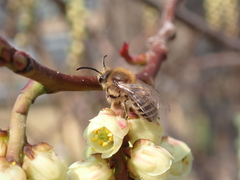
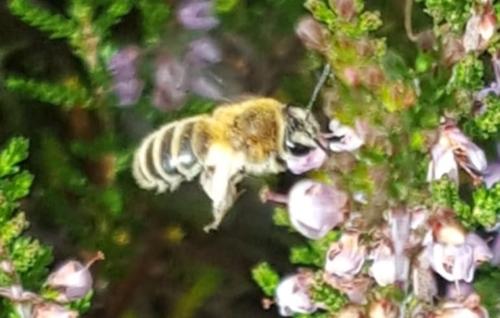
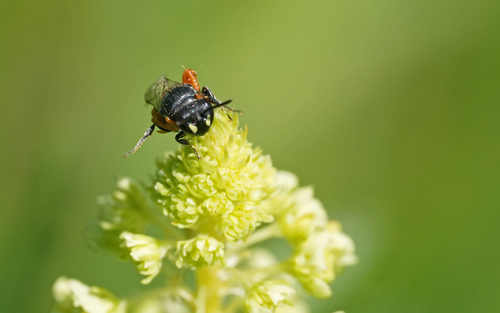
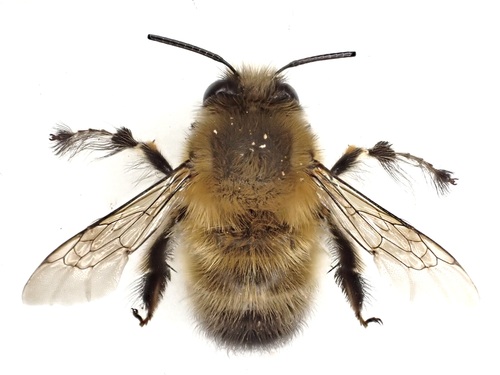
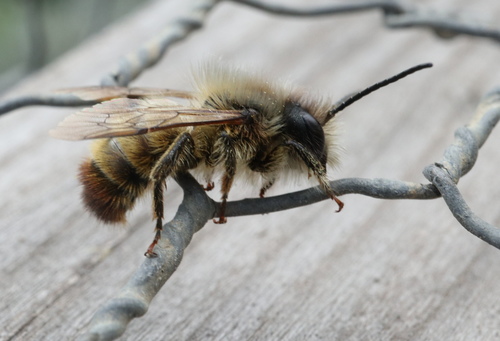
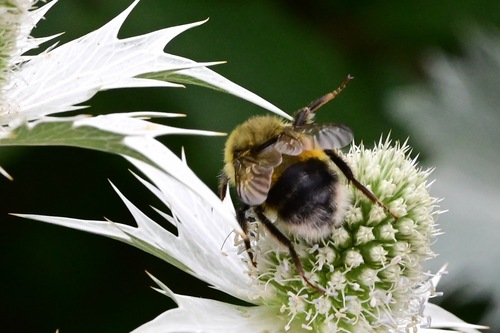
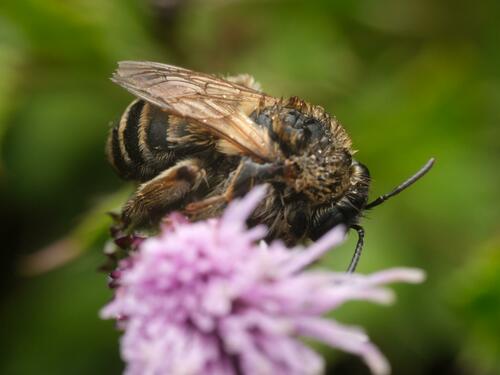
Colletes cinicularius is a large species of Colletes which has an unbanded, hairy, black abdomen which contrasts with the thorax which is covered with brown hair. The most likely confusion species in Britain is Andrena scotica as this also has an early flight period but C. cunicularius is larger than A.scotica with longer antennae and does not have a fovea on the face. The males are smaller and paler than the females.

Colletes cunicularius is widespread in the Palearactic from Great Britain in the west to the Pacific coasts of Siberia and China in the east. In Great Britain it was restricted to the western coastal areas between south Wales and Cumbria but it has been expanding its range inland. As of 2015 it had recently colonised Jersey from the nearby continent and this may also be the source of Colletes cunicularius which have begun to breed in southern England.

Colletes cunicularius is... Wikipedia →

Global Distribution

Parks Where Found

# Park Country Daily sighting probability
1 Bavarian Forest National Park 🇩🇪 Germany
~10%
2 Wadden Sea National Park 🇩🇪 Germany
<5%

Cities Where Found

# City Country Daily sighting probability
1 Warsaw 🇵🇱 Poland
~10%
2 Munich 🇩🇪 Germany
~10%
3 Berlin 🇩🇪 Germany
~10%
4 Cologne 🇩🇪 Germany
~10%
5 Vienna 🇦🇹 Austria
~10%
6 Kyiv 🇺🇦 Ukraine
~10%
7 Liverpool 🇬🇧 United Kingdom
<5%
8 Prague 🇨🇿 Czechia
<5%
9 Paris 🇫🇷 France
<5%
10 Moscow 🇷🇺 Russia
<5%

Before you go

What are the chances of seeing an Early Cellophane Bee in Warsaw?

With luck

About 10% of wildlife watchers report an Early Cellophane Bee sighting in Warsaw on a given day, based on 82 verified sightings from GBIF citizen-science data. It is the 71st most-seen of the 580 insects we can rate there. Over three days the chance rises to about 30%, and over a week to about 60%, if each day is a fresh chance.

When is the best time to see an Early Cellophane Bee in Warsaw?

March

In that month about 40% of wildlife watchers report an Early Cellophane Bee in Warsaw on a given day, against under 5% in June–August and October–February, the lowest months.

What time of day is best to see an Early Cellophane Bee?

Between 1 and 4 pm

Across all the parks we cover, that three-hour window holds the most Early Cellophane Bee sightings with a recorded time, and nearly all of them come between 6 am and 6 pm: it is a daytime animal.

Is Warsaw the best place to see an Early Cellophane Bee?

Yes

Of the 10 cities where we can rate Early Cellophane Bee sightings, Warsaw has the highest daily chance: about 10%. Next come Munich (Germany, about 10%) and Berlin (Germany, about 10%).

Where does the Early Cellophane Bee sighting chance come from?

GBIF citizen-science records

It is estimated from how often the Early Cellophane Bee is recorded against all the insects logged in Warsaw (82 verified sightings), calibrated against known sighting rates. Figures are rounded to the nearest 10% because citizen-science data supports honest approximations, not decimals, and months with records from fewer than five people show "—". How it works.

← Back to Warsaw