About the Magicicada cassini
Magicicada cassini (originally spelled cassinii ), known as the 17-year cicada, Cassin's periodical cicada or the dwarf periodical cicada, is a species of periodical cicada. It is endemic to North America. It has a 17-year life cycle but is otherwise indistinguishable from the 13-year periodical cicada Magicicada tredecassini. The two species are usually discussed together as "cassini periodical cicadas" or "cassini-type periodical cicadas." Unlike other periodical cicadas, cassini-type males may synchronize their courting behavior so that tens of thousands of males sing and fly in unison. The species was first reported to the Academy of Natural Sciences of Philadelphia by Margaretta Morris in 1846. In 1852, the species was formally described by J. C. Fisher and given the specific name cassini in honour of John Cassin, an American ornithologist, whose own report was included by Fisher in his publication.
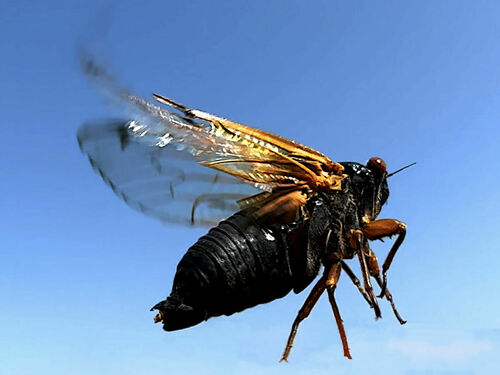
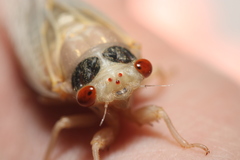
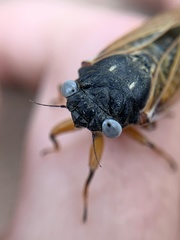
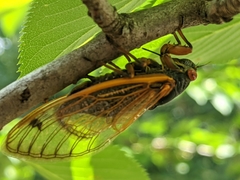
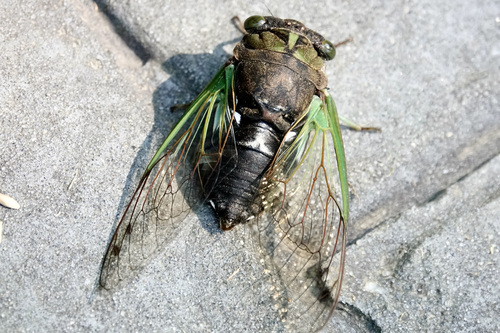
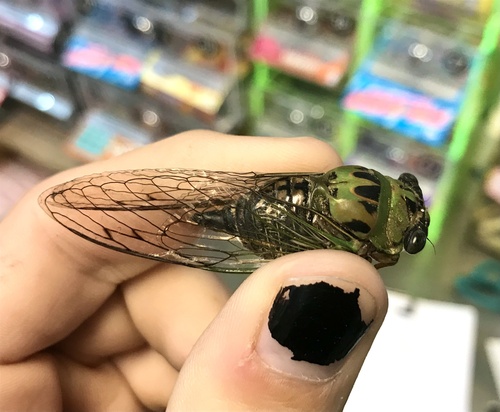
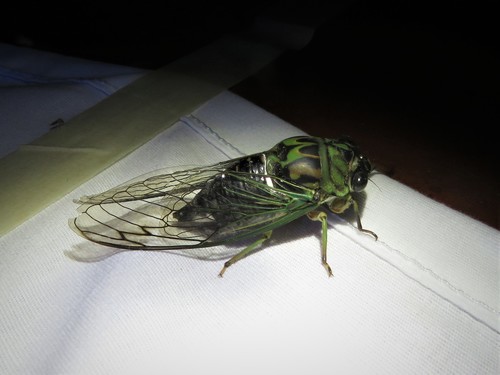
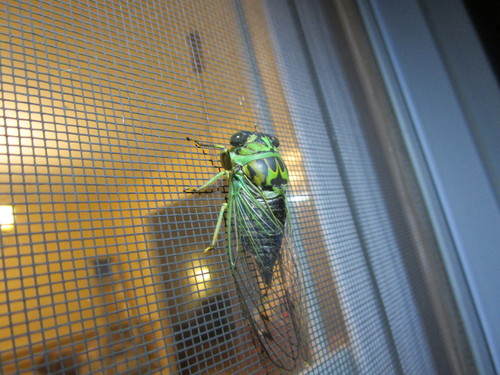
The adult M. cassini is very similar in appearance to other periodical cicadas. It is between 24 and 27 mm (0.94 and 1.06 in) long, measured from the front of the head to the tip of the wings folded over the abdomen. The head is black, the eyes are large and red,... Wikipedia →