


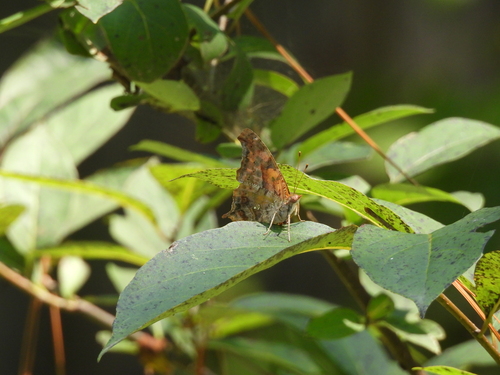
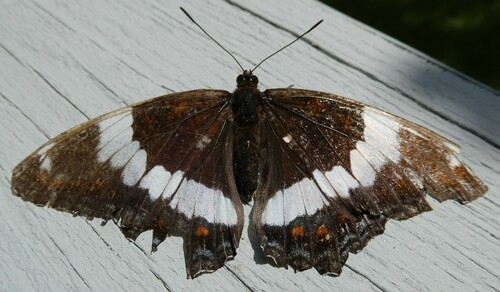
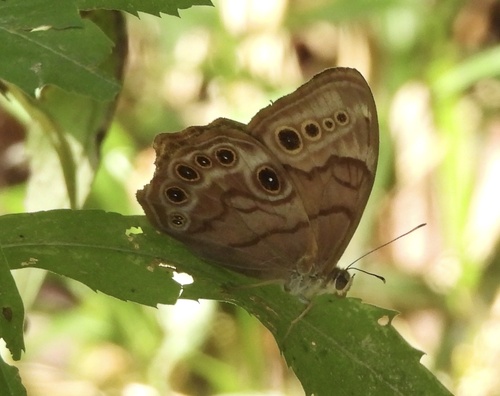
Silvery Checkerspot

Silvery Checkerspot

Chlosyne nycteis

Daily sighting probability ~10% · With luck
at Washington

In 3 days ~20% in a week ~30%

151 Verified sightings at Washington
229 In all 3 parks From 2019 to 2026
July Best month
☀️ Diurnal When it's spotted

About the Silvery Checkerspot

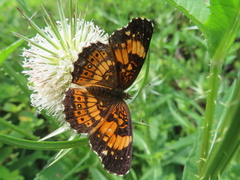
Chlosyne nycteis, the silvery checkerspot, is a species of Nymphalinae butterfly that occurs in North America. In the United States, it is listed as a species of special concern in Connecticut and Maine, and is believed to be extirpated in Connecticut, Massachusetts, and New Hampshire.

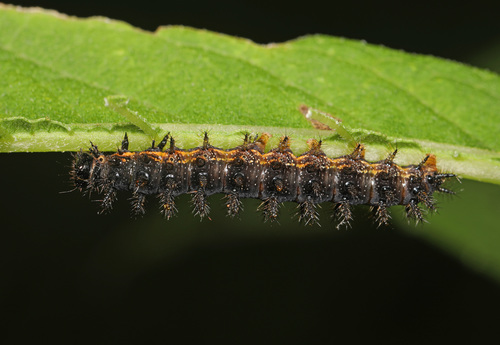
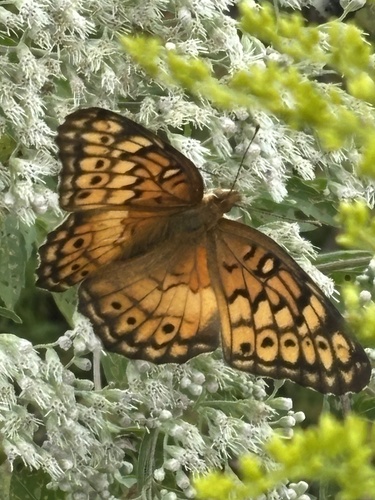
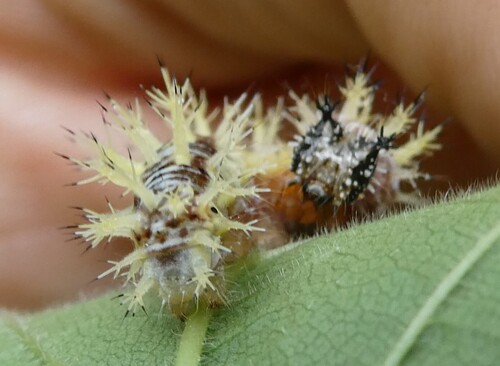
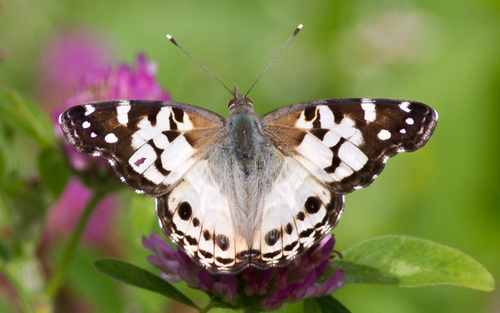
The dorsal view is pale yellow-orange with dark borders and markings. The hindwing has white-centered submarginal spots on both sides, dorsal and ventral. The hindwing is pale and has a white crescent at the margin. The caterpillar is almost all black with dusted white spots. Sometimes, it has a yellow-orange stripe or two smaller stripes along the side. The family Nymphalidae is known for its branched spines.

Their range consists of southern Canada south to Georgia, Florida, and Texas. Silvery checkerspots enjoy moist areas such as streamsides. They can also be seen in meadows and forest openings. In the northern portion of its habitat, one brood hatches between June and July; for the remainder of its range, two broods occur from May to September. Three broods have been reported in the deep southern part of Texas... Wikipedia →

Global Distribution

Parks Where Found

# Park Country Daily sighting probability
1 Great Smoky Mountains National Park 🇺🇸 United States
~20%
2 Shenandoah National Park 🇺🇸 United States
~10%
3 Rocky Mountain National Park 🇺🇸 United States
~10%

Cities Where Found

# City Country Daily sighting probability
1 Austin 🇺🇸 United States
~10%
2 Washington 🇺🇸 United States
~10%
3 Dallas 🇺🇸 United States
<5%
4 Houston 🇺🇸 United States
<5%

Before you go

What are the chances of seeing a Silvery Checkerspot in Washington?

With luck

About 10% of wildlife watchers report a Silvery Checkerspot sighting in Washington on a given day, based on 151 verified sightings from GBIF citizen-science data. It is the 211th most-seen of the 1807 insects we can rate there. Over three days the chance rises to about 20%, and over a week to about 30%, if each day is a fresh chance.

When is the best time to see a Silvery Checkerspot in Washington?

May and July–September

In those months about 10% of wildlife watchers report a Silvery Checkerspot in Washington on a given day, against under 5% in June and October–April, the lowest months.

What time of day is best to see a Silvery Checkerspot?

Between 11 am and 2 pm

Across all the parks we cover, that three-hour window holds the most Silvery Checkerspot sightings with a recorded time, and nearly all of them come between 6 am and 6 pm: it is a daytime animal.

Is Washington the best place to see a Silvery Checkerspot?

Among the best

Of the 4 cities where we can rate Silvery Checkerspot sightings, Washington ranks 2nd at about 10%, level with the leaders once rounded. The best odds are in Austin (United States, about 10%).

Which relatives of the Silvery Checkerspot live in Washington?

Same family: Nymphalidae

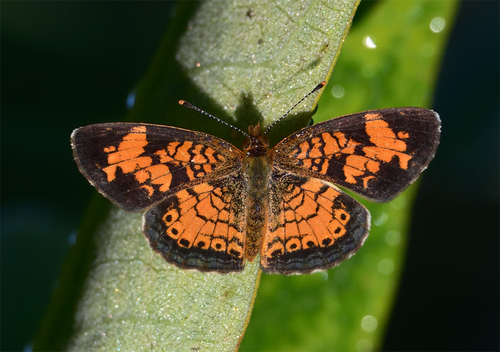
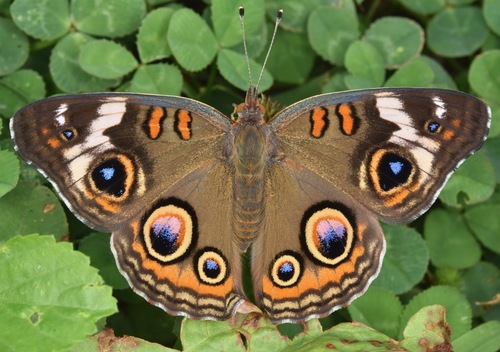
The closest relatives of the Silvery Checkerspot that you can see in Washington (family Nymphalidae, Brush-footed Butterflies) are Monarch (about 30%), Pearl Crescent (about 20%) and Common Buckeye (about 10%), with each one's daily chance of a sighting.

Where does the Silvery Checkerspot sighting chance come from?

GBIF citizen-science records

It is estimated from how often the Silvery Checkerspot is recorded against all the insects logged in Washington (151 verified sightings), calibrated against known sighting rates. Figures are rounded to the nearest 10% because citizen-science data supports honest approximations, not decimals, and months with records from fewer than five people show "—". How it works.

← Back to Washington