Henslow's Sparrow

Henslow's Sparrow

Centronyx henslowii

Silhouette: L. Shyamal · PhyloPic

Daily sighting probability <5% · Rare
at Congaree National Park

In 3 days ~10% in a week ~20%

40 Verified sightings at Congaree National Park From 2019 to 2026
82 In all 3 parks
February Best month
☀️ Diurnal When it's spotted

About the Henslow's Sparrow

Henslow's sparrow (Centronyx henslowii) is a North American passerine bird in the family Passerellidae. It was named by John James Audubon in honor of John Stevens Henslow. It was originally classified in the genus Emberiza and called Henslow's bunting.

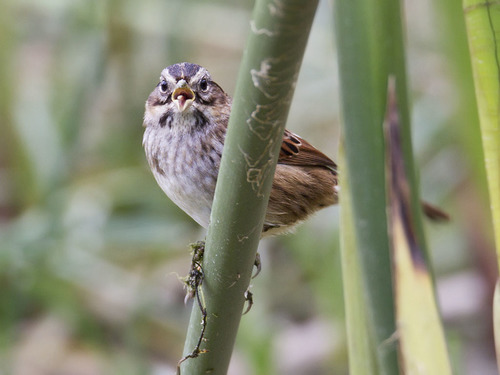
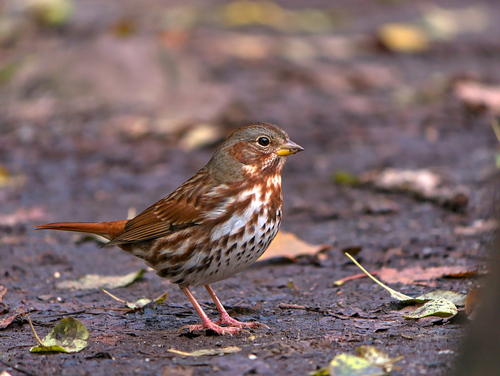
Adults have streaked brown upperparts with a light brown breast with streaks, a white belly and a white throat. They have a pale stripe on the crown with a dark stripe on each side, an olive face and neck, rust-coloured wings and a short dark forked tail.

Measurements: Length: 4.3–5.1 in (11–13 cm) Weight: 0.4–0.5 oz (11–14 g) Wingspan: 6.3–7.9 in (16–20 cm) Henslow's sparrows breed in fields and meadows across interior eastern North America. Their range stretches from New York and Pennsylvania across the midwest to as far west as Kansas, with a disjunct population in North Carolina, though their populations are scattered and low-density. Historically, Henslow's sparrows were much more widespread and bred as far east as New England. They winter in weedy fields in the American south from Texas and Arkansas east to South Carolina, Georgia, and Florida.

The range and numbers of this bird... Wikipedia →

Sounds

Song1:05

United States · 2025

© Sue Riffe · XC1002059 · CC BY-NC-SA 4.0

Call1:12

United States · 2020

© Matt Wistrand · XC571344 · CC BY-NC-SA 4.0

Flight call0:18

United States · 2015

© Nathan Pieplow · XC288578 · CC BY-NC-SA 4.0

Global Distribution

Parks Where Found

# Park Country Daily sighting probability
1 Congaree National Park 🇺🇸 United States
<5%
2 Great Smoky Mountains National Park 🇺🇸 United States
<5%
3 Point Pelee National Park 🇨🇦 Canada
<5%

Cities Where Found

# City Country Daily sighting probability
1 Chicago 🇺🇸 United States
<5%
2 New York City 🇺🇸 United States
<5%

Before you go

What are the chances of seeing a Henslow's Sparrow in Congaree National Park?

Rare

Under 5% of wildlife watchers report a Henslow's Sparrow sighting in Congaree National Park on a given day, based on 40 verified sightings from GBIF citizen-science data from 2019 to 2026. It is the 95th most-seen of the 148 birds we can rate there. Over three days the chance rises to about 10%, and over a week to about 20%, if each day is a fresh chance.

When is the best time to see a Henslow's Sparrow in Congaree National Park?

February

In that month about 20% of wildlife watchers report a Henslow's Sparrow in Congaree National Park on a given day, against under 5% in March to November, the lowest months.

What time of day is best to see a Henslow's Sparrow?

Between 8 and 11 am

Across all the parks we cover, that three-hour window holds the most Henslow's Sparrow sightings with a recorded time, and about 8 in 10 of them come between 6 am and 6 pm: it is a daytime animal.

Is Congaree National Park the best place to see a Henslow's Sparrow?

Yes

Of the 3 parks where we can rate Henslow's Sparrow sightings, Congaree National Park has the highest daily chance: under 5%. Next come Great Smoky Mountains National Park (United States, under 5%) and Point Pelee National Park (Canada, under 5%).

Which relatives of the Henslow's Sparrow live in Congaree National Park?

Same family: Passerellidae

The closest relatives of the Henslow's Sparrow that you can see in Congaree National Park (family Passerellidae, New World Sparrows) are White-throated Sparrow (about 20%), Eastern Towhee (about 20%) and Chipping Sparrow (about 20%), with each one's daily chance of a sighting.

Where does the Henslow's Sparrow sighting chance come from?

GBIF citizen-science records

It is estimated from how often the Henslow's Sparrow is recorded against all the birds logged in Congaree National Park (40 verified sightings from 2019 to 2026), calibrated against known sighting rates. Figures are rounded to the nearest 10% because citizen-science data supports honest approximations, not decimals, and months with records from fewer than five people show "—". How it works.

← Back to Congaree National Park