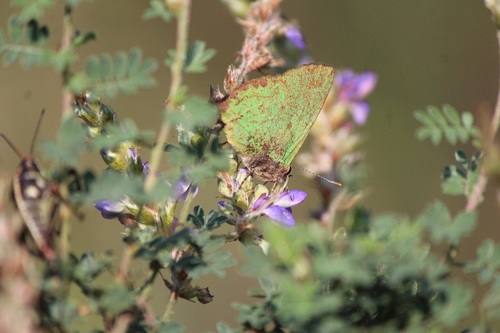
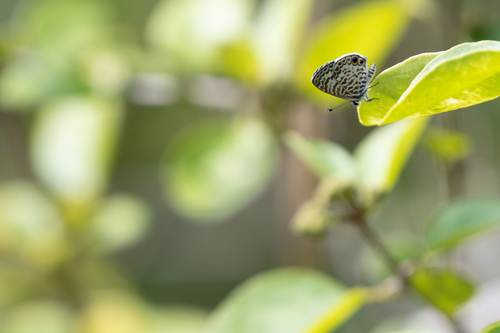
Lantana Scrub-Hairstreak

Lantana Scrub-Hairstreak

Strymon bazochii

Daily sighting probability <5% · Rare
at Cumbres de Monterrey National Park

In 3 days ~10% in a week ~30%

8 Verified sightings at Cumbres de Monterrey National Park From 2019 to 2026
8 In 1 park
September Best month
☀️ Diurnal When it's spotted

About the Lantana Scrub-Hairstreak

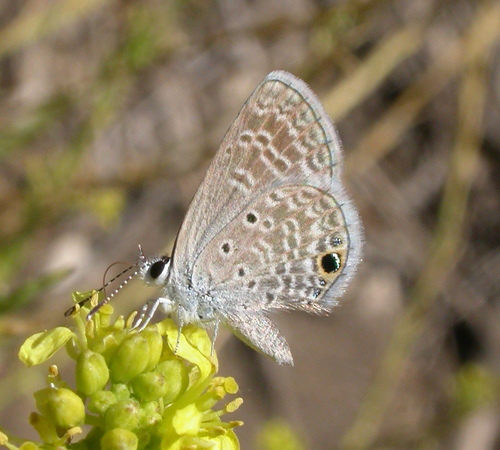
Strymon bazochii, the lantana scrub-hairstreak or smaller lantana butterfly, is a butterfly in the family Lycaenidae. It is found from Paraguay north through Central America, the West Indies and Mexico to southern Texas. It was introduced to Hawaii in 1902 to control Lantana species, in which it has proven unsuccessful.

The wingspan is 22–25 mm. Adults are on wing from May to December. There are two to three generations per year. The larvae feed on Lippia alba and Lippia graveolens in Texas. In Hawaii, they feed on Lantana species and basils. Adults feed on nectar from various flowers, including Bidens alba, Lantana species and Stachytarpheta jamaicensis.

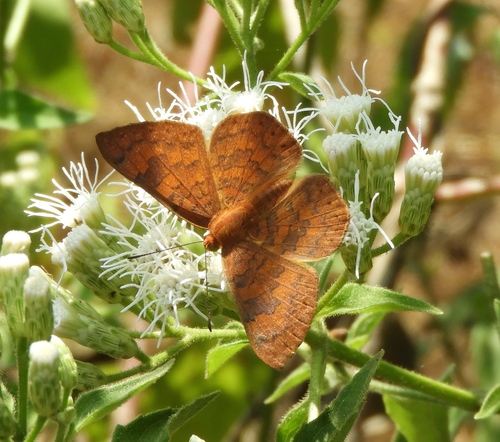
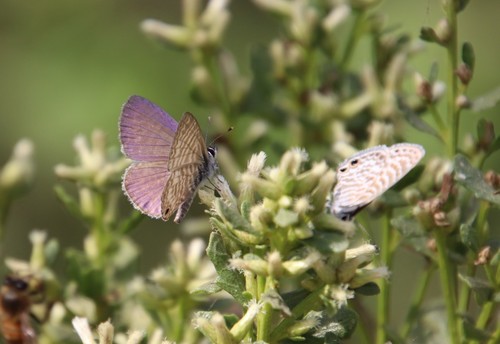
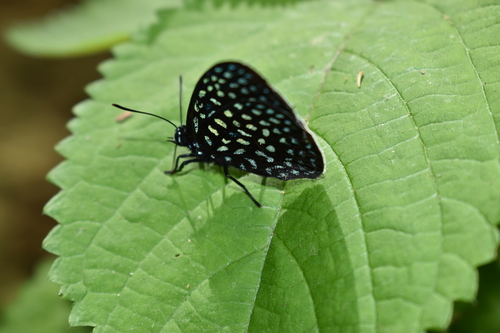
Strymon bazochii generally have metallic, brown wings with speckled, blue hues. Their eyes are grey. There are slight differences between male and female. Male butterflies will display horizontal, white lines on their wings. Females do not exhibit this pattern.

Like other butterflies, lantana scrub-hairstreaks undergo metamorphosis. Eggs are deposited in the plant species of Lantana Urticoides. Within an average of thirty-one days, a caterpillar will have grown and begun... Wikipedia →

Global Distribution

Parks Where Found

# Park Country Daily sighting probability
1 Cumbres de Monterrey National Park 🇲🇽 Mexico
<5%

More parks will be added in future updates.

Cities Where Found

# City Country Daily sighting probability
1 Rosario 🇦🇷 Argentina
~10%
2 Vitória 🇧🇷 Brazil
~10%
3 Curitiba 🇧🇷 Brazil
~10%
4 Buenos Aires 🇦🇷 Argentina
~10%
5 São Paulo 🇧🇷 Brazil
~10%
6 Cordoba 🇦🇷 Argentina
~10%
7 Monterrey 🇲🇽 México
<5%

Before you go

What are the chances of seeing a Lantana Scrub-Hairstreak in Cumbres de Monterrey National Park?

Rare

Under 5% of wildlife watchers report a Lantana Scrub-Hairstreak sighting in Cumbres de Monterrey National Park on a given day, based on 8 verified sightings from GBIF citizen-science data from 2019 to 2026. It is the 279th most-seen of the 431 insects we can rate there. Over three days the chance rises to about 10%, and over a week to about 30%, if each day is a fresh chance.

When is the best time to see a Lantana Scrub-Hairstreak in Cumbres de Monterrey National Park?

September to November

In those months about 10% of wildlife watchers report a Lantana Scrub-Hairstreak in Cumbres de Monterrey National Park on a given day, against under 5% in December to August, the lowest months.

What time of day is best to see a Lantana Scrub-Hairstreak?

Between 10 am and 1 pm

Across all the parks we cover, that three-hour window holds the most Lantana Scrub-Hairstreak sightings with a recorded time, and nearly all of them come between 6 am and 6 pm: it is a daytime animal.

Where else can you see a Lantana Scrub-Hairstreak?

Only Cumbres de Monterrey National Park, in our data

Cumbres de Monterrey National Park is the only park on Wallace's Line with enough records to rate Lantana Scrub-Hairstreak sightings: under 5% of wildlife watchers there report one on a given day.

Where does the Lantana Scrub-Hairstreak sighting chance come from?

GBIF citizen-science records

It is estimated from how often the Lantana Scrub-Hairstreak is recorded against all the insects logged in Cumbres de Monterrey National Park (8 verified sightings from 2019 to 2026), calibrated against known sighting rates. Figures are rounded to the nearest 10% because citizen-science data supports honest approximations, not decimals, and months with records from fewer than five people show "—". How it works.

← Back to Cumbres de Monterrey National Park