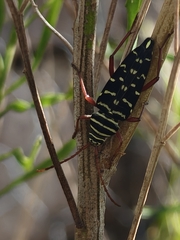
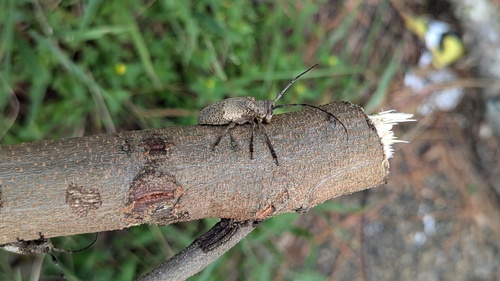
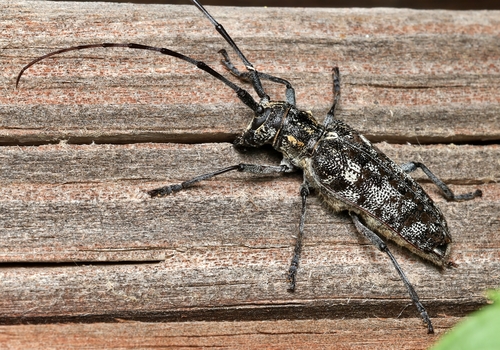
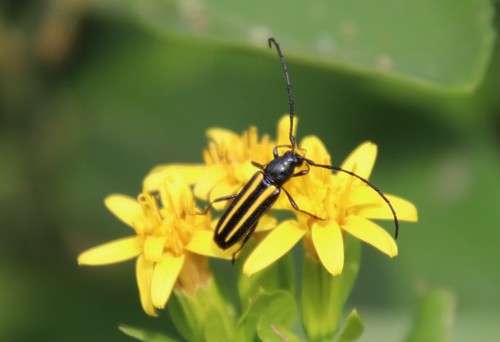
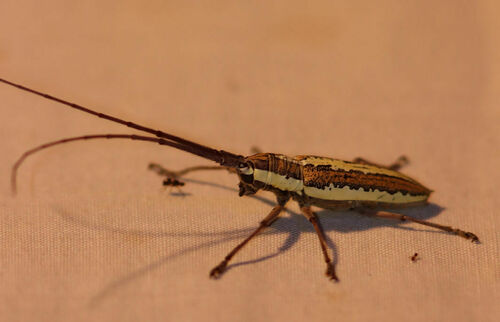
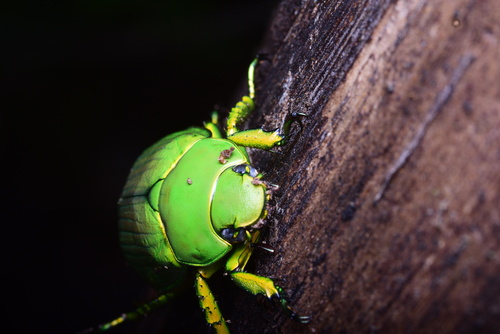
Placosternus erythropus

Placosternus erythropus

Placosternus erythropus

Daily sighting probability <5% · Rare
at Cumbres de Monterrey National Park

In 3 days ~10% in a week ~30%

8 Verified sightings at Cumbres de Monterrey National Park From 2019 to 2026
8 In 1 park
November Best month
☀️ Diurnal When it's spotted

About the Placosternus erythropus

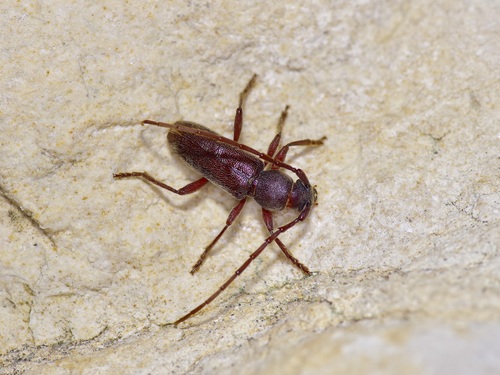
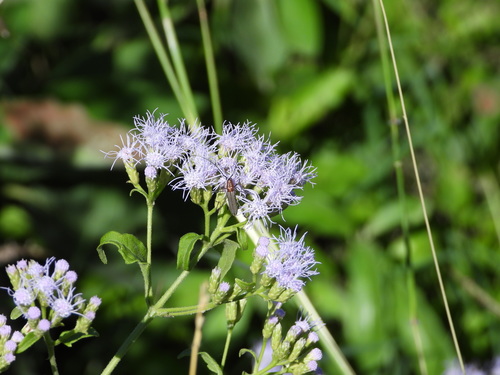
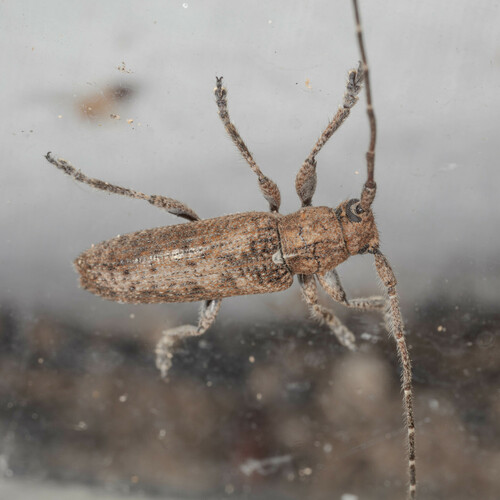
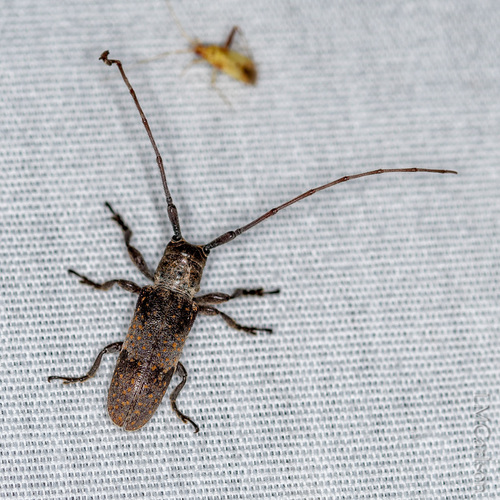
Placosternus erythropus is a species of beetle in the family Cerambycidae. Placosternus erythropus is a moderately slender beetle with exceptionally long antennae. In the US it's called "longhorned beetle," though that name is shared by many species in the family. Its body reaches up to 20mm long (25/32 inch).

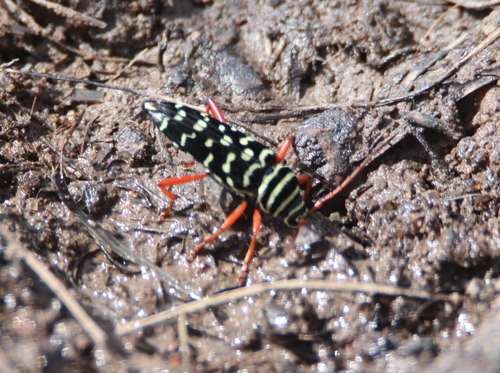
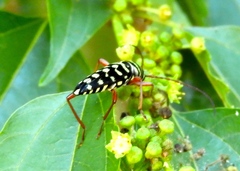
The iNaturalist page showing images of the four species comprising the genus Placosternus shows that the species are quite similar to one another; all are black with white or yellowish stripes and spots, and bear red or reddish appendages.

Making identification even harder, the closely related genus Megacyllene embraces species which in shape, pattern and color are similar, as seen on the iNaturalist page comparing 35 Megacyllene species. The main physical distinction between the two genera is that there's a spine on the "basal antennomere" of Megacyllene species, while that spine is lacking on Placosternus species. An antennomere is any segment in an antenna, so a basal antennomore is the antennomere at the antenna's base.

Placosternus erythropus occurs in western and southern Texas in the US, south through Mexico and Central America into Costa... Wikipedia →
Global Distribution

Parks Where Found

# Park Country Daily sighting probability
1 Cumbres de Monterrey National Park 🇲🇽 Mexico
<5%

More parks will be added in future updates.

Cities Where Found

# City Country Daily sighting probability
1 Mexico City 🇲🇽 México
<5%
2 Monterrey 🇲🇽 México
<5%

Before you go

What are the chances of seeing a Placosternus erythropus in Cumbres de Monterrey National Park?

Rare

Under 5% of wildlife watchers report a Placosternus erythropus sighting in Cumbres de Monterrey National Park on a given day, based on 8 verified sightings from GBIF citizen-science data from 2019 to 2026. It is the 279th most-seen of the 431 insects we can rate there. Over three days the chance rises to about 10%, and over a week to about 30%, if each day is a fresh chance.

When is the best time to see a Placosternus erythropus in Cumbres de Monterrey National Park?

October to December

In those months about 10% of wildlife watchers report a Placosternus erythropus in Cumbres de Monterrey National Park on a given day, against under 5% in January to September, the lowest months. Those are among Cumbres de Monterrey National Park's driest months, with about 55 mm of rain a month against 180 mm in September.

What time of day is best to see a Placosternus erythropus?

Between 1 and 4 pm

Across all the parks we cover, that three-hour window holds the most Placosternus erythropus sightings with a recorded time, and nearly all of them come between 6 am and 6 pm: it is a daytime animal.

Where else can you see a Placosternus erythropus?

Only Cumbres de Monterrey National Park, in our data

Cumbres de Monterrey National Park is the only park on Wallace's Line with enough records to rate Placosternus erythropus sightings: under 5% of wildlife watchers there report one on a given day.

Which relatives of the Placosternus erythropus live in Cumbres de Monterrey National Park?

Same family: Cerambycidae

The closest relatives of the Placosternus erythropus that you can see in Cumbres de Monterrey National Park (family Cerambycidae, Longhorn Beetles) are Coastal Huisache Girdler (about 10%) and Ochraethes pollinosus (about 10%), with each one's daily chance of a sighting.

Where does the Placosternus erythropus sighting chance come from?

GBIF citizen-science records

It is estimated from how often the Placosternus erythropus is recorded against all the insects logged in Cumbres de Monterrey National Park (8 verified sightings from 2019 to 2026), calibrated against known sighting rates. Figures are rounded to the nearest 10% because citizen-science data supports honest approximations, not decimals, and months with records from fewer than five people show "—". How it works.

← Back to Cumbres de Monterrey National Park