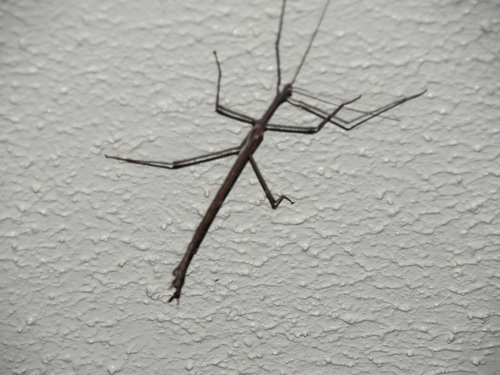
Black Earwig

Black Earwig

Chelisoches morio

Daily sighting probability ~10% · With luck
at Daintree National Park

In 3 days ~20% in a week ~30%

5 Verified sightings at Daintree National Park From 2019 to 2026
5 In 1 park
February Best month
☀️🌙 Day & Night When it's spotted

About the Black Earwig

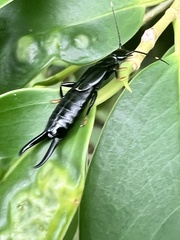
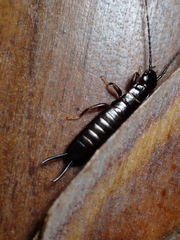
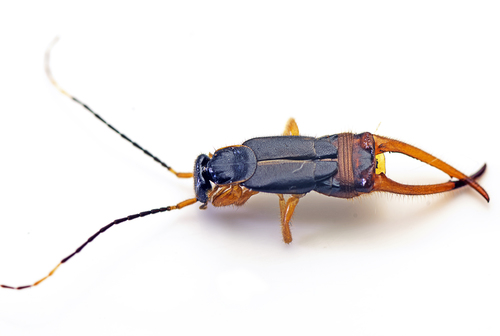
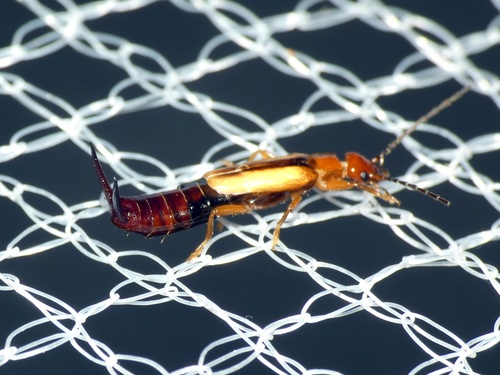
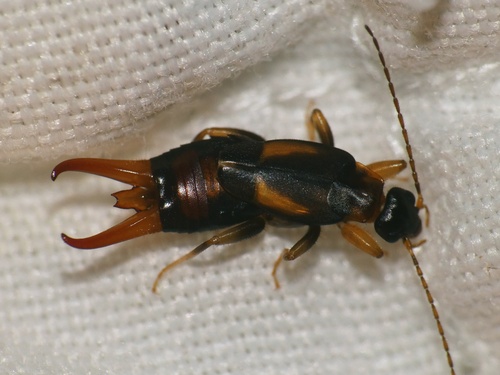
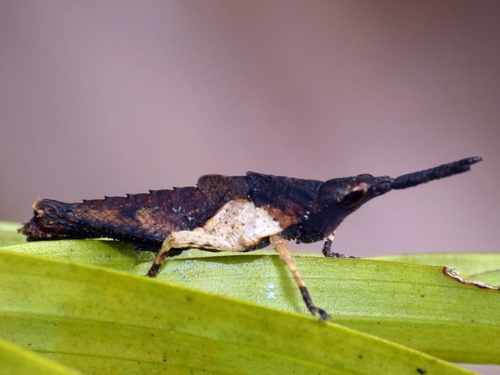
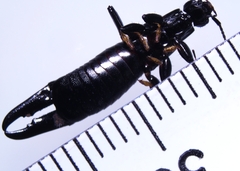
Chelisoches morio, the black earwig, is a species of insect in the family Chelisochidae. It is an omnivore that can be found worldwide, however it is most prominent in tropical areas, Pacific islands, the Pacific Northwest, and damp environments. The adults are jet black and can range in size from 18 to 25mm in size, though some have grown to be 36mm. The males cerci are widely separated and serrated compared to the female. The forceps are used for prey capture, defense, fighting and courtship.

Chelisoches morio are most active at night, though normal behavior also occurs during the day. In addition to consuming prey such as aphids, leaf beetles, hoppers, mites, mealybugs and termites, C. morio also consume fruits such as bananas and dragon fruits.

Chelisoches morio have four instar stages before molting into adults. Females average about 140 eggs within one batch. The incubation period lasts about 5–7 days. Adult males live for about 60 days and adult females live for about 94 days. Once the eggs hatch into the first instar, the nymphs congregate by the mother. The female then takes one day to feed the newly hatched nymphs. Afterwards, the nymphs molt into their... Wikipedia →

Global Distribution

Parks Where Found

# Park Country Daily sighting probability
1 Daintree National Park 🇦🇺 Australia
~10%

More parks will be added in future updates.

Cities Where Found

# City Country Daily sighting probability
1 Singapore 🇸🇬 Singapore
<5%

Before you go

What are the chances of seeing a Black Earwig in Daintree National Park?

With luck

About 10% of wildlife watchers report a Black Earwig sighting in Daintree National Park on a given day, based on 5 verified sightings from GBIF citizen-science data from 2019 to 2026. It is the 745th most-seen of the 856 insects we can rate there. Over three days the chance rises to about 20%, and over a week to about 30%, if each day is a fresh chance.

When is the best time to see a Black Earwig in Daintree National Park?

January–March and June–July

In those months about 10% of wildlife watchers report a Black Earwig in Daintree National Park on a given day, against under 5% in April–May and August–December, the lowest months.

What time of day is best to see a Black Earwig?

Between 1 and 4 pm

Across all the parks we cover, that three-hour window holds the most Black Earwig sightings with a recorded time, and about 6 in 10 of them come between 6 am and 6 pm: it is seen both by day and at night.

Where else can you see a Black Earwig?

Only Daintree National Park, in our data

Daintree National Park is the only park on Wallace's Line with enough records to rate Black Earwig sightings: about 10% of wildlife watchers there report one on a given day.

Where does the Black Earwig sighting chance come from?

GBIF citizen-science records

It is estimated from how often the Black Earwig is recorded against all the insects logged in Daintree National Park (5 verified sightings from 2019 to 2026), calibrated against known sighting rates. Figures are rounded to the nearest 10% because citizen-science data supports honest approximations, not decimals, and months with records from fewer than five people show "—". How it works.

← Back to Daintree National Park