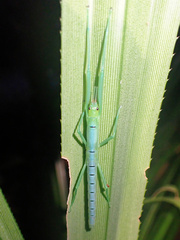
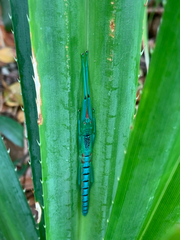
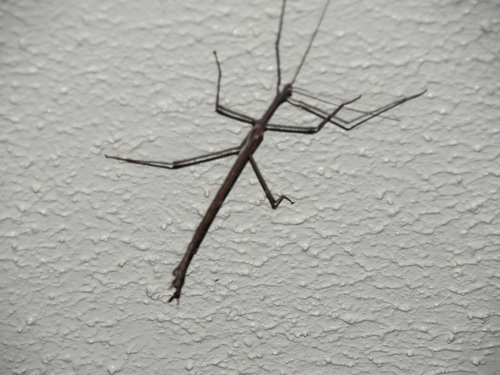
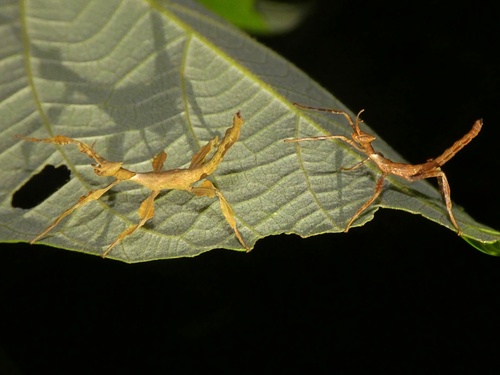
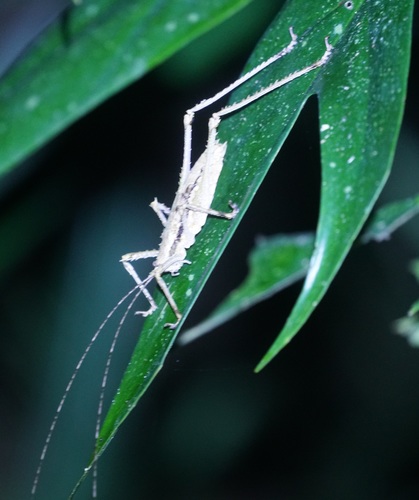
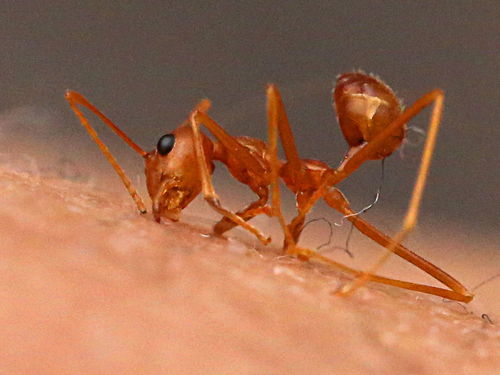
Peppermint Stick Insect

Peppermint Stick Insect

Megacrania batesii

Daily sighting probability ~60% · Likely
at Daintree National Park

In 3 days ~90% in a week >90%

455 Verified sightings at Daintree National Park From 2019 to 2026
455 In 1 park
November Best month
☀️🌙 Day & Night When it's spotted

About the Peppermint Stick Insect

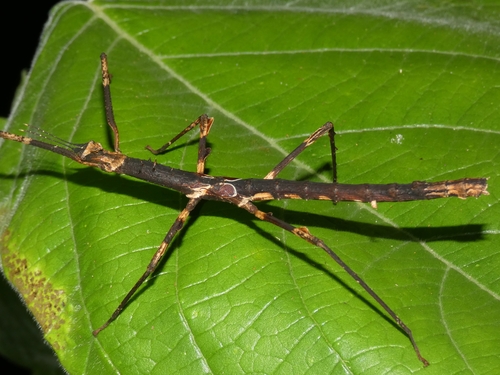
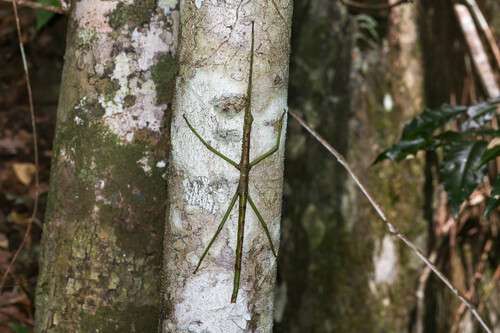
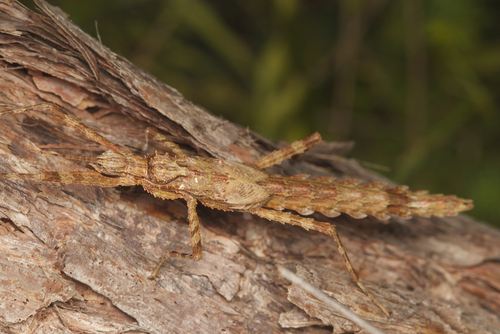
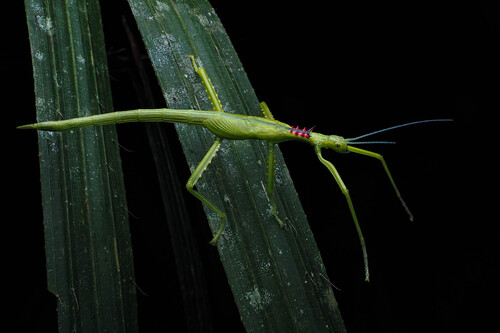
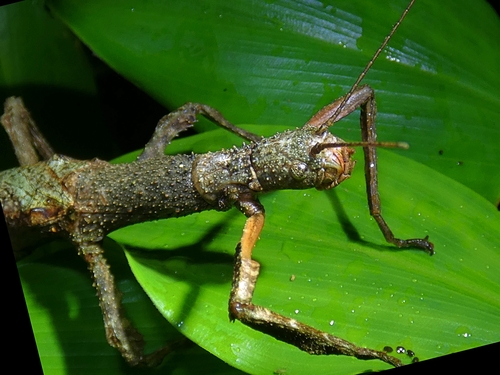
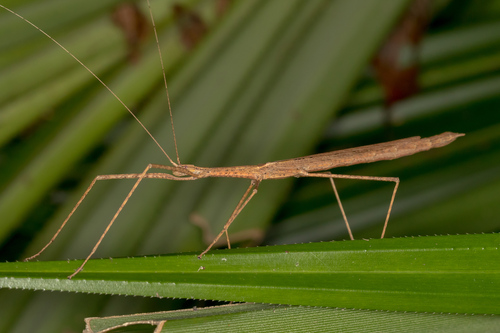
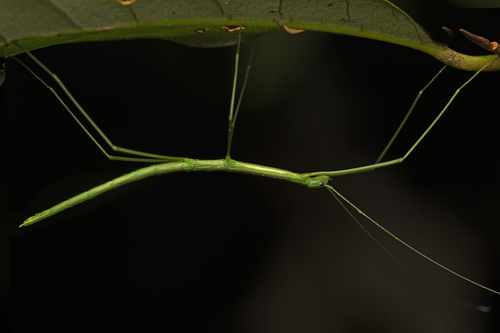
Megacrania batesii, commonly known as the peppermint stick insect, is an unusual species of stick insect found in northeastern Australia, the Bismarck Archipelago, the Solomon Islands, New Guinea, and possibly as far north as the Philippines. It is notable for its aposematic coloration, as well as its robust chemical defense mechanism. Its common name refers to the irritating fluid — with an odor resembling peppermint — that it sprays as a defensive action from a pair of glands located at its prothorax when threatened, as well as the cylindrical, twig-like shape of its body. A member of the subfamily Megacraniinae, it was first described by English naturalist and explorer Henry Walter Bates in 1865.

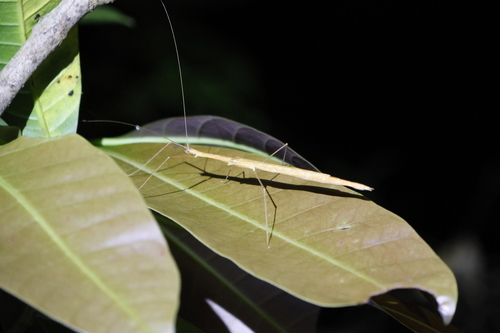
Within their distribution, the habitat of these large insects occurs in complex mesophyll vine forests (lowland tropical and subtropical rainforests), at the transition area between the forest and the beach. They can be found in small numbers in such places, resting on the upper surfaces of the leaves of various species in the Pandanaceae family. Some of the isolated subpopulations of this species in northern Queensland are at risk for local extinction as a result of natural or anthropogenic hazards.

This species appears to reproduce primarily by parthenogenesis, although sexual reproduction has also been observed. Predators of this insect include spiders, centipedes, green tree ants, mantises, katydids, and some birds. At least one species of parasitoid wasp has been observed to lay their eggs in the eggs of M. batesii. Wikipedia →
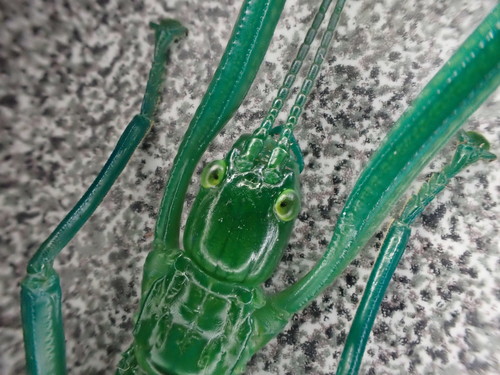
Global Distribution

Parks Where Found

# Park Country Daily sighting probability
1 Daintree National Park 🇦🇺 Australia
~60%

More parks will be added in future updates.

Before you go

What are the chances of seeing a Peppermint Stick Insect in Daintree National Park?

Likely

About 60% of wildlife watchers report a Peppermint Stick Insect sighting in Daintree National Park on a given day, based on 455 verified sightings from GBIF citizen-science data from 2019 to 2026. It is the most-seen of the 856 insects we can rate there. Over three days the chance rises to about 90%, and over a week to over 90%, if each day is a fresh chance.

When is the best time to see a Peppermint Stick Insect in Daintree National Park?

January–February, September and November

In those months about 70% of wildlife watchers report a Peppermint Stick Insect in Daintree National Park on a given day, against about 40% in March, the lowest month.

What time of day is best to see a Peppermint Stick Insect?

Between 2 and 5 pm

Across all the parks we cover, that three-hour window holds the most Peppermint Stick Insect sightings with a recorded time, and about 7 in 10 of them come between 6 am and 6 pm: it is seen both by day and at night.

Where else can you see a Peppermint Stick Insect?

Only Daintree National Park, in our data

Daintree National Park is the only park on Wallace's Line with enough records to rate Peppermint Stick Insect sightings: about 60% of wildlife watchers there report one on a given day.

Which relatives of the Peppermint Stick Insect live in Daintree National Park?

Same family: Phasmatidae

The closest relatives of the Peppermint Stick Insect that you can see in Daintree National Park (family Phasmatidae) are Strong Stick Insect (about 40%), Spiny Leaf Insect (about 30%) and Crowned Stick Insect (about 30%), with each one's daily chance of a sighting.

Where does the Peppermint Stick Insect sighting chance come from?

GBIF citizen-science records

It is estimated from how often the Peppermint Stick Insect is recorded against all the insects logged in Daintree National Park (455 verified sightings from 2019 to 2026), calibrated against known sighting rates. Figures are rounded to the nearest 10% because citizen-science data supports honest approximations, not decimals, and months with records from fewer than five people show "—". How it works.

← Back to Daintree National Park