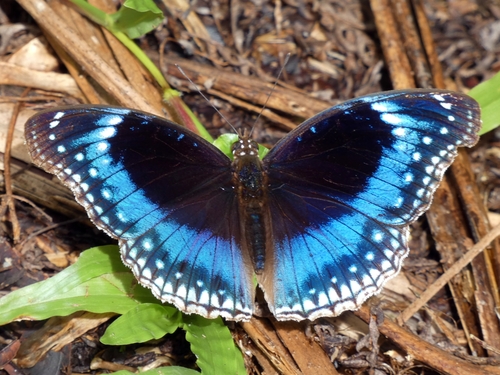
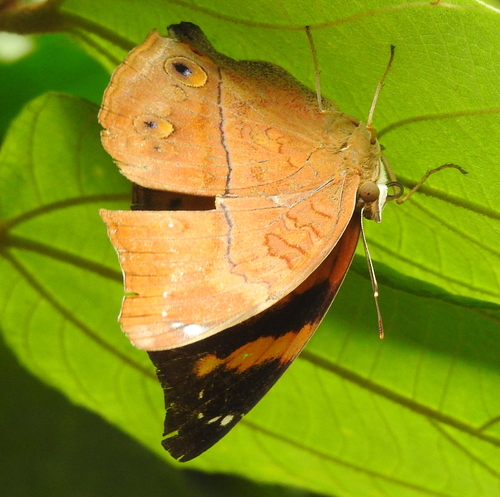
Blue Wanderer
Daily sighting probability ~10% · With luck
at Daintree National Park

In 3 days ~30% in a week ~60%

25 Verified sightings at Daintree National Park From 2019 to 2026
51 In all 4 parks
July Best month
☀️ Diurnal When it's spotted

About the Blue Wanderer

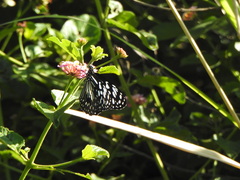
Tirumala hamata, the dark tiger, is a butterfly of the family Nymphalidae. It is distributed from the Philippines to Australia and Pacific oceanic islands such as Samoa. In Australia, the butterflies perform mass migrations to the south in some years. In April 1995, the butterfly made a rare migratory journey to New Zealand, coinciding with the appearance of Hypolimnas bolina on the islands.

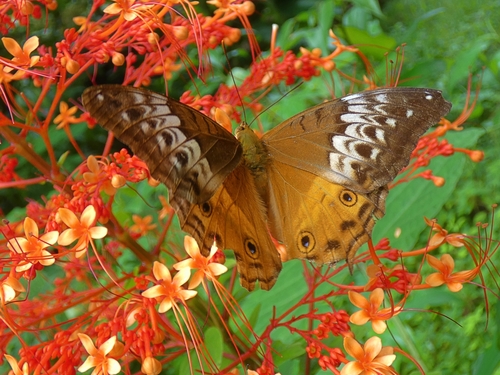
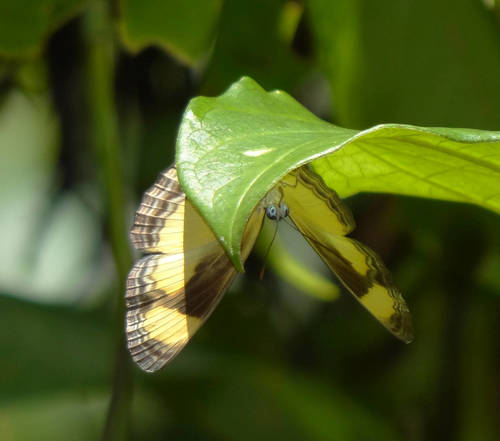
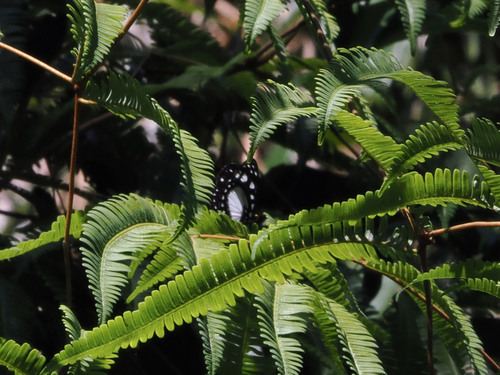
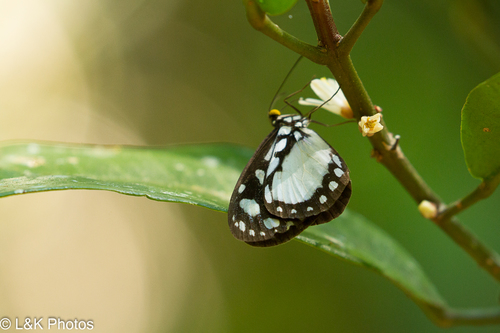
The wingspan is about 70 mm. Adults have black wings with blue spots. They are grey with black bands between segments and orange lateral lines and a black head with white markings. Adults have been observed scratching the leaves of Heliotropium amplexicaule and Parsonsia straminea, possibly to suck out moisture, or to obtain pyrrolizidine alkaloids for pheromone production and/or chemical defense.

The larvae feed on a wide range of plants including Parsonsia (including Parsonsia straminea and Parsonsia velutina), Heterostemma papuana, Heterostemma acuminatum, Hoya australis, Leichhardtia, Marsdenia (including Marsdenia velutina), Secanome carnosum, Secamone elliptica, Vincetoxicum (syn. Tylophora), Cryptostegia grandiflora, Cynanchum carnosum, and Cynanchum leptolepis. Wikipedia →

Global Distribution

Parks Where Found

# Park Country Daily sighting probability
1 Daintree National Park 🇦🇺 Australia
~10%
2 Noosa National Park 🇦🇺 Australia
~10%
3 Springbrook National Park 🇦🇺 Australia
~10%
4 Lamington National Park 🇦🇺 Australia
~10%

Cities Where Found

# City Country Daily sighting probability
1 Brisbane 🇦🇺 Australia
~10%
2 Sydney 🇦🇺 Australia
<5%

Before you go

What are the chances of seeing a Blue Wanderer in Daintree National Park?

With luck

About 10% of wildlife watchers report a Blue Wanderer sighting in Daintree National Park on a given day, based on 25 verified sightings from GBIF citizen-science data from 2019 to 2026. It is the 151st most-seen of the 856 insects we can rate there. Over three days the chance rises to about 30%, and over a week to about 60%, if each day is a fresh chance.

When is the best time to see a Blue Wanderer in Daintree National Park?

July

In that month about 30% of wildlife watchers report a Blue Wanderer in Daintree National Park on a given day, against under 5% in September to March, the lowest months. That is one of Daintree National Park's driest months, with about 60 mm of rain against 380 mm in January.

What time of day is best to see a Blue Wanderer?

Between 9 am and noon

Across all the parks we cover, that three-hour window holds the most Blue Wanderer sightings with a recorded time, and about 9 in 10 of them come between 6 am and 6 pm: it is a daytime animal.

Is Daintree National Park the best place to see a Blue Wanderer?

Yes

Of the 4 parks where we can rate Blue Wanderer sightings, Daintree National Park has the highest daily chance: about 10%. Next come Noosa National Park (Australia, about 10%) and Springbrook National Park (Australia, about 10%).

Which relatives of the Blue Wanderer live in Daintree National Park?

Same family: Nymphalidae

The closest relatives of the Blue Wanderer that you can see in Daintree National Park (family Nymphalidae, Brush-footed Butterflies) are Orange Bushbrown (about 40%), Great Eggfly (about 40%) and Eastern Cruiser (about 30%), with each one's daily chance of a sighting.

Where does the Blue Wanderer sighting chance come from?

GBIF citizen-science records

It is estimated from how often the Blue Wanderer is recorded against all the insects logged in Daintree National Park (25 verified sightings from 2019 to 2026), calibrated against known sighting rates. Figures are rounded to the nearest 10% because citizen-science data supports honest approximations, not decimals, and months with records from fewer than five people show "—". How it works.

← Back to Daintree National Park