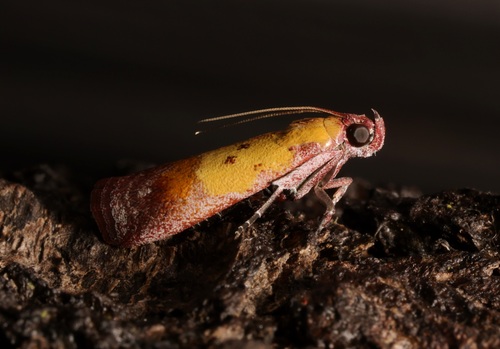
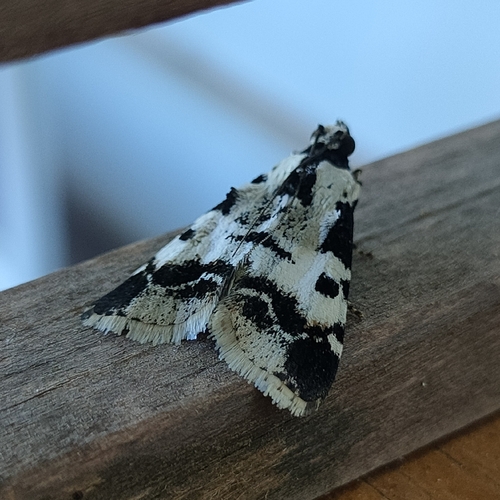
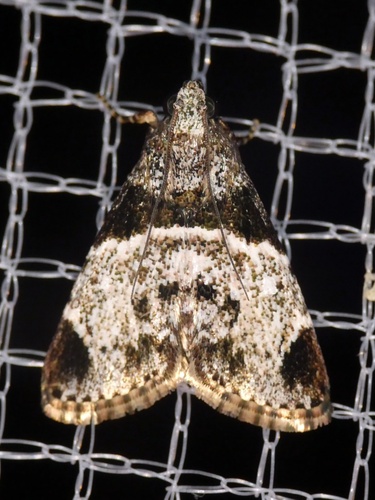
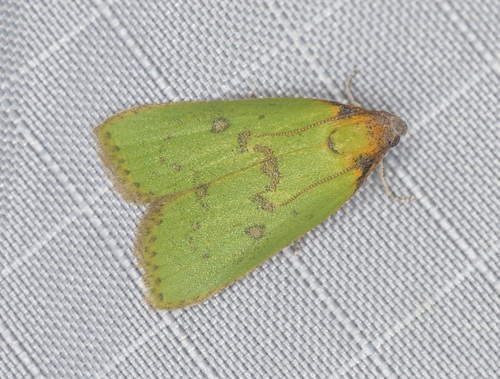
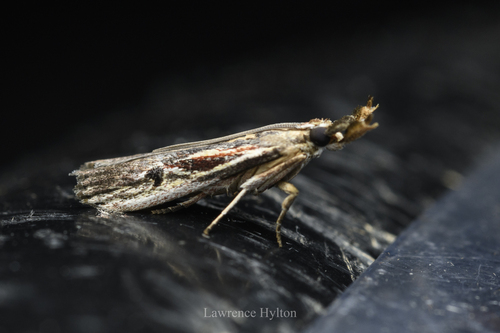
Coconut Spike Moth

Coconut Spike Moth

Tirathaba rufivena

Daily sighting probability ~10% · With luck
at Daintree National Park

In 3 days ~30% in a week ~60%

17 Verified sightings at Daintree National Park From 2019 to 2026
24 In all 2 parks
April Best month
🌙 Nocturnal When it's spotted

About the Coconut Spike Moth

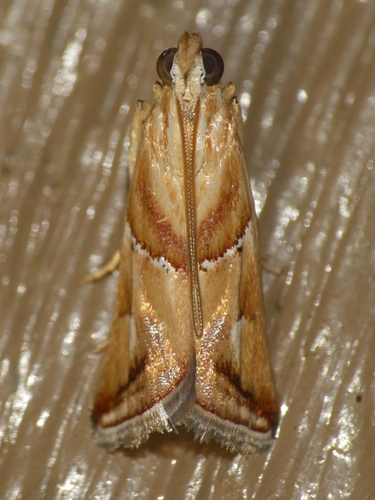
Tirathaba rufivena, the coconut spike moth, greater coconut spike moth or oil palm bunch moth, is a moth of the family Pyralidae. It is found from south-east Asia to the Pacific islands, including Malaysia, the Cook Islands, the Philippines and the tropical region of Queensland, Australia. They are considered as a minor pest.

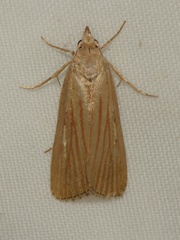
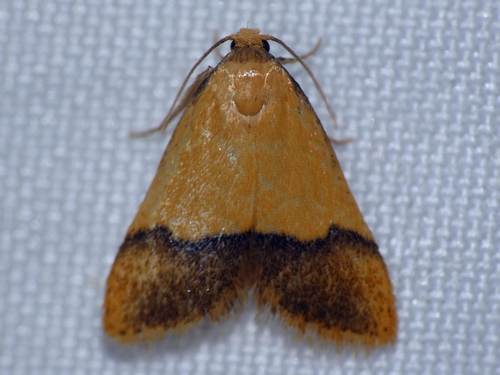
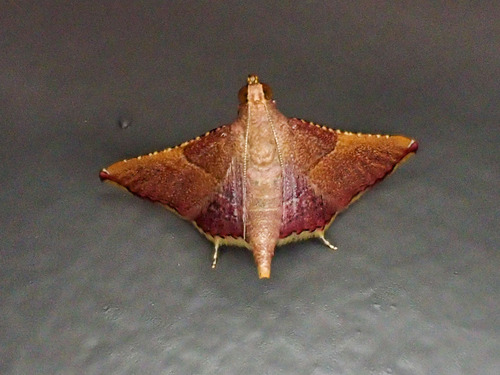
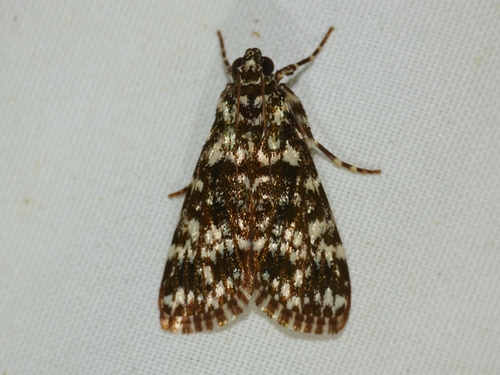
Its wingspan is about 26–30 millimetres (1–1+1⁄4 in). More or less developed annuli at middle and end of the cell connected by a white streak, sometimes with a spot in base of cell also joined by the white streak. The inner margin, vein 1, the interno-median interspace and veins beyond lower angle of cell streaked with crimson. A dark marginal line. The hindwings are plain pale yellow or orange yellow.

The larvae are an agricultural pest that feeds on Cocos nucifera, Nypa fruticans, Elaeis guineensis, Musa species, and Phaseolus species. Usually the caterpillar attacks male flowers where infestation causes abortion of young and results in underdeveloped fruits. A severe attack can wilt the plant and delay plant development. They are not borers, and only show external feeding.

Biological control is the most... Wikipedia →
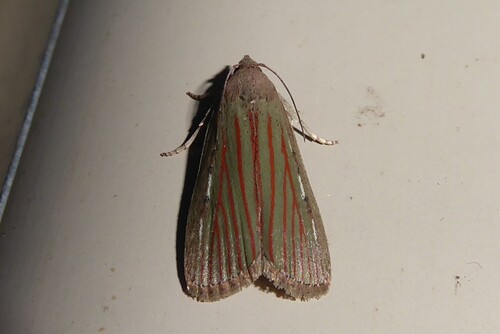
Global Distribution

Parks Where Found

# Park Country Daily sighting probability
1 Daintree National Park 🇦🇺 Australia
~10%
2 Springbrook National Park 🇦🇺 Australia
~10%

Cities Where Found

# City Country Daily sighting probability
1 Brisbane 🇦🇺 Australia
<5%

Before you go

What are the chances of seeing a Coconut Spike Moth in Daintree National Park?

With luck

About 10% of wildlife watchers report a Coconut Spike Moth sighting in Daintree National Park on a given day, based on 17 verified sightings from GBIF citizen-science data from 2019 to 2026. It is the 208th most-seen of the 856 insects we can rate there. Over three days the chance rises to about 30%, and over a week to about 60%, if each day is a fresh chance.

When is the best time to see a Coconut Spike Moth in Daintree National Park?

January and March–April

In those months about 20% of wildlife watchers report a Coconut Spike Moth in Daintree National Park on a given day, against under 5% in May, the lowest month. Those are among Daintree National Park's wettest months, with about 290 mm of rain a month against 50 mm in September.

What time of day is best to see a Coconut Spike Moth?

Between 7 and 10 pm

Across all the parks we cover, that three-hour window holds the most Coconut Spike Moth sightings with a recorded time, and about 9 in 10 of them come between 6 pm and 6 am: it is mostly seen at night.

Is Daintree National Park the best place to see a Coconut Spike Moth?

Yes

Of the 2 parks where we can rate Coconut Spike Moth sightings, Daintree National Park has the highest daily chance: about 10%. Next come Springbrook National Park (Australia, about 10%).

Where does the Coconut Spike Moth sighting chance come from?

GBIF citizen-science records

It is estimated from how often the Coconut Spike Moth is recorded against all the insects logged in Daintree National Park (17 verified sightings from 2019 to 2026), calibrated against known sighting rates. Figures are rounded to the nearest 10% because citizen-science data supports honest approximations, not decimals, and months with records from fewer than five people show "—". How it works.

← Back to Daintree National Park