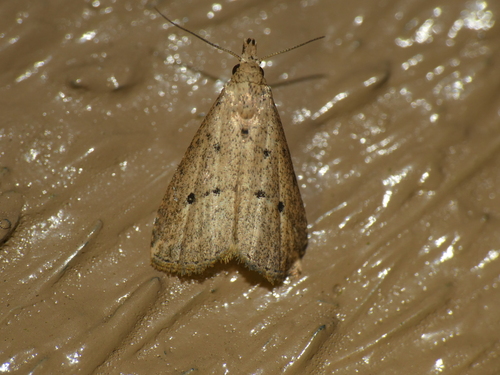
Delgamma pangonia
Daily sighting probability ~10% · With luck
at Daintree National Park

In 3 days ~20% in a week ~40%

8 Verified sightings at Daintree National Park From 2019 to 2026
8 In 1 park
April Best month
🌙 Nocturnal When it's spotted

About the Delgamma pangonia

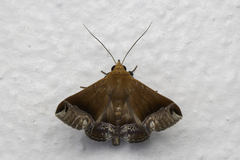
Delgamma is a monotypic moth genus of the family Noctuidae erected by Frederic Moore in 1885. Its only species, Delgamma pangonia, the strawberry cutworm, was first described by Achille Guenée in 1852. It is found in tropical countries such as India, Sri Lanka, Bangladesh, the Philippines, Thailand, São Tomé, parts of Africa, and Australia.

Palpi upturned, where the second joint reaches the vertex of the head, and smoothly scaled, with and moderate-length third joint. A short frontal tuft is present. Antennae fasciculate in males. The thorax and abdomen are smoothly scaled. Tibia spineless and moderately hairy. Hind tarsi with the first joint fringed above. Forewings with somewhat acute apex. Hindwings of males with the cell short and a large oval depression beyond it, veins 6 and 7 being bent and approaching vein 8. Veins 4 and 5 are depressed and running along vein 3 to near the margin.

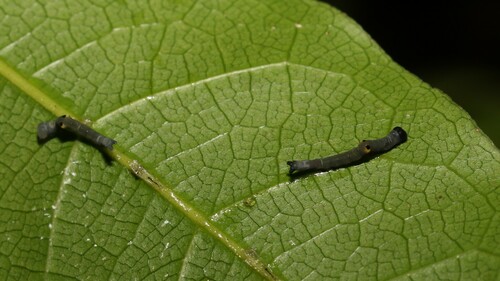
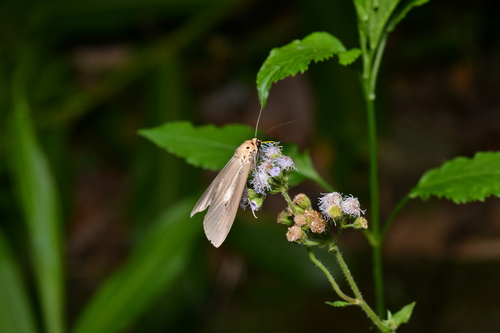
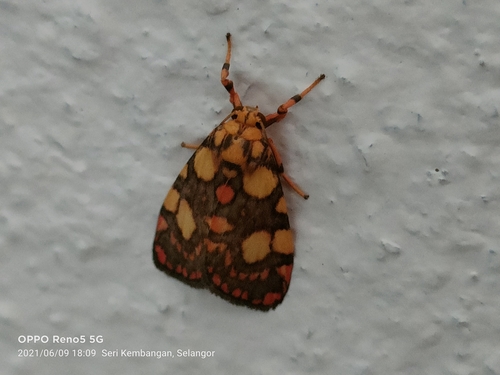
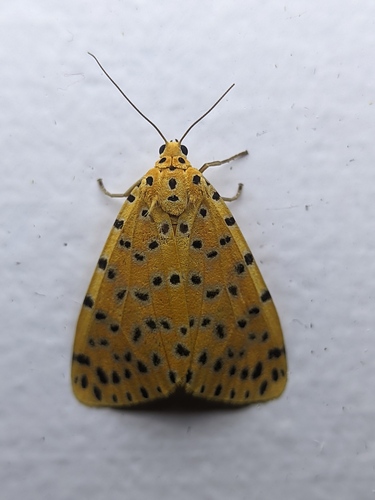
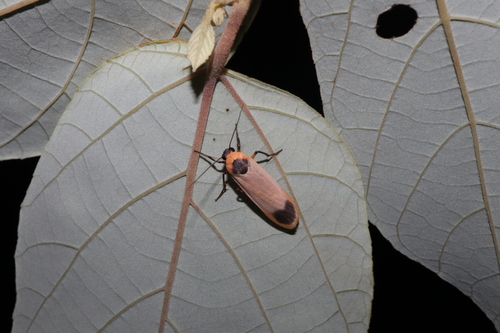
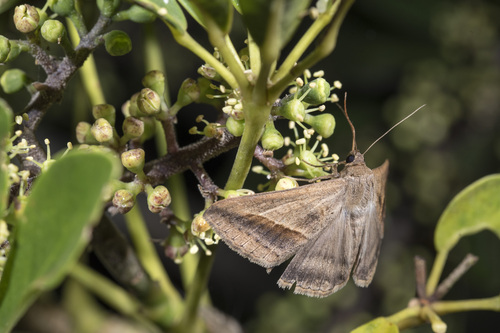
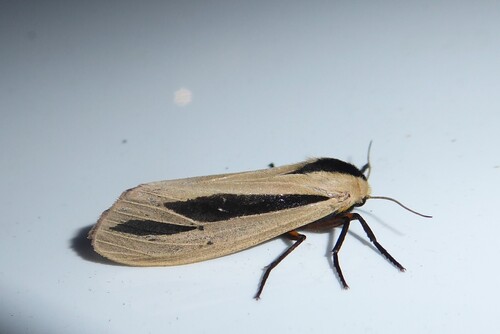
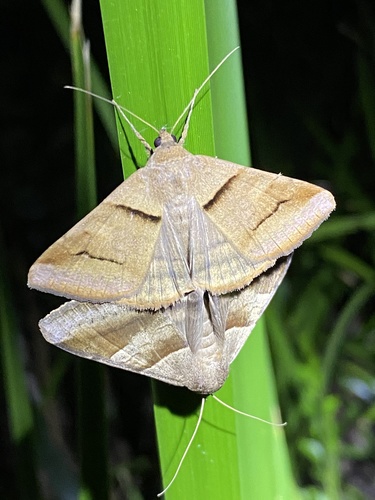
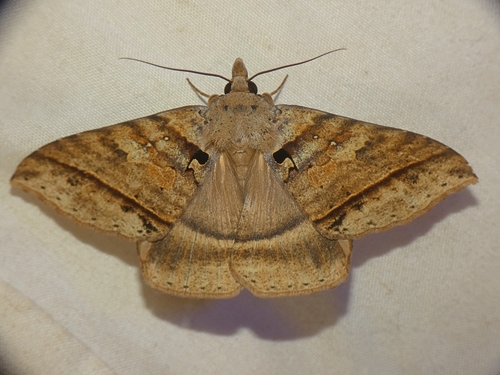
The wingspan is about 4 cm. An adult has bright brown wings, each with a broad pale margin. Forewings have a dark triangle at the tip of each wing tinged with a purplish shine. The caterpillar is humped without tubercles and brownish with grey dots. The first two... Wikipedia →

Global Distribution

Parks Where Found

# Park Country Daily sighting probability
1 Daintree National Park 🇦🇺 Australia
~10%

More parks will be added in future updates.

Before you go

What are the chances of seeing a Delgamma pangonia in Daintree National Park?

With luck

About 10% of wildlife watchers report a Delgamma pangonia sighting in Daintree National Park on a given day, based on 8 verified sightings from GBIF citizen-science data from 2019 to 2026. It is the 511th most-seen of the 856 insects we can rate there. Over three days the chance rises to about 20%, and over a week to about 40%, if each day is a fresh chance.

When is the best time to see a Delgamma pangonia in Daintree National Park?

April

In that month about 20% of wildlife watchers report a Delgamma pangonia in Daintree National Park on a given day, against under 5% in January–March and July–September, the lowest months.

What time of day is best to see a Delgamma pangonia?

Between 8 and 11 pm

Across all the parks we cover, that three-hour window holds the most Delgamma pangonia sightings with a recorded time, and nearly all of them come between 6 pm and 6 am: it is mostly seen at night.

Where else can you see a Delgamma pangonia?

Only Daintree National Park, in our data

Daintree National Park is the only park on Wallace's Line with enough records to rate Delgamma pangonia sightings: about 10% of wildlife watchers there report one on a given day.

Which relatives of the Delgamma pangonia live in Daintree National Park?

Same family: Erebidae

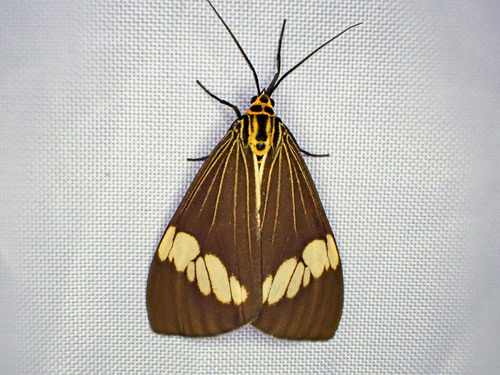
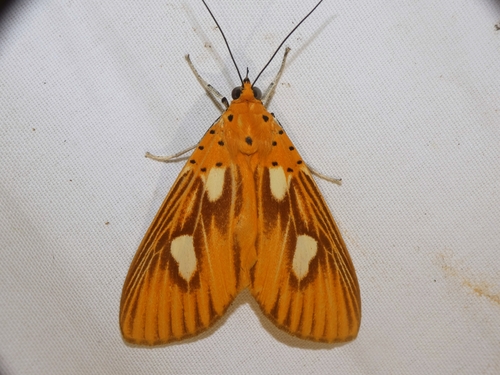
The closest relatives of the Delgamma pangonia that you can see in Daintree National Park (family Erebidae, Underwing, Tiger, Tussock, and Allied Moths) are Asian Magpie Moth (about 20%), Asota orbona (about 20%) and Imperial Fruit Sucking Moth (about 20%), with each one's daily chance of a sighting.

Where does the Delgamma pangonia sighting chance come from?

GBIF citizen-science records

It is estimated from how often the Delgamma pangonia is recorded against all the insects logged in Daintree National Park (8 verified sightings from 2019 to 2026), calibrated against known sighting rates. Figures are rounded to the nearest 10% because citizen-science data supports honest approximations, not decimals, and months with records from fewer than five people show "—". How it works.

← Back to Daintree National Park