Baphomet Moth

Baphomet Moth

Creatonotos gangis

Daily sighting probability ~10% · With luck
at Daintree National Park

In 3 days ~40% in a week ~70%

28 Verified sightings at Daintree National Park From 2019 to 2026
34 In all 2 parks
March Best month
🌙 Nocturnal When it's spotted

About the Baphomet Moth

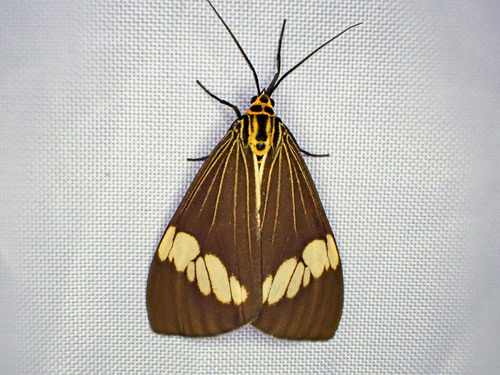
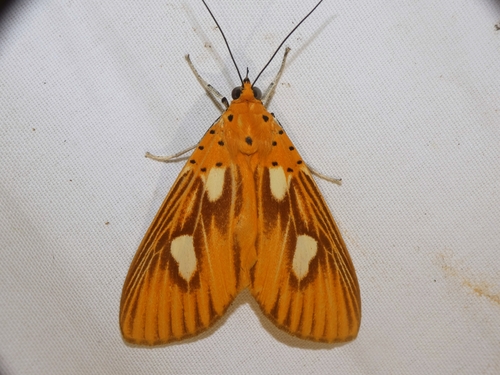
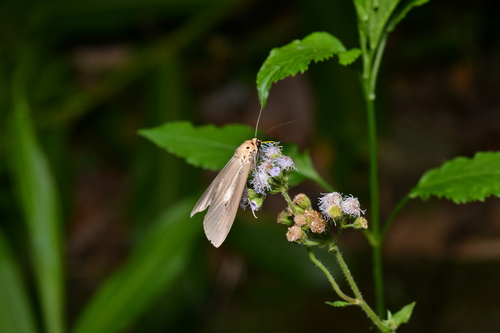
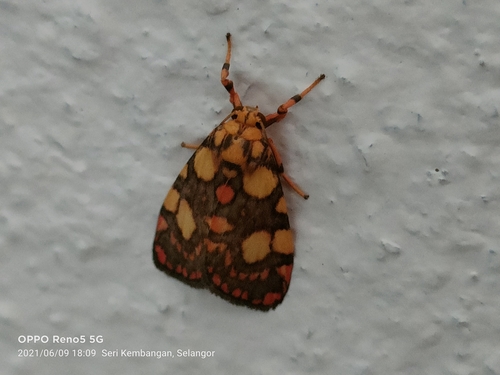
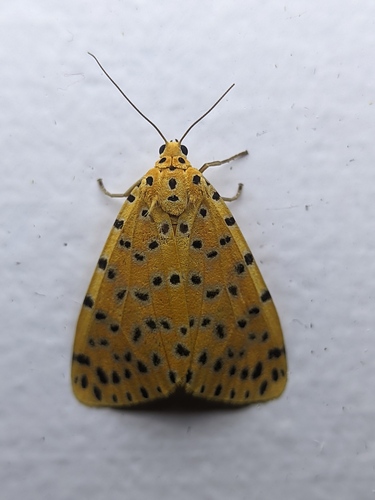
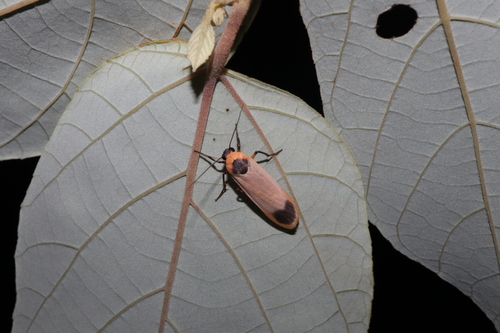
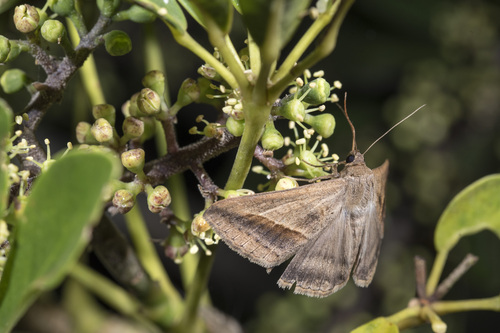
Creatonotos gangis, the Baphomet moth, is a species of arctiine moth in South East Asia and Australia. It was described by Carl Linnaeus in his 1763 Centuria Insectorum. It is often listed as a synonym of Creatonotos interrupta, but the identity is unclear.

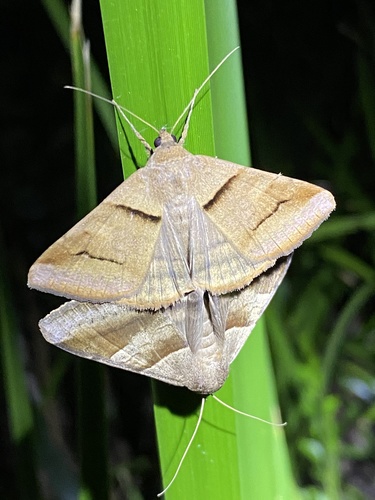
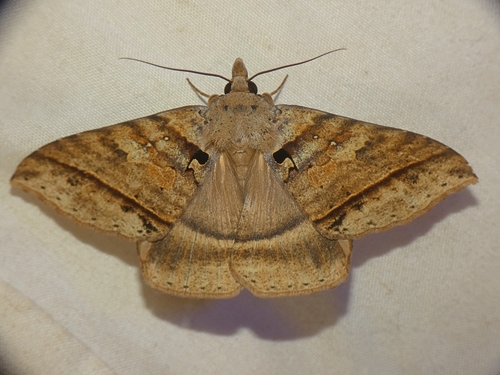
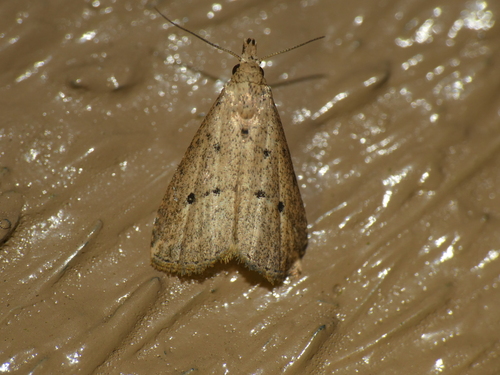
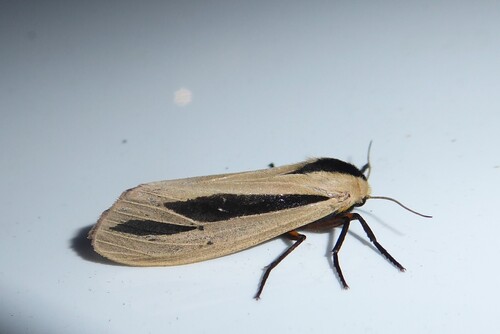
Adults have white hindwings and brown forewings, each with a dark streak, and a wingspan of 4 cm (1.6 in). The abdomen is red or, more rarely, yellow. Males have four large, grey-colored coremata behind them, which can exceed the length of the abdomen when inflated.

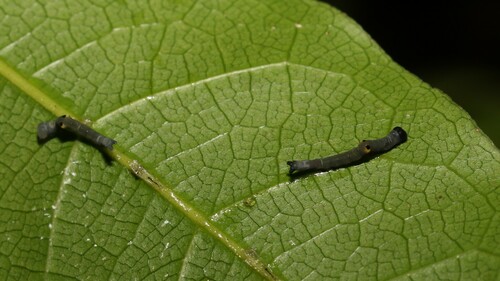
The eggs are yellow and round, and are laid in rows on the leaves of food plants. The caterpillars are brown hairy animals with a yellow stripe along the back, with a polyphagous diet, known as a minor pest which feeds on groundnuts, rice, ragi, sorghum, pearl millet, coffee, sweet potato, and lucerne crops.

In The Fauna of British India, Including Ceylon and Burma: Moths Vol. II, the species (listed as C. interrupta) is described as follows: Antennae minutely ciliated in both sexes. Head, thorax and fore wing pale pinkish ochreous. Palpi and legs smoky black, the femora yellow; a broad dorsal band on thorax; abdomen crimson above,... Wikipedia →
Global Distribution

Parks Where Found

# Park Country Daily sighting probability
1 Daintree National Park 🇦🇺 Australia
~10%
2 Kanha National Park 🇮🇳 India
~10%

Cities Where Found

# City Country Daily sighting probability
1 Tasikmalaya 🇮🇩 Indonesia
~20%
2 Yogyakarta 🇮🇩 Indonesia
~10%
3 Denpasar 🇮🇩 Indonesia
~10%
4 Kochi 🇮🇳 India
~10%
5 Pune 🇮🇳 India
<5%
6 Singapore 🇸🇬 Singapore
<5%

Before you go

What are the chances of seeing a Baphomet Moth in Daintree National Park?

With luck

About 10% of wildlife watchers report a Baphomet Moth sighting in Daintree National Park on a given day, based on 28 verified sightings from GBIF citizen-science data from 2019 to 2026. It is the 100th most-seen of the 856 insects we can rate there. Over three days the chance rises to about 40%, and over a week to about 70%, if each day is a fresh chance.

When is the best time to see a Baphomet Moth in Daintree National Park?

March and May

In those months about 30% of wildlife watchers report a Baphomet Moth in Daintree National Park on a given day, against under 5% in August and December, the lowest months.

What time of day is best to see a Baphomet Moth?

Between 9 pm and midnight

Across all the parks we cover, that three-hour window holds the most Baphomet Moth sightings with a recorded time, and about 7 in 10 of them come between 6 pm and 6 am: it is mostly seen at night.

Is Daintree National Park the best place to see a Baphomet Moth?

Yes

Of the 2 parks where we can rate Baphomet Moth sightings, Daintree National Park has the highest daily chance: about 10%. Next come Kanha National Park (India, about 10%).

Which relatives of the Baphomet Moth live in Daintree National Park?

Same family: Erebidae

The closest relatives of the Baphomet Moth that you can see in Daintree National Park (family Erebidae, Underwing, Tiger, Tussock, and Allied Moths) are Asian Magpie Moth (about 20%), Asota orbona (about 20%) and Imperial Fruit Sucking Moth (about 20%), with each one's daily chance of a sighting.

Where does the Baphomet Moth sighting chance come from?

GBIF citizen-science records

It is estimated from how often the Baphomet Moth is recorded against all the insects logged in Daintree National Park (28 verified sightings from 2019 to 2026), calibrated against known sighting rates. Figures are rounded to the nearest 10% because citizen-science data supports honest approximations, not decimals, and months with records from fewer than five people show "—". How it works.

← Back to Daintree National Park