Spiny Leaf Insect

Spiny Leaf Insect

Extatosoma tiaratum

Daily sighting probability ~30% · Possible
at Daintree National Park

In 3 days ~60% in a week ~90%

79 Verified sightings at Daintree National Park From 2019 to 2026
108 In all 4 parks
November Best month
☀️🌙 Day & Night When it's spotted

About the Spiny Leaf Insect

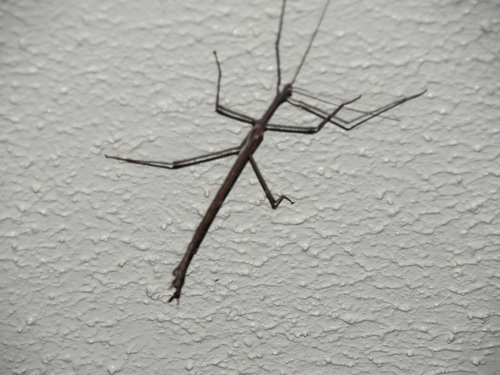
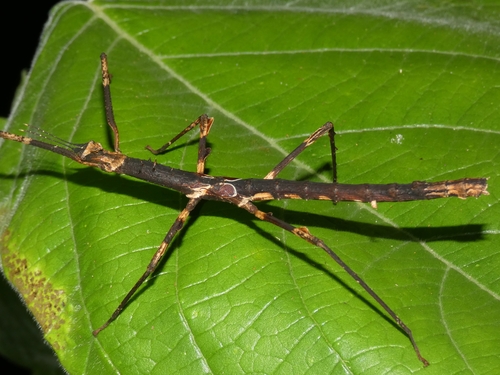
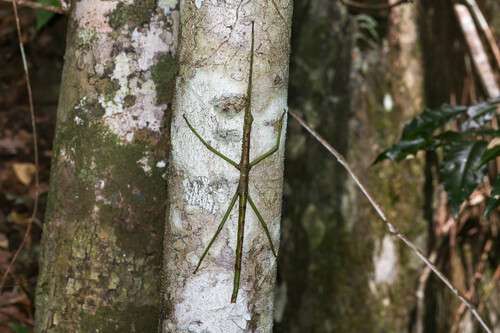
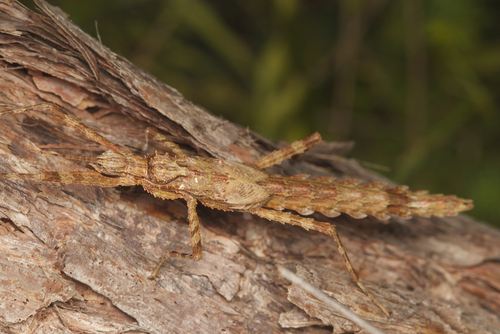
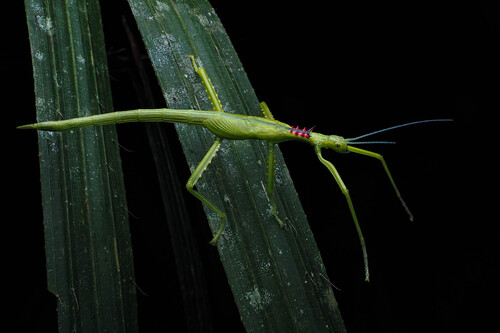
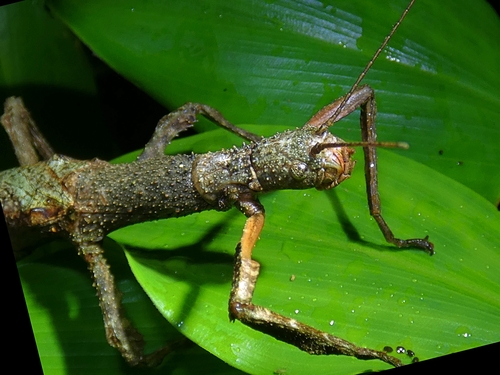
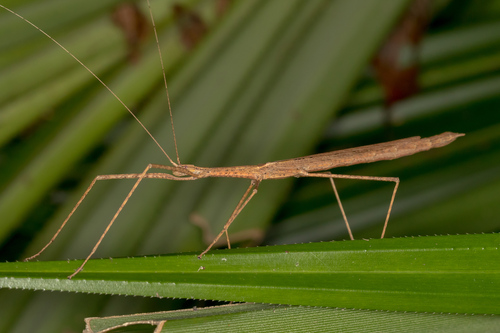
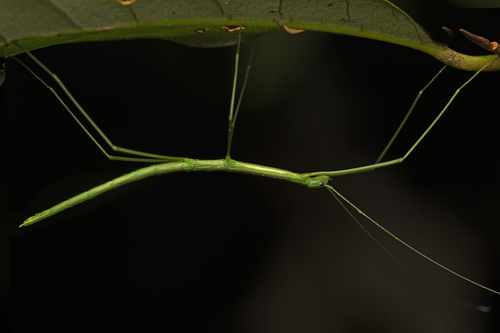
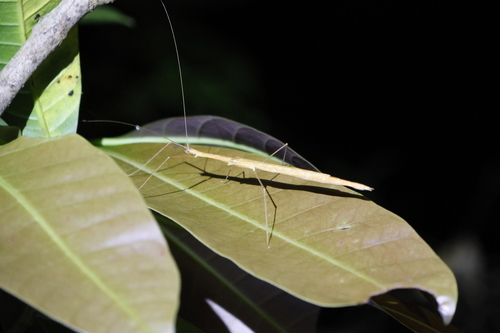
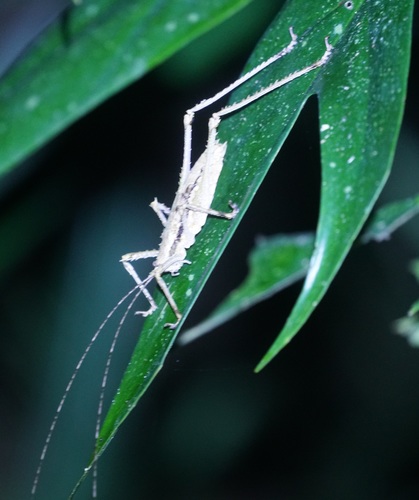
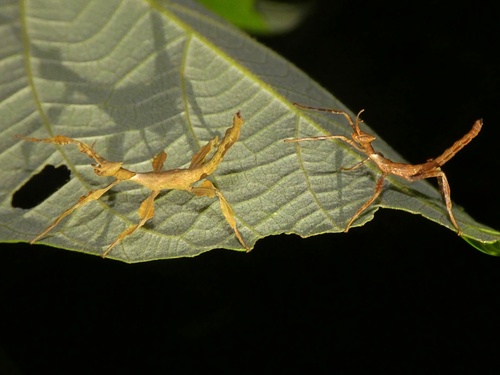
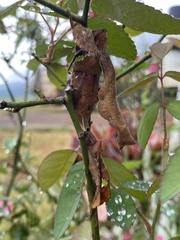
Extatosoma tiaratum, commonly known as the spiny leaf insect, the Australian giant prickly stick insect, Macleay's spectre, or the Australian walking stick, is a large species of Australian stick insect. E. tiaratum is endemic to rainforests in Australia, with most of its range in eastern New South Wales and eastern Queensland, but it is also found in eastern Victoria (one old record) and South Australia (possibly introduced). The closely related and similar E. popa is from New Guinea.

Female adult E. tiaratum are covered with thornlike spikes for defense and camouflage. Their long, rounded bodies grow to about 20 cm (8 in) long. The females are further described as "heavy-bodied, brachypterous and having numerous spines and integumental expansions on the face and legs, including a tuft of spines on the conical occiput of the hypognathous head". As mentioned, the wings of the female are too small for flying, regardless of her being gravid.

Exhibiting the sexual dimorphism of many similar insects (particularly other phasmids as well as mantises), males are small and thinner, growing only about 11 cm (4.5 in) in length and have three ocelli. Males lack the... Wikipedia →
Global Distribution

Parks Where Found

# Park Country Daily sighting probability
1 Daintree National Park 🇦🇺 Australia
~30%
2 Lamington National Park 🇦🇺 Australia
~10%
3 Springbrook National Park 🇦🇺 Australia
~10%
4 Blue Mountains National Park 🇦🇺 Australia
<5%

Cities Where Found

# City Country Daily sighting probability
1 Brisbane 🇦🇺 Australia
<5%
2 Sydney 🇦🇺 Australia
<5%

Before you go

What are the chances of seeing a Spiny Leaf Insect in Daintree National Park?

Possible

About 30% of wildlife watchers report a Spiny Leaf Insect sighting in Daintree National Park on a given day, based on 79 verified sightings from GBIF citizen-science data from 2019 to 2026. It is the 19th most-seen of the 856 insects we can rate there. Over three days the chance rises to about 60%, and over a week to about 90%, if each day is a fresh chance.

When is the best time to see a Spiny Leaf Insect in Daintree National Park?

November

In that month about 50% of wildlife watchers report a Spiny Leaf Insect in Daintree National Park on a given day, against under 5% in May and June, the lowest months. That is one of Daintree National Park's driest months, with about 65 mm of rain against 380 mm in January.

What time of day is best to see a Spiny Leaf Insect?

Between noon and 3 pm

Across all the parks we cover, that three-hour window holds the most Spiny Leaf Insect sightings with a recorded time, and about 7 in 10 of them come between 6 am and 6 pm: it is seen both by day and at night.

Is Daintree National Park the best place to see a Spiny Leaf Insect?

Yes

Of the 4 parks where we can rate Spiny Leaf Insect sightings, Daintree National Park has the highest daily chance: about 30%. Next come Lamington National Park (Australia, about 10%) and Springbrook National Park (Australia, about 10%).

Where does the Spiny Leaf Insect sighting chance come from?

GBIF citizen-science records

It is estimated from how often the Spiny Leaf Insect is recorded against all the insects logged in Daintree National Park (79 verified sightings from 2019 to 2026), calibrated against known sighting rates. Figures are rounded to the nearest 10% because citizen-science data supports honest approximations, not decimals, and months with records from fewer than five people show "—". How it works.

← Back to Daintree National Park