Slender Wiretail

Slender Wiretail

Oristicta filicicola

Daily sighting probability ~10% · With luck
at Daintree National Park

In 3 days ~20% in a week ~50%

14 Verified sightings at Daintree National Park From 2019 to 2026
14 In 1 park
January Best month
☀️ Diurnal When it's spotted

About the Slender Wiretail

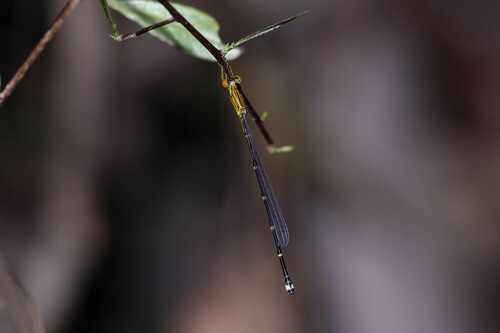
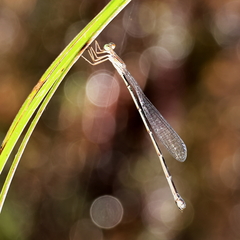
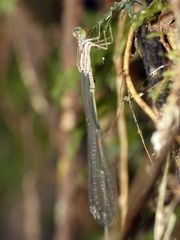
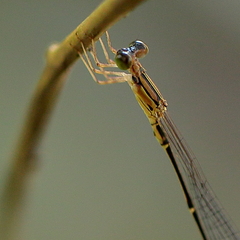
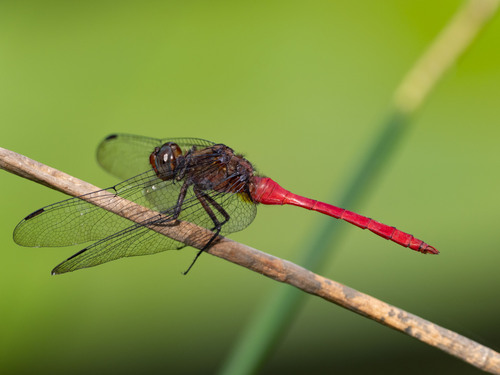
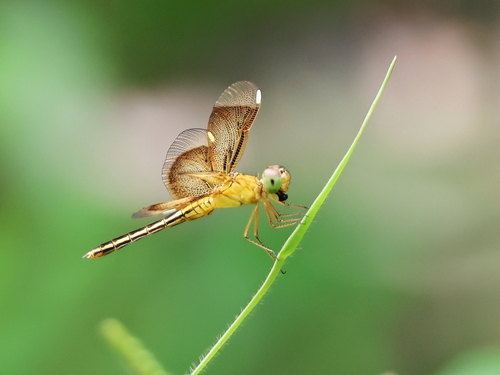
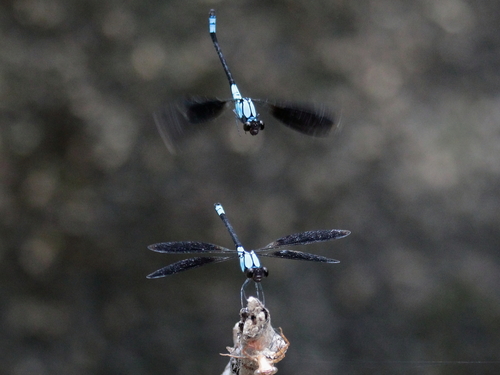
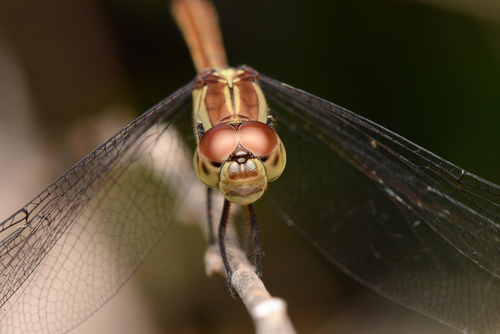
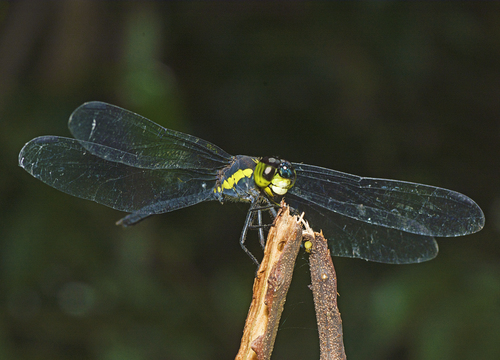
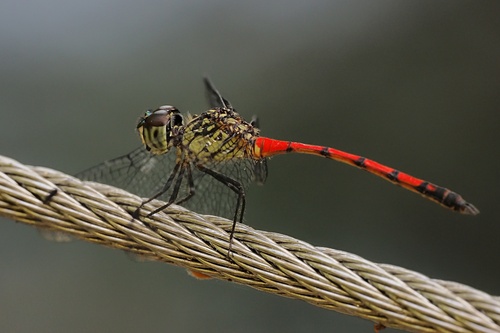
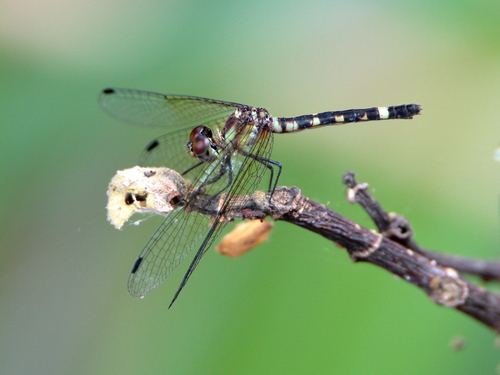
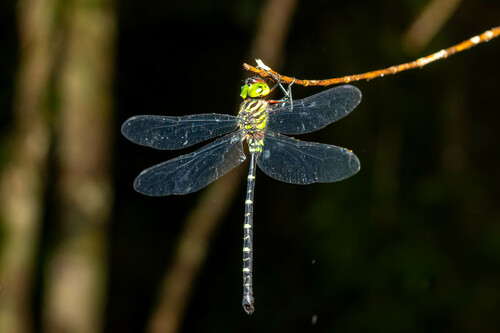
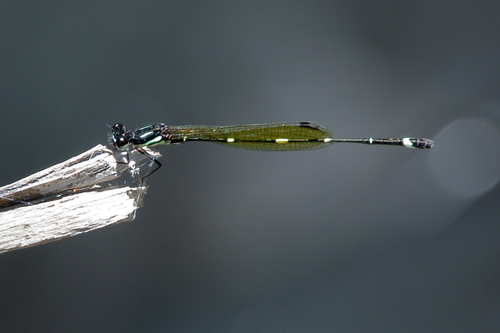
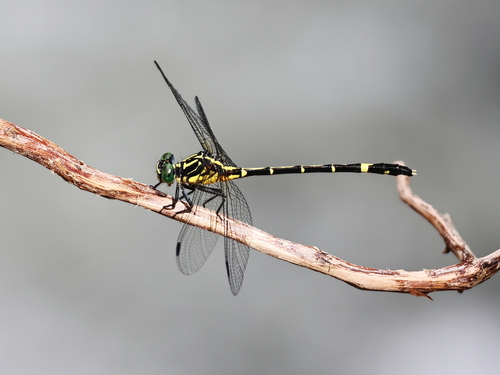
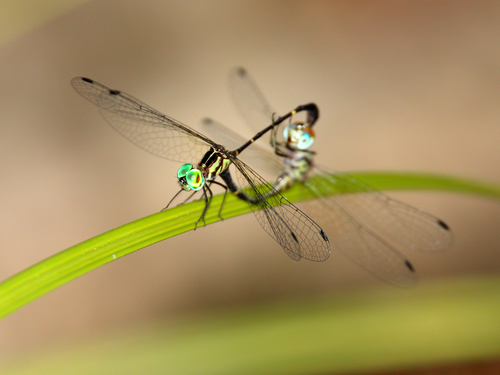
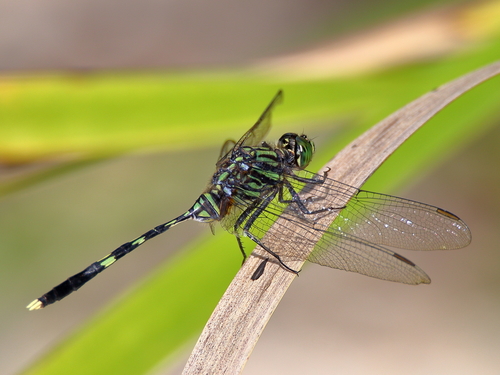
Oristicta filicicola is a species of damselfly belonging to the family Isostictidae. Until 2017 it was the only species of the genus Oristicta. Commonly known as a slender wiretail, it is a slender and dull-coloured damselfly of medium-size.

It is endemic to north-eastern Australia, where it inhabits streams in rainforests. Oristicta filicicola has olive-green eyes widely spaced on a small head. The synthorax is pale on the lower surface, graduating to a light green on the sides, with dark markings along the sutures. The upper surface is brown, outlined in black on the edges. The dorsal carina (mid-line ridge) is white on a dark background. The abdomen is long and slender, with a steel-like metallic-black on the upper surface, sharply cut off to cream ventral surfaces. At each segment join the paler colour sweeps up forming a narrow ring. On segments 9 and 10, the pale coloration sweeps up towards the rear, to form a dark wedge-shaped pattern on both segments. From a sample of twenty-six specimens held in the Commonwealth Scientific and Industrial Research Organisation, the average length from head to tail tip was 45 mm. The superior anal appendages of... Wikipedia →

Global Distribution

Parks Where Found

# Park Country Daily sighting probability
1 Daintree National Park 🇦🇺 Australia
~10%

More parks will be added in future updates.

Before you go

What are the chances of seeing a Slender Wiretail in Daintree National Park?

With luck

About 10% of wildlife watchers report a Slender Wiretail sighting in Daintree National Park on a given day, based on 14 verified sightings from GBIF citizen-science data from 2019 to 2026. It is the 402nd most-seen of the 856 insects we can rate there. Over three days the chance rises to about 20%, and over a week to about 50%, if each day is a fresh chance.

When is the best time to see a Slender Wiretail in Daintree National Park?

January and April

In those months about 20% of wildlife watchers report a Slender Wiretail in Daintree National Park on a given day, against under 5% in February–March, May–June, August and December, the lowest months. Those are among Daintree National Park's wettest months, with about 270 mm of rain a month against 50 mm in September.

What time of day is best to see a Slender Wiretail?

Between 10 am and 1 pm

Across all the parks we cover, that three-hour window holds the most Slender Wiretail sightings with a recorded time, and nearly all of them come between 6 am and 6 pm: it is a daytime animal.

Where else can you see a Slender Wiretail?

Only Daintree National Park, in our data

Daintree National Park is the only park on Wallace's Line with enough records to rate Slender Wiretail sightings: about 10% of wildlife watchers there report one on a given day.

Which relatives of the Slender Wiretail live in Daintree National Park?

Same order: Odonata

The closest relatives of the Slender Wiretail that you can see in Daintree National Park (order Odonata, Dragonflies and Damselflies) are Fiery Skimmer (about 30%), Painted Grasshawk (about 30%) and Tropical Rockmaster (about 20%), with each one's daily chance of a sighting.

Where does the Slender Wiretail sighting chance come from?

GBIF citizen-science records

It is estimated from how often the Slender Wiretail is recorded against all the insects logged in Daintree National Park (14 verified sightings from 2019 to 2026), calibrated against known sighting rates. Figures are rounded to the nearest 10% because citizen-science data supports honest approximations, not decimals, and months with records from fewer than five people show "—". How it works.

← Back to Daintree National Park