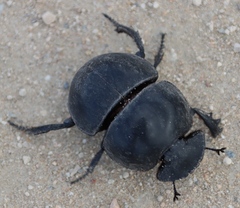
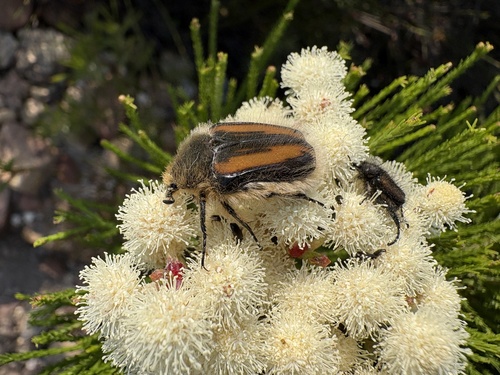
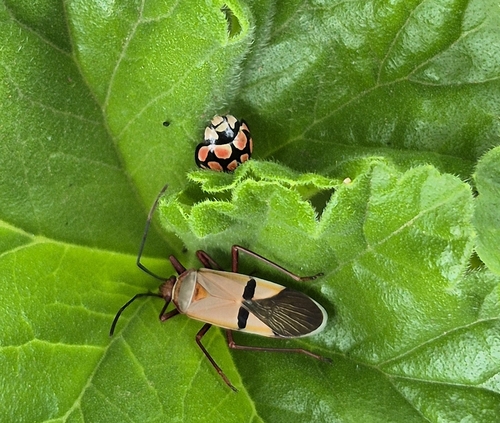
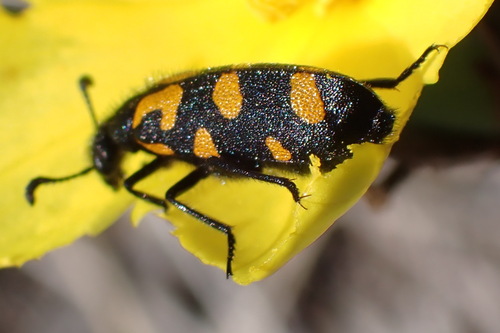
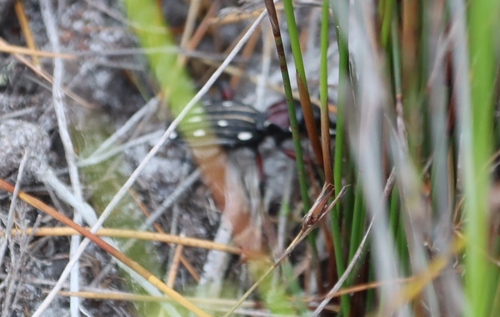
Cape Flightless Dung Beetle

Cape Flightless Dung Beetle

Circellium bacchus

Daily sighting probability ~70% · Very likely
at De Hoop Nature Reserve

In 3 days >90%

121 Verified sightings at De Hoop Nature Reserve From 2019 to 2026
405 In all 3 parks
May Best month
☀️ Diurnal When it's spotted

About the Cape Flightless Dung Beetle

The flightless dung beetle (Circellium bacchus) is a species of dung beetle endemic to a few areas of South Africa, including the Addo Elephant National Park, Amakhala Game Reserve and the Buffalo Valley Game Farm. It is the only species in the genus Circellium. The loss of flight allows the beetle to use the empty space below the elytra as a carbon dioxide storage tank, creating a unique breathing mechanism which conserves water, a valuable survival trait in the arid regions it lives in.

The species was originally widespread in Southern Africa, but it only survives in the few areas mentioned above; as such, it qualifies as an IUCN vulnerable species. Its vulnerability is exacerbated by a number of other factors, including the fact that its habitat is under threat by agriculture and human activity, that it has low breeding capacity as well as low dispersability (as a consequence of being flightless), and that its survival is strictly dependent on a number of vertebrates (particularly elephant and buffalo) that are also experiencing a decrease in population.

The flightless dung beetles mostly feed on elephant or buffalo faeces, but they have been recorded to also feed on dung from other species such as rabbits, baboons, antelopes, and ostriches. Wikipedia →

Global Distribution

Parks Where Found

# Park Country Daily sighting probability
1 De Hoop Nature Reserve 🇿🇦 South Africa
~70%
2 Addo Elephant National Park 🇿🇦 South Africa
~40%
3 Garden Route National Park 🇿🇦 South Africa
~10%

Before you go

What are the chances of seeing a Cape Flightless Dung Beetle in De Hoop Nature Reserve?

Very likely

About 70% of wildlife watchers report a Cape Flightless Dung Beetle sighting in De Hoop Nature Reserve on a given day, based on 121 verified sightings from GBIF citizen-science data from 2019 to 2026. It is the most-seen of the 25 insects we can rate there. Over three days the chance rises to over 90%, if each day is a fresh chance.

When is the best time to see a Cape Flightless Dung Beetle in De Hoop Nature Reserve?

April–May, July and September–October

In those months about 80% of wildlife watchers report a Cape Flightless Dung Beetle in De Hoop Nature Reserve on a given day, against about 30% in January, the lowest month.

What time of day is best to see a Cape Flightless Dung Beetle?

Between 11 am and 2 pm

Across all the parks we cover, that three-hour window holds the most Cape Flightless Dung Beetle sightings with a recorded time, and about 9 in 10 of them come between 6 am and 6 pm: it is a daytime animal.

Is De Hoop Nature Reserve the best place to see a Cape Flightless Dung Beetle?

Yes

Of the 3 parks where we can rate Cape Flightless Dung Beetle sightings, De Hoop Nature Reserve has the highest daily chance: about 70%. Next come Addo Elephant National Park (South Africa, about 40%) and Garden Route National Park (South Africa, about 10%).

Where does the Cape Flightless Dung Beetle sighting chance come from?

GBIF citizen-science records

It is estimated from how often the Cape Flightless Dung Beetle is recorded against all the insects logged in De Hoop Nature Reserve (121 verified sightings from 2019 to 2026), calibrated against known sighting rates. Figures are rounded to the nearest 10% because citizen-science data supports honest approximations, not decimals, and months with records from fewer than five people show "—". How it works.

← Back to De Hoop Nature Reserve