Cape Mountain Cockroach

Cape Mountain Cockroach

Aptera fusca

Daily sighting probability ~20% · Possible
at De Hoop Nature Reserve

In 3 days ~50% in a week ~80%

12 Verified sightings at De Hoop Nature Reserve From 2019 to 2026
632 In all 4 parks
April Best month
☀️ Diurnal When it's spotted

About the Cape Mountain Cockroach

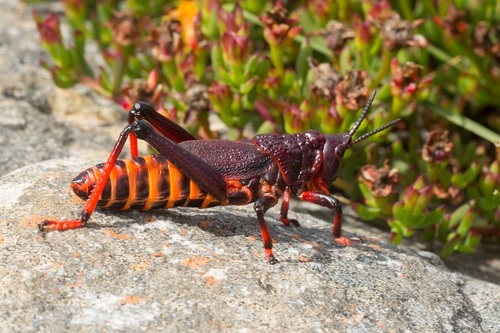
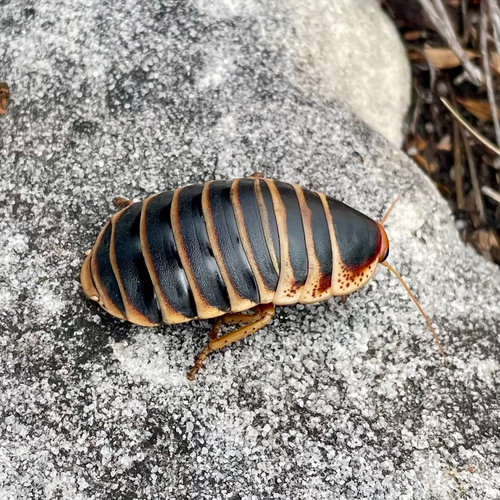
Aptera fusca, the Cape Mountain cockroach, giant cockroach or Table Mountain cockroach, is a large cockroach which is widespread on low vegetation in open areas in the fynbos biome of the Western Cape region of South Africa. Adult females can be from 30 to 40 millimetres (1.2 to 1.6 in) long. Males are slightly smaller (body length 29 millimetres (1.1 in)) and have dark brown wings, which are absent in females. It is stoutly built, with a reddish head and brown to black body segments with prominent yellow margins. The femora are heavily spined, with the hind tibiae having two very broad ridges with only two rows of spurs. They are nocturnal and herbivorous. Unusually for insects, it gives birth to 18–24 live offspring and protects the young for a while after giving birth. Family groups are found in late summer and autumn: a brood of black nymphs, a wingless female and two or more males, all living in a hidden crack. When alarmed, it raises its abdomen into the air and squeaks loudly; it also releases a foul-smelling liquid from glands on the back when handled and alarmed, producing an indelible brown stain on skin. The only other species in the genus Aptera, A. munda, is rare, and is found in the Richtersveld. Wikipedia →

Global Distribution

Parks Where Found

# Park Country Daily sighting probability
1 De Hoop Nature Reserve 🇿🇦 South Africa
~20%
2 Garden Route National Park 🇿🇦 South Africa
~20%
3 Table Mountain National Park 🇿🇦 South Africa
~20%
4 West Coast National Park 🇿🇦 South Africa
~10%

Cities Where Found

# City Country Daily sighting probability
1 Cape Town 🇿🇦 South Africa
~10%

Before you go

What are the chances of seeing a Cape Mountain Cockroach in De Hoop Nature Reserve?

Possible

About 20% of wildlife watchers report a Cape Mountain Cockroach sighting in De Hoop Nature Reserve on a given day, based on 12 verified sightings from GBIF citizen-science data from 2019 to 2026. It is the 7th most-seen of the 25 insects we can rate there. Over three days the chance rises to about 50%, and over a week to about 80%, if each day is a fresh chance.

When is the best time to see a Cape Mountain Cockroach in De Hoop Nature Reserve?

April

In that month about 50% of wildlife watchers report a Cape Mountain Cockroach in De Hoop Nature Reserve on a given day, against under 5% in February–March, May–June, August and October, the lowest months.

What time of day is best to see a Cape Mountain Cockroach?

Between 10 am and 1 pm

Across all the parks we cover, that three-hour window holds the most Cape Mountain Cockroach sightings with a recorded time, and about 9 in 10 of them come between 6 am and 6 pm: it is a daytime animal.

Is De Hoop Nature Reserve the best place to see a Cape Mountain Cockroach?

Yes

Of the 4 parks where we can rate Cape Mountain Cockroach sightings, De Hoop Nature Reserve has the highest daily chance: about 20%. Next come Garden Route National Park (South Africa, about 20%) and Table Mountain National Park (South Africa, about 20%).

Where does the Cape Mountain Cockroach sighting chance come from?

GBIF citizen-science records

It is estimated from how often the Cape Mountain Cockroach is recorded against all the insects logged in De Hoop Nature Reserve (12 verified sightings from 2019 to 2026), calibrated against known sighting rates. Figures are rounded to the nearest 10% because citizen-science data supports honest approximations, not decimals, and months with records from fewer than five people show "—". How it works.
← Back to De Hoop Nature Reserve