
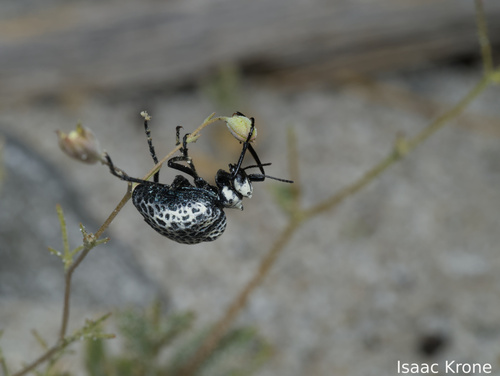
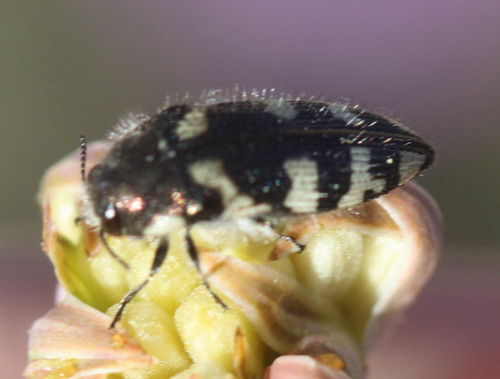
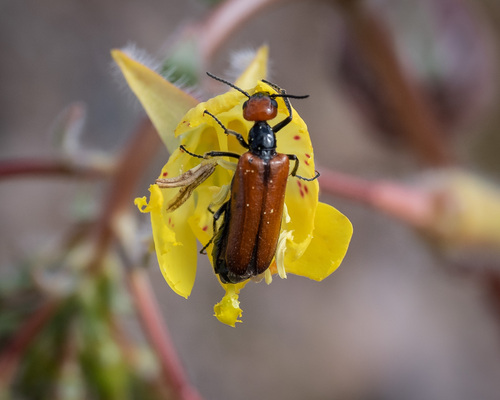
Edrotes ventricosus

Edrotes ventricosus

Edrotes ventricosus

Daily sighting probability ~10% · With luck
at Death Valley National Park

In 3 days ~30% in a week ~60%

14 Verified sightings at Death Valley National Park From 2019 to 2026
22 In all 2 parks
January Best month
☀️ Diurnal When it's spotted

About the Edrotes ventricosus

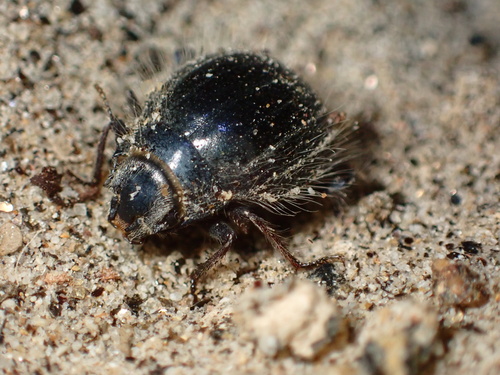
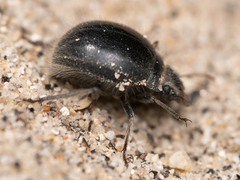
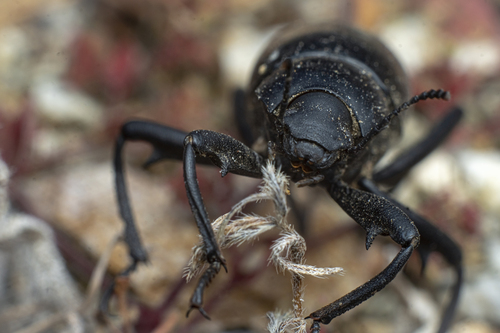
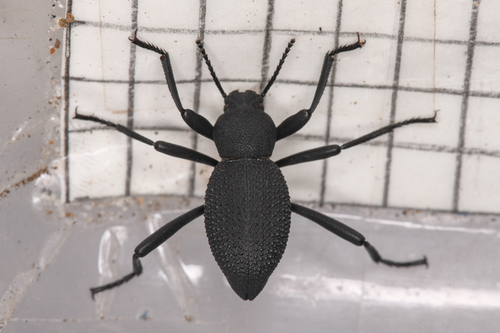
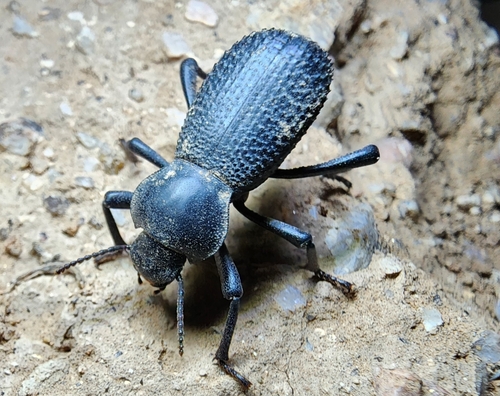
Edrotes ventricosus, the hairy robot beetle or desert hairy robot beetle, is a species of darkling beetle within the family Tenebrionidae. This species is found in the southwestern region of North America, inhabiting desert environments in the southwestern United States (California, Nevada, Arizona) and northwestern Mexico (Baja California, Sonora). Individuals are round in shape and grow to sizes of 6.4-10 millimeters, appearing black in coloration with hairs on its dorsal side. It is herbivorous, feeding on various plants both native and introduced. Plants this species feeds on include saltgrass, cheat grass, saltwort, and wild onion. Individuals are active from the seasons of early spring to late winter, with those found in the southern portion of its range being active year-round. Adults may also come out in winter to feed on warmer days. This species can be found as pets for being an easy to keep insect that appear 'cute' with their small round body shape and 'fuzzy' appearance. Wikipedia →

Global Distribution

Parks Where Found

# Park Country Daily sighting probability
1 Death Valley National Park 🇺🇸 United States
~10%
2 Joshua Tree National Park 🇺🇸 United States
~10%

Before you go

What are the chances of seeing an Edrotes ventricosus in Death Valley National Park?

With luck

About 10% of wildlife watchers report an Edrotes ventricosus sighting in Death Valley National Park on a given day, based on 14 verified sightings from GBIF citizen-science data from 2019 to 2026. It is the 35th most-seen of the 108 insects we can rate there. Over three days the chance rises to about 30%, and over a week to about 60%, if each day is a fresh chance.

When is the best time to see an Edrotes ventricosus in Death Valley National Park?

January

In that month about 30% of wildlife watchers report an Edrotes ventricosus in Death Valley National Park on a given day, against under 5% in May to December, the lowest months. That is one of Death Valley National Park's wettest months, with about 25 mm of rain against 5 mm in June.

What time of day is best to see an Edrotes ventricosus?

Between 1 and 4 pm

Across all the parks we cover, that three-hour window holds the most Edrotes ventricosus sightings with a recorded time, and about 7 in 10 of them come between 6 am and 6 pm: it is a daytime animal.

Is Death Valley National Park the best place to see an Edrotes ventricosus?

Yes

Of the 2 parks where we can rate Edrotes ventricosus sightings, Death Valley National Park has the highest daily chance: about 10%. Next come Joshua Tree National Park (United States, about 10%).

Which relatives of the Edrotes ventricosus live in Death Valley National Park?

Same family: Tenebrionidae

The closest relatives of the Edrotes ventricosus that you can see in Death Valley National Park (family Tenebrionidae, Darkling Beetles) are Armored Stink Beetle (about 30%), Desert Ironclad Beetle (about 20%) and Eusattus muricatus (about 20%), with each one's daily chance of a sighting.

Where does the Edrotes ventricosus sighting chance come from?

GBIF citizen-science records

It is estimated from how often the Edrotes ventricosus is recorded against all the insects logged in Death Valley National Park (14 verified sightings from 2019 to 2026), calibrated against known sighting rates. Figures are rounded to the nearest 10% because citizen-science data supports honest approximations, not decimals, and months with records from fewer than five people show "—". How it works.

← Back to Death Valley National Park