
Messor pergandei
Daily sighting probability ~40% · Likely
at Death Valley National Park

In 3 days ~80% in a week >90%

89 Verified sightings at Death Valley National Park From 2019 to 2026
322 In all 3 parks
December Best month
☀️ Diurnal When it's spotted

About the Messor pergandei

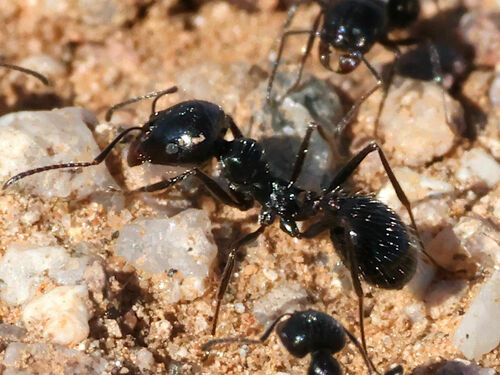
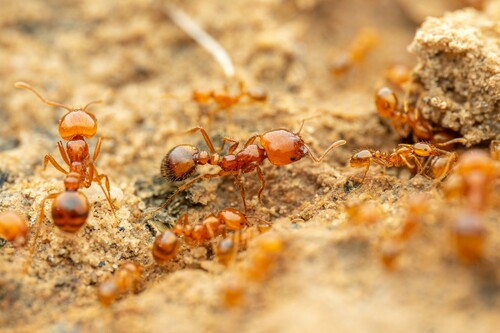
Veromessor pergandei is a species of harvester ant native to the Southwestern United States, especially the deserts of southeastern California. It has also been identified in the Baja California peninsula of Mexico. It was first described by Gustav Mayr, who named it Aphaenogaster pergandei. It can also be referred to as a black harvester ant or desert harvester ant, although these common names have also been applied to other species.

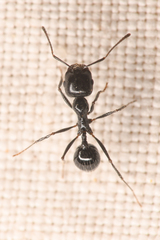
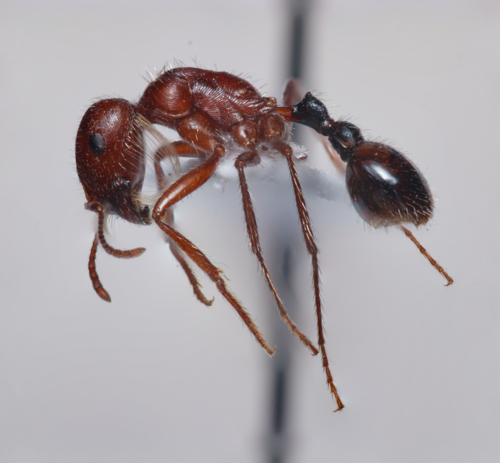
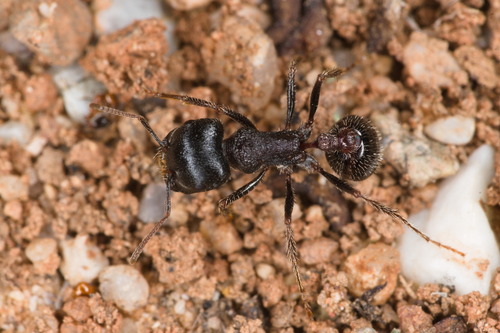
V. pergandei has a head of equal length and width, with very large mandibles. It has short white or yellow hair and a large thorax. Males typically measure about 8.5 mm (0.33 in) and females about 10 mm (0.39 in). However, individual size can vary based on factors such as availability of food and interspecific competition. The species is named after American myrmecologist Theodore Pergande. The genus was for some time synonymized under Messor but has been split out based on a 2015 study.

Like other harvester ants, V. pergandei gathers fruits and seeds for food. The seeds of perennial shrubs such as Larrea tridentata and Ambrosia dumosa are included in its diet. Messor pergandei at AntWeb... Wikipedia →

Global Distribution

Parks Where Found

# Park Country Daily sighting probability
1 Death Valley National Park 🇺🇸 United States
~40%
2 Joshua Tree National Park 🇺🇸 United States
~30%
3 Saguaro National Park 🇺🇸 United States
<5%

Cities Where Found

# City Country Daily sighting probability
1 Mesa 🇺🇸 United States
~10%
2 Las Vegas 🇺🇸 United States
<5%
3 Phoenix 🇺🇸 United States
<5%
4 Los Angeles 🇺🇸 United States
<5%

Before you go

What are the chances of seeing a Messor pergandei in Death Valley National Park?

Likely

About 40% of wildlife watchers report a Messor pergandei sighting in Death Valley National Park on a given day, based on 89 verified sightings from GBIF citizen-science data from 2019 to 2026. It is the 7th most-seen of the 108 insects we can rate there. Over three days the chance rises to about 80%, and over a week to over 90%, if each day is a fresh chance.

When is the best time to see a Messor pergandei in Death Valley National Park?

December

In that month about 70% of wildlife watchers report a Messor pergandei in Death Valley National Park on a given day, against under 5% in May to September, the lowest months.

What time of day is best to see a Messor pergandei?

Between 10 am and 1 pm

Across all the parks we cover, that three-hour window holds the most Messor pergandei sightings with a recorded time, and about 9 in 10 of them come between 6 am and 6 pm: it is a daytime animal.

Is Death Valley National Park the best place to see a Messor pergandei?

Yes

Of the 3 parks where we can rate Messor pergandei sightings, Death Valley National Park has the highest daily chance: about 40%. Next come Joshua Tree National Park (United States, about 30%) and Saguaro National Park (United States, under 5%).

Which relatives of the Messor pergandei live in Death Valley National Park?

Same family: Formicidae

The closest relatives of the Messor pergandei that you can see in Death Valley National Park (family Formicidae, Ants) are California Harvester Ant (about 10%), Rough Harvester Ant (about 10%) and Southern Fire Ant (about 10%), with each one's daily chance of a sighting.

Where does the Messor pergandei sighting chance come from?

GBIF citizen-science records

It is estimated from how often the Messor pergandei is recorded against all the insects logged in Death Valley National Park (89 verified sightings from 2019 to 2026), calibrated against known sighting rates. Figures are rounded to the nearest 10% because citizen-science data supports honest approximations, not decimals, and months with records from fewer than five people show "—". How it works.

← Back to Death Valley National Park