Ornativalva erubescens

Ornativalva erubescens

Ornativalva erubescens

Daily sighting probability ~10% · With luck
at Death Valley National Park

In 3 days ~20% in a week ~40%

5 Verified sightings at Death Valley National Park From 2019 to 2026
5 In 1 park
October Best month
🌙 Nocturnal When it's spotted

About the Ornativalva erubescens

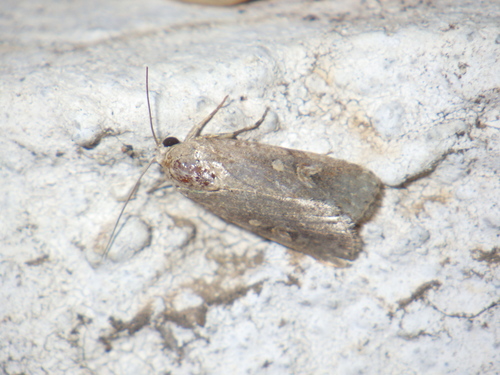
Ornativalva erubescens is a moth of the family Gelechiidae. It was described by Thomas de Grey, 6th Baron Walsingham, in 1904. It is found in Morocco, Algeria, Tunisia, Libya, Egypt, Sudan, Israel, Saudi Arabia, Iran, Pakistan, and the southwestern U.S.

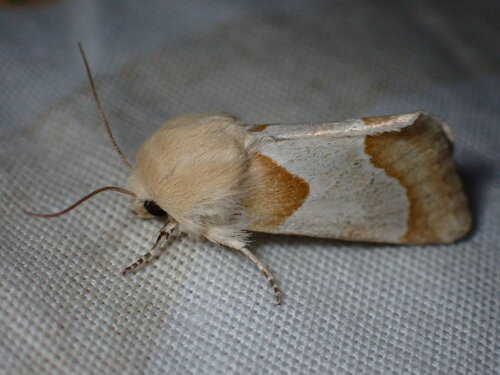
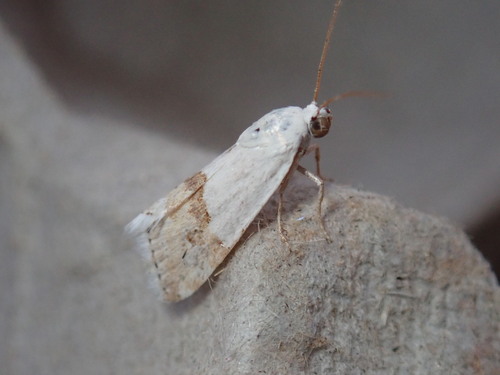
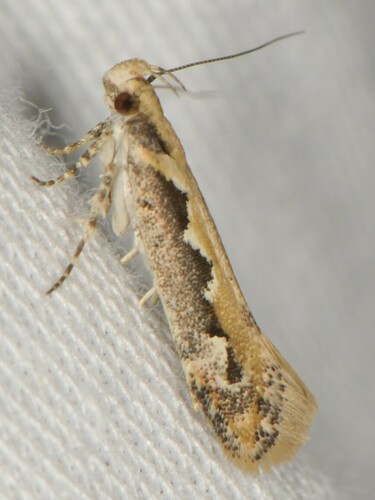
The wingspan is 17–18 mm. The forewings are whitish ochreous, suffused along the costa, as far as two-thirds from the base, with bright rosy red. Between these two colours is a band of olive-grey, running as far as the end of the cell, with two rectangular projections thrown downwards into the paler space beneath it, these being darker, more inclining to fuscous, than the upper portion of the streak with which they blend. At the end of this streak is an oblique blackish spot, preceding a space of the whitish ochreous ground-colour, narrowly margined at its lower edge with brownish fuscous. On the flexus is a narrow short black streak, on the pale costal third are two small aggregations of brownish fuscous scales within the basal third, and three larger aggregations on the costa and costal cilia in the outer third, two similar groups of scales occurring in the cilia below the apex. The hindwings are rather iridescent, grey, with a brownish tinge. Adults have been recorded on wing in January, May, August and November. Wikipedia →
Global Distribution

Parks Where Found

# Park Country Daily sighting probability
1 Death Valley National Park 🇺🇸 United States
~10%

More parks will be added in future updates.

Cities Where Found

# City Country Daily sighting probability
1 Mesa 🇺🇸 United States
~10%
2 Phoenix 🇺🇸 United States
<5%

Before you go

What are the chances of seeing an Ornativalva erubescens in Death Valley National Park?

With luck

About 10% of wildlife watchers report an Ornativalva erubescens sighting in Death Valley National Park on a given day, based on 5 verified sightings from GBIF citizen-science data from 2019 to 2026. It is the 91st most-seen of the 108 insects we can rate there. Over three days the chance rises to about 20%, and over a week to about 40%, if each day is a fresh chance.

When is the best time to see an Ornativalva erubescens in Death Valley National Park?

October

In that month about 20% of wildlife watchers report an Ornativalva erubescens in Death Valley National Park on a given day, against under 5% in May–September and November–January, the lowest months.

What time of day is best to see an Ornativalva erubescens?

Between 7 and 10 pm

Across all the parks we cover, that three-hour window holds the most Ornativalva erubescens sightings with a recorded time, and about 8 in 10 of them come between 6 pm and 6 am: it is mostly seen at night.

Where else can you see an Ornativalva erubescens?

Only Death Valley National Park, in our data

Death Valley National Park is the only park on Wallace's Line with enough records to rate Ornativalva erubescens sightings: about 10% of wildlife watchers there report one on a given day.

Which relatives of the Ornativalva erubescens live in Death Valley National Park?

Same order: Lepidoptera

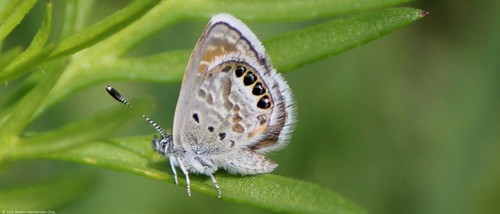
The closest relatives of the Ornativalva erubescens that you can see in Death Valley National Park (order Lepidoptera, Butterflies and Moths) are White-Lined Sphinx (about 80%), Painted Lady (about 40%) and Western Pygmy-Blue (about 40%), with each one's daily chance of a sighting.

Where does the Ornativalva erubescens sighting chance come from?

GBIF citizen-science records

It is estimated from how often the Ornativalva erubescens is recorded against all the insects logged in Death Valley National Park (5 verified sightings from 2019 to 2026), calibrated against known sighting rates. Figures are rounded to the nearest 10% because citizen-science data supports honest approximations, not decimals, and months with records from fewer than five people show "—". How it works.

← Back to Death Valley National Park