Astyalus Swallowtail

Astyalus Swallowtail

Papilio astyalus

Daily sighting probability ~30% · Possible
at Iguaçu National Park

In 3 days ~70% in a week ~90%

150 Verified sightings at Iguaçu National Park From 2019 to 2026
309 In all 2 parks
September Best month
☀️ Diurnal When it's spotted

About the Astyalus Swallowtail

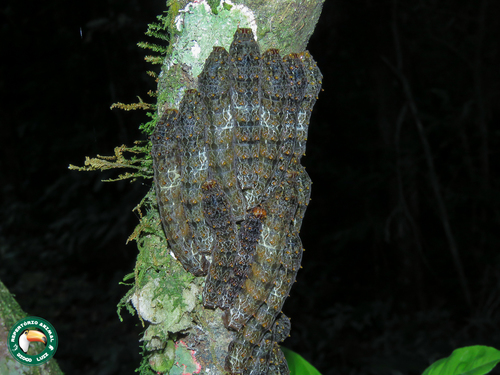
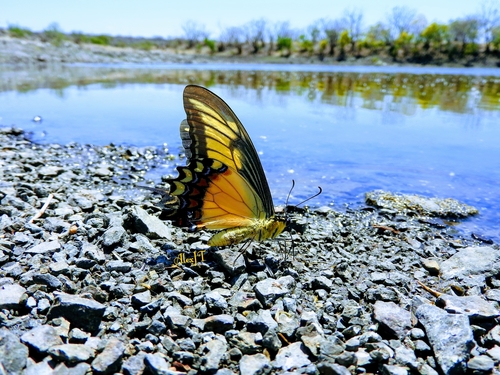
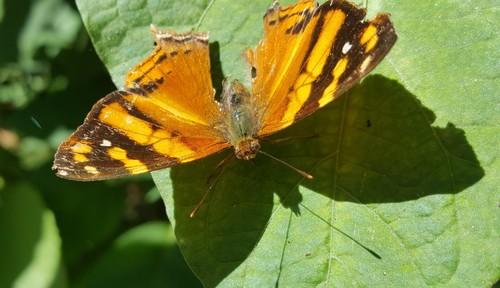
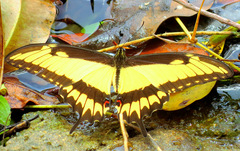
Papilio astyalus, the broad-banded swallowtail or Astyalus swallowtail, is a butterfly of the family Papilionidae. It is found from Mexico south to Argentina. It is occasionally reported from southern Texas and rare strays can be found up to southern Arizona and northern Texas.

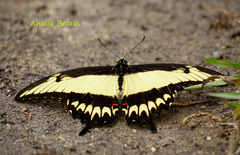
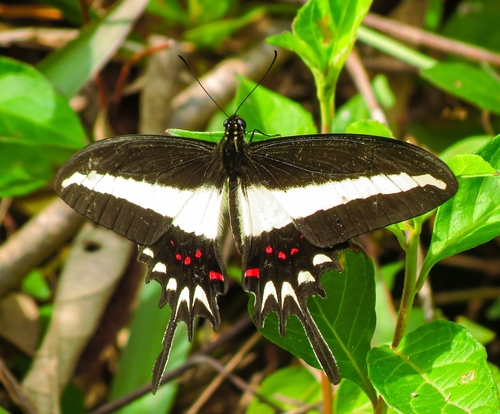
The wingspan is 117–120 mm. In the male the wings are black, on the obverse the forewings are crossed by a wide yellow band crossed by black veins. There is a small yellow macula in the cell and a series of yellow macules in the submarginal part. The hindwings bear tails, a yellow band in the extension of that of the forewings, submarginal yellow macules, and an orange-red ocellus surmounted by an iridescent blue lunule in the anal angle. On the reverse the wings have similar patterns but the cell of the fore wings is striped with yellow and the black part of the hind wings is smaller. The hindwings also bear a series of iridescent blue lunules surmounted by orange-red lunules.

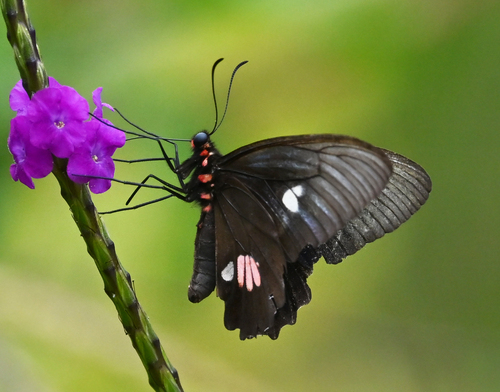
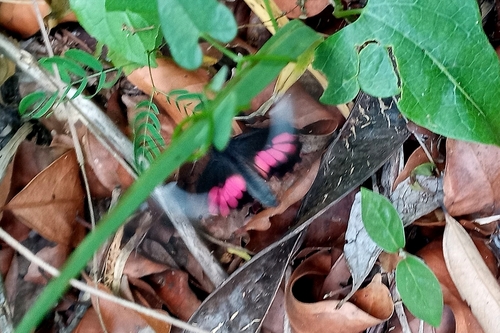
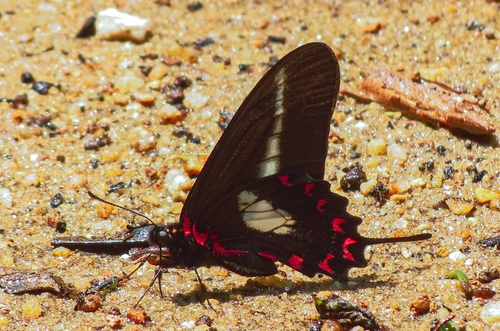
The female is darker, and lacks the broad yellow band present in the male. On the obverse the forewings are dark brown, paler in the submarginal part and bear a series of submarginal yellow macules. The hindwings are dark brown with a series of submarginal red, iridescent blue and yellow macules, an orange ocellus in the anal angle and more reduced tails. The reverse is similar, but the blue spots are more reduced and are surmounted by orange-red lunules.

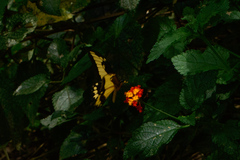
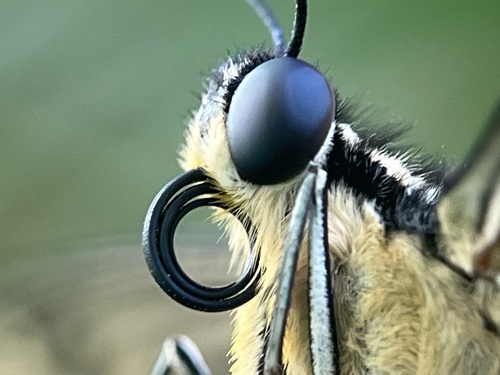
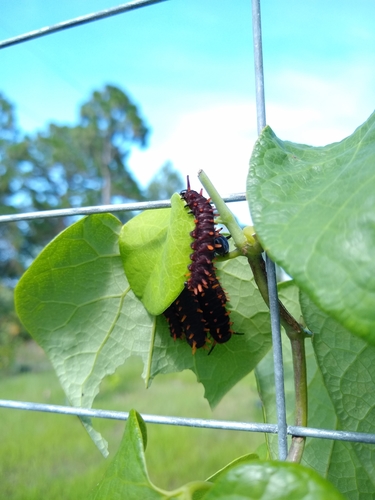
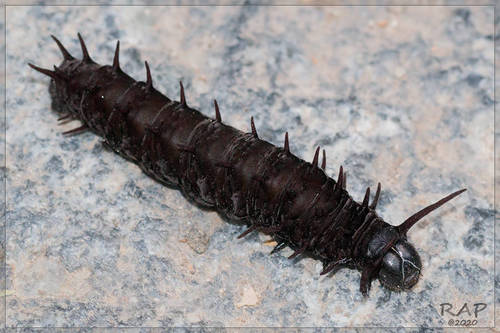
Male has yellow body below and flanks but black above, female has black body.Very similar to Papilio thersites. Adults are on wing from April to October. There are probably two generations per year. The larvae feed on the leaves of Citrus trees. Adults feed on the nectar of various flowers, including Lantana species. Wikipedia →
Global Distribution

Parks Where Found

# Park Country Daily sighting probability
1 Iguazú National Park 🇦🇷 Argentina
~40%
2 Iguaçu National Park 🇧🇷 Brazil
~30%

Cities Where Found

# City Country Daily sighting probability
1 Montevideo 🇺🇾 Uruguay
~20%
2 Porto Alegre 🇧🇷 Brazil
~20%
3 Curitiba 🇧🇷 Brazil
~10%
4 São Paulo 🇧🇷 Brazil
~10%
5 Belo Horizonte 🇧🇷 Brazil
<5%

Before you go

What are the chances of seeing an Astyalus Swallowtail in Iguaçu National Park?

Possible

About 30% of wildlife watchers report an Astyalus Swallowtail sighting in Iguaçu National Park on a given day, based on 150 verified sightings from GBIF citizen-science data from 2019 to 2026. It is the 17th most-seen of the 279 insects we can rate there. Over three days the chance rises to about 70%, and over a week to about 90%, if each day is a fresh chance.

When is the best time to see an Astyalus Swallowtail in Iguaçu National Park?

August to February

In those months about 40% of wildlife watchers report an Astyalus Swallowtail in Iguaçu National Park on a given day, against under 5% in June, the lowest month.

What time of day is best to see an Astyalus Swallowtail?

Between noon and 3 pm

Across all the parks we cover, that three-hour window holds the most Astyalus Swallowtail sightings with a recorded time, and about 9 in 10 of them come between 6 am and 6 pm: it is a daytime animal.

Is Iguaçu National Park the best place to see an Astyalus Swallowtail?

2nd of 2

Of the 2 parks where we can rate Astyalus Swallowtail sightings, Iguaçu National Park ranks 2nd at about 30%. The best odds are in Iguazú National Park (Argentina, about 40%).

Which relatives of the Astyalus Swallowtail live in Iguaçu National Park?

Same genus: Papilio

The closest relatives of the Astyalus Swallowtail that you can see in Iguaçu National Park (genus Papilio, Common Swallowtails) are Thoas Swallowtail (about 30%), Ruby-Spotted Swallowtail (about 20%) and Androgeus Swallowtail (about 10%), with each one's daily chance of a sighting.

Where does the Astyalus Swallowtail sighting chance come from?

GBIF citizen-science records

It is estimated from how often the Astyalus Swallowtail is recorded against all the insects logged in Iguaçu National Park (150 verified sightings from 2019 to 2026), calibrated against known sighting rates. Figures are rounded to the nearest 10% because citizen-science data supports honest approximations, not decimals, and months with records from fewer than five people show "—". How it works.

← Back to Iguaçu National Park