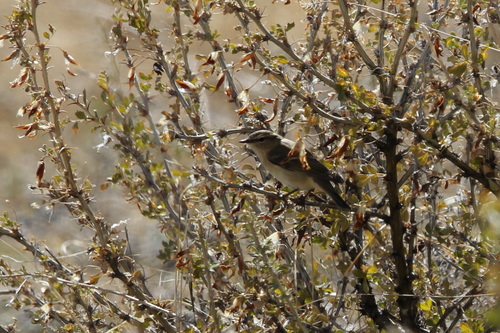
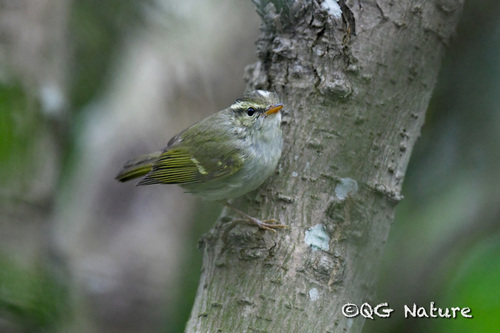
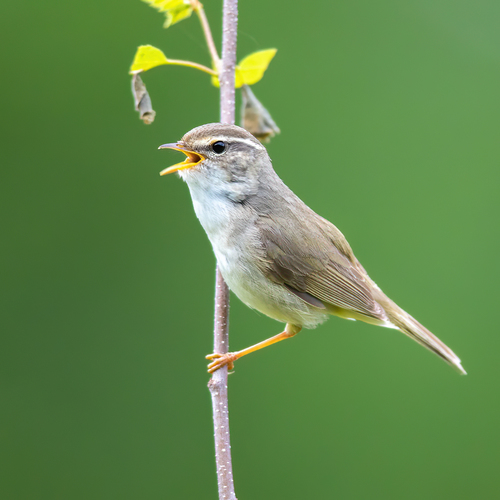
Chinese Leaf-Warbler

Chinese Leaf-Warbler

Phylloscopus yunnanensis

Silhouette: Jiekun He · PhyloPic

LCLeast ConcernNTVUENCR
Daily sighting probability <5% · Rare
at Doi Inthanon National Park

In 3 days ~10%

48 Verified sightings at Doi Inthanon National Park From 2019 to 2026
70 In all 2 parks
November Best month
☀️ Diurnal When it's spotted

About the Chinese Leaf-Warbler

The Chinese leaf warbler (Phylloscopus yunnanensis) is a species of Old World warbler in the family Phylloscopidae. Its natural habitats are subtropical or tropical dry forests and subtropical or tropical high-altitude shrubland. It is found only in China.

The Chinese leaf warbler's scientific binomial name, Phylloscopus yunnanensis, originates from the Irish ornithological naturalist authority John David Digues La Touche in 1922. A more recent Latin "junior synonym" alternate scientific name is P. sichuanensis from 1992. Yunnanensis and sichuanensis derive from the Yunnan and Sichuan provinces in China.

The Chinese leaf warbler is a brightly colored, small leaf-warbler, with a total length of around 10 cm and a wing length of 5–6 cm. Its body is slightly elongated and compact. The warbler has a slightly forked or notched tail that is almost square in shape. Its bill is pointed and short (around 1 cm long) and dark brown in color, brownish-yellow on the underside. The wings are very short and rounded, the legs slender and very dark. Claws and toes are dark brownish-grey with dusky buff undersides.

Birds generally go through variations... Wikipedia →

Sounds

Song0:20

China · 2026

© Peter Boesman · XC1147768 · CC BY-NC-ND 4.0

Call0:40

China · 2026

© Yang Li · XC1146865 · CC BY-NC-SA 4.0

Subsong0:48

China · 2024

© Ding Li Yong · XC921680 · CC BY-NC-ND 4.0

Global Distribution

Parks Where Found

# Park Country Daily sighting probability
1 Jiuzhaigou National Park 🇨🇳 China
~10%
2 Doi Inthanon National Park 🇹🇭 Thailand
<5%

Cities Where Found

# City Country Daily sighting probability
1 Xining 🇨🇳 China
~10%
2 Beijing 🇨🇳 China
<5%

Before you go

What are the chances of seeing a Chinese Leaf-Warbler in Doi Inthanon National Park?

Rare

Under 5% of wildlife watchers report a Chinese Leaf-Warbler sighting in Doi Inthanon National Park on a given day, based on 48 verified sightings from GBIF citizen-science data from 2019 to 2026. It is the 251st most-seen of the 367 birds we can rate there. Over three days the chance rises to about 10%, if each day is a fresh chance.

When is the best time to see a Chinese Leaf-Warbler in Doi Inthanon National Park?

November

In that month about 10% of wildlife watchers report a Chinese Leaf-Warbler in Doi Inthanon National Park on a given day, against under 5% in December to October, the lowest months. That is one of Doi Inthanon National Park's driest months, with about 90 mm of rain against 340 mm in August.

What time of day is best to see a Chinese Leaf-Warbler?

Between 8 and 11 am

Across all the parks we cover, that three-hour window holds the most Chinese Leaf-Warbler sightings with a recorded time, and about 8 in 10 of them come between 6 am and 6 pm: it is a daytime animal.

Is Doi Inthanon National Park the best place to see a Chinese Leaf-Warbler?

2nd of 2

Of the 2 parks where we can rate Chinese Leaf-Warbler sightings, Doi Inthanon National Park ranks 2nd at under 5%. The best odds are in Jiuzhaigou National Park (China, about 10%).

Which relatives of the Chinese Leaf-Warbler live in Doi Inthanon National Park?

Same genus: Phylloscopus

The closest relatives of the Chinese Leaf-Warbler that you can see in Doi Inthanon National Park (genus Phylloscopus, Leaf Warblers) are Davison's Leaf-Warbler (about 50%), Ashy-throated Warbler (about 40%) and Yellow-browed Warbler (about 40%), with each one's daily chance of a sighting.

Where does the Chinese Leaf-Warbler sighting chance come from?

GBIF citizen-science records

It is estimated from how often the Chinese Leaf-Warbler is recorded against all the birds logged in Doi Inthanon National Park (48 verified sightings from 2019 to 2026), calibrated against known sighting rates. Figures are rounded to the nearest 10% because citizen-science data supports honest approximations, not decimals, and months with records from fewer than five people show "—". How it works.

← Back to Doi Inthanon National Park