Vagrant Emperor

Vagrant Emperor

Anax ephippiger

Daily sighting probability ~10% · With luck
at Doñana National Park

In 3 days ~20% in a week ~50%

5 Verified sightings at Doñana National Park From 2019 to 2026
36 In all 3 parks
November Best month
☀️ Diurnal When it's spotted

About the Vagrant Emperor

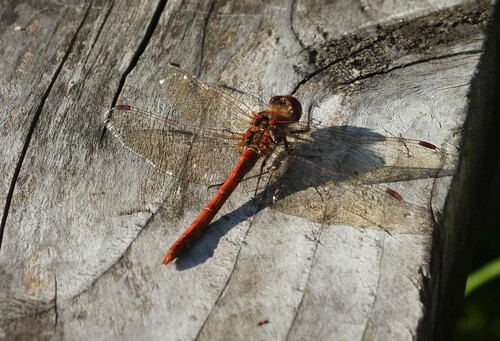
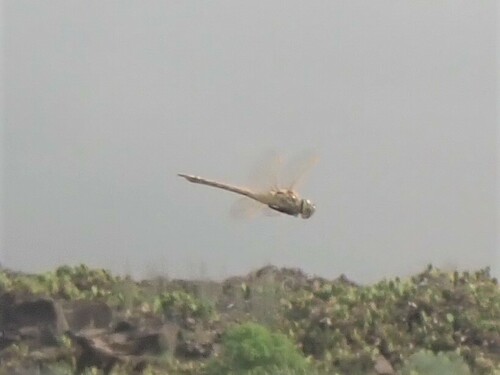
Anax ephippiger, the vagrant emperor, is a species of dragonfly in the family Aeshnidae. It migrates to Afro-tropical, Europe, central and southern Asia through monsoon winds. It is found in Algeria, Angola, Botswana, Cameroon, Chad, the Democratic Republic of the Congo, Ivory Coast, Egypt, Equatorial Guinea, Ethiopia, Gambia, Ghana, Kenya, Kuwait, Madagascar, Malawi, Mauritania, Mauritius, Morocco, Mozambique, Namibia, Niger, Nigeria, São Tomé and Príncipe, Senegal, Seychelles, Somalia, South Africa, Sri Lanka, India, Sudan, Tanzania, Togo, Uganda, United Arab Emirates, Zambia, Zimbabwe, and possibly Burundi. Recorded in Malta in 1957, and every few years since, where it is seen migrating in large numbers. It has never been recorded breeding in the Maltese archipelago. It is increasingly being recorded in coastal Southern England and up to 10 miles (16 km) inland – one was seen at Knepp Wildland on 17 November 2021 (the 5th confirmed record for that year).

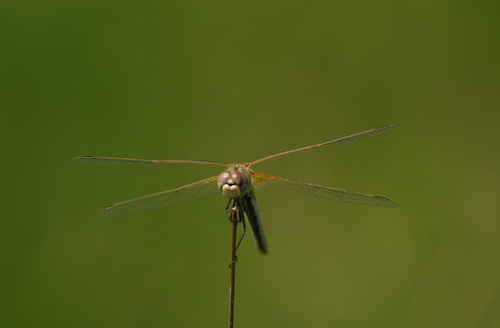
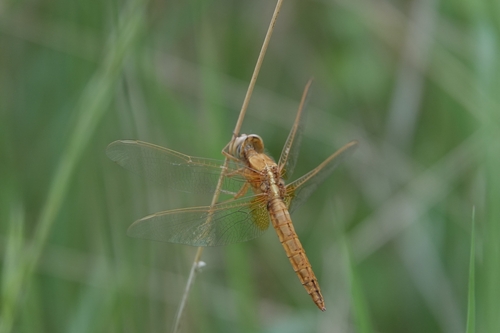
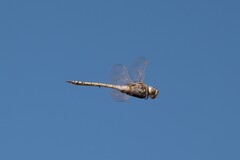
It is a large dragonfly with greenish-yellow eyes. Its thorax is olivaceous-brown, paler on sides. Wings are transparent with an amber-yellow patch. Abdomen is ochreous, marked... Wikipedia →
Global Distribution

Parks Where Found

# Park Country Daily sighting probability
1 Doñana National Park 🇪🇸 Spain
~10%
2 iSimangaliso Wetland Park 🇿🇦 South Africa
~10%
3 Kruger National Park 🇿🇦 South Africa
~10%

Cities Where Found

# City Country Daily sighting probability
1 Kuwait City 🇰🇼 Kuwait
~20%
2 Ahmedabad 🇮🇳 India
~10%
3 Turin 🇮🇹 Italy
~10%
4 Hyderabad 🇮🇳 India
~10%
5 Tel Aviv 🇮🇱 Israel
<5%
6 Lisbon 🇵🇹 Portugal
<5%
7 Milan 🇮🇹 Italy
<5%
8 Mumbai 🇮🇳 India
<5%

Before you go

What are the chances of seeing a Vagrant Emperor in Doñana National Park?

With luck

About 10% of wildlife watchers report a Vagrant Emperor sighting in Doñana National Park on a given day, based on 5 verified sightings from GBIF citizen-science data from 2019 to 2026. It is the 66th most-seen of the 87 insects we can rate there. Over three days the chance rises to about 20%, and over a week to about 50%, if each day is a fresh chance.

When is the best time to see a Vagrant Emperor in Doñana National Park?

November

In that month about 20% of wildlife watchers report a Vagrant Emperor in Doñana National Park on a given day, against under 5% in June–September and December–March, the lowest months. That is one of Doñana National Park's wettest months, with about 65 mm of rain against almost none in July.

What time of day is best to see a Vagrant Emperor?

Between 11 am and 2 pm

Across all the parks we cover, that three-hour window holds the most Vagrant Emperor sightings with a recorded time, and about 9 in 10 of them come between 6 am and 6 pm: it is a daytime animal.

Is Doñana National Park the best place to see a Vagrant Emperor?

Yes

Of the 3 parks where we can rate Vagrant Emperor sightings, Doñana National Park has the highest daily chance: about 10%. Next come iSimangaliso Wetland Park (South Africa, about 10%) and Kruger National Park (South Africa, about 10%).

Where does the Vagrant Emperor sighting chance come from?

GBIF citizen-science records

It is estimated from how often the Vagrant Emperor is recorded against all the insects logged in Doñana National Park (5 verified sightings from 2019 to 2026), calibrated against known sighting rates. Figures are rounded to the nearest 10% because citizen-science data supports honest approximations, not decimals, and months with records from fewer than five people show "—". How it works.

← Back to Doñana National Park