Mecodema crenicolle

Mecodema crenicolle

Mecodema crenicolle

Endemic
Daily sighting probability ~10% · With luck
at Egmont National Park

In 3 days ~30% in a week ~60%

9 Verified sightings at Egmont National Park From 2019 to 2026
24 In all 2 parks
January Best month
☀️ Diurnal When it's spotted

About the Mecodema crenicolle

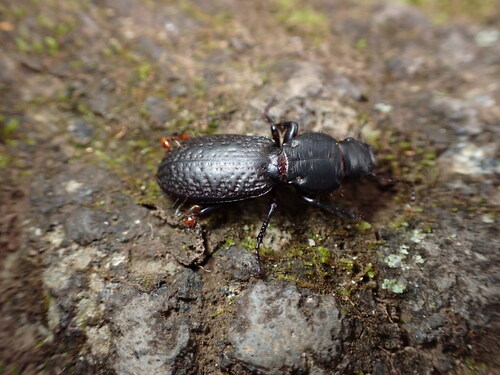
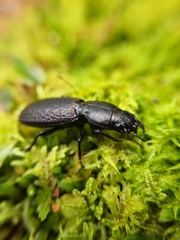
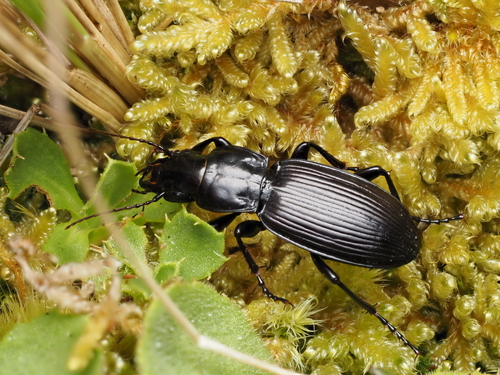
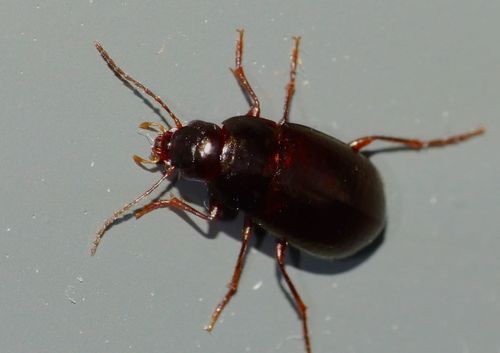
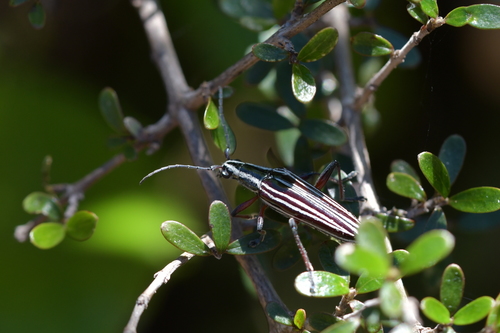
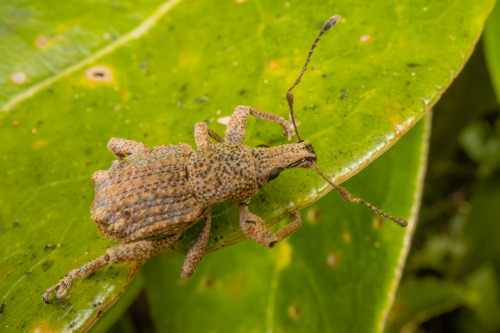
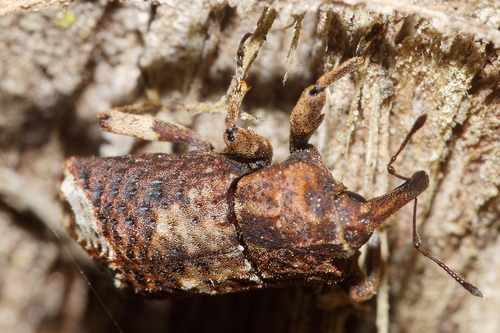
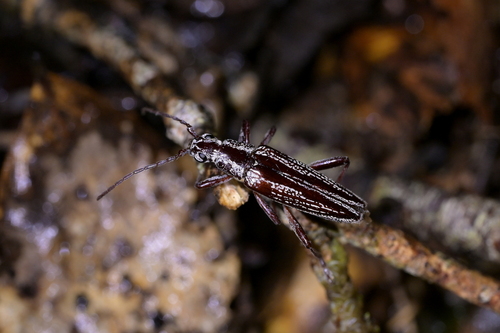
Mecodema crenicolle is a species of ground beetle endemic to New Zealand. It is found only on the North Island of New Zealand where it occurs in native forest, pine plantation and pasture habitats. As an adult, it is a medium-large beetle with a length of 22–29 mm. It is black with distinctive puncture marks over much of its body and is similar to Mecodema venator, its sister species. It was first described in taxonomic literature by French naturalist François-Louis Laporte de Castelnau in 1867. Like other Mecodema, it is flightless and a predator of invertebrates.

This species was first described in modern taxonomic literature by French naturalist François-Louis Laporte de Castelnau in 1867 from a specimen collected in the Auckland region. The holotype (a single specimen on which the species description is based) is stored in the Natural History Museum, Vienna. The species was unknowingly described again under four additional names: Mecodema crenaticolle by Austrian entomologist Ludwig Redtenbacher in 1868, then as Mecodema rugicolle, Mecodema lineatum and Mecomedema variolosum by Scottish entomologist Thomas Broun in 1882, 1894 and 1903 respectively.

In 1949, British... Wikipedia →

Global Distribution

Parks Where Found

# Park Country Daily sighting probability
1 Abel Tasman National Park 🇳🇿 New Zealand
~20%
2 Egmont National Park 🇳🇿 New Zealand
~10%

Closest Relatives at Egmont National Park

Before you go

What are the chances of seeing a Mecodema crenicolle in Egmont National Park?

With luck

About 10% of wildlife watchers report a Mecodema crenicolle sighting in Egmont National Park on a given day, based on 9 verified sightings from GBIF citizen-science data from 2019 to 2026. It is the 69th most-seen of the 191 insects we can rate there. Over three days the chance rises to about 30%, and over a week to about 60%, if each day is a fresh chance.

When is the best time to see a Mecodema crenicolle in Egmont National Park?

September and December–January

In those months about 20% of wildlife watchers report a Mecodema crenicolle in Egmont National Park on a given day, against under 5% in March, May–August and October–November, the lowest months.

What time of day is best to see a Mecodema crenicolle?

Between 9 am and noon

Across all the parks we cover, that three-hour window holds the most Mecodema crenicolle sightings with a recorded time, and about 9 in 10 of them come between 6 am and 6 pm: it is a daytime animal.

Is Egmont National Park the best place to see a Mecodema crenicolle?

2nd of 2

Of the 2 parks where we can rate Mecodema crenicolle sightings, Egmont National Park ranks 2nd at about 10%. The best odds are in Abel Tasman National Park (New Zealand, about 20%).

Where does the Mecodema crenicolle sighting chance come from?

GBIF citizen-science records

It is estimated from how often the Mecodema crenicolle is recorded against all the insects logged in Egmont National Park (9 verified sightings from 2019 to 2026), calibrated against known sighting rates. Figures are rounded to the nearest 10% because citizen-science data supports honest approximations, not decimals, and months with records from fewer than five people show "—". How it works.

← Back to Egmont National Park