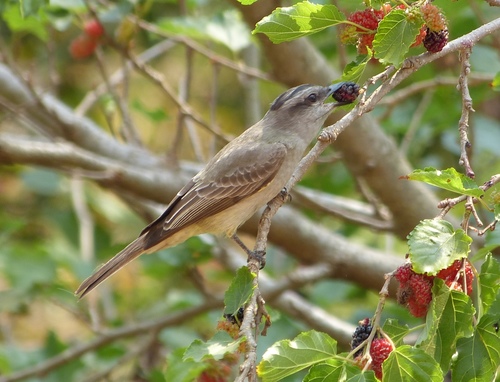
White Monjita

White Monjita

Xolmis irupero

Silhouette: Edwin Price · PhyloPic

LCLeast ConcernNTVUENCR
Daily sighting probability ~10% · With luck
at El Impenetrable National Park

In 3 days ~20% in a week ~50%

23 Verified sightings at El Impenetrable National Park From 2019 to 2026
800 In all 4 parks
October Best month
☀️ Diurnal When it's spotted

About the White Monjita

The white monjita (Xolmis irupero) is a species of bird in the family Tyrannidae, the tyrant flycatchers. It is found in Argentina, Bolivia, Brazil, Paraguay, and Uruguay. The white monjita was formally described in 1823 as Tyrannus irupero. It was eventually transferred to genus Xolmis that had been erected in 1826.

According to the IOC, the South American Classification Committee of the American Ornithological Society (SACC), and the Clements taxonomy, the white monjita shares genus Xolmis with only the white-rumped monjita (X. velatus). However, as of December 2024 BirdLife International's Handbook of the Birds of the World includes six other species in addition to the white and white-rumped monjitas.

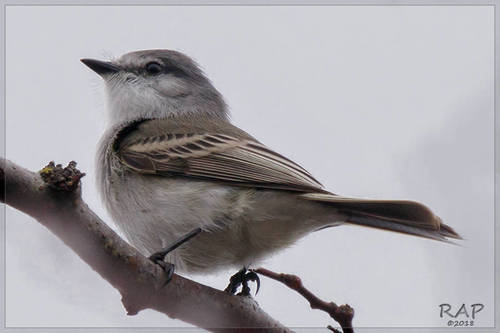
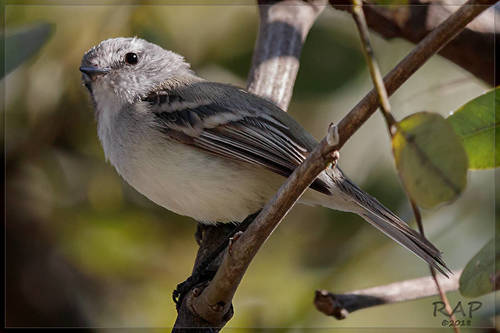
The white monjita is 17 to 18 cm (6.7 to 7.1 in) long and weighs 21 to 29.5 g (0.74 to 1.0 oz). Adult males of the nominate subspecies are almost entirely white. They have black primaries, primary coverts, and tail tip. Females are almost identical but have a gray tinge on their back. Wikipedia →

Sounds

Song0:42

Brazil · 2019

© JAYRSON ARAUJO DE OLIVEIRA · XC461422 · CC BY-NC-SA 4.0

Call0:29

Brazil · 2016

© Luiz C. Silva · XC308334 · CC BY-NC-SA 4.0

Call0:38

Argentina · 2013

© Peter Boesman · XC273297 · CC BY-NC-ND 4.0

Global Distribution

Parks Where Found

# Park Country Daily sighting probability
1 Iberá National Park 🇦🇷 Argentina
~40%
2 El Palmar National Park 🇦🇷 Argentina
~10%
3 El Impenetrable National Park 🇦🇷 Argentina
~10%
4 Chapada Diamantina National Park 🇧🇷 Brazil
<5%

Cities Where Found

# City Country Daily sighting probability
1 Asuncion 🇵🇾 Paraguay
~20%
2 Cordoba 🇦🇷 Argentina
<5%
3 Rosario 🇦🇷 Argentina
<5%
4 Porto Alegre 🇧🇷 Brazil
<5%
5 Montevideo 🇺🇾 Uruguay
<5%
6 Buenos Aires 🇦🇷 Argentina
<5%

Before you go

What are the chances of seeing a White Monjita in El Impenetrable National Park?

With luck

About 10% of wildlife watchers report a White Monjita sighting in El Impenetrable National Park on a given day, based on 23 verified sightings from GBIF citizen-science data from 2019 to 2026. It is the 146th most-seen of the 219 birds we can rate there. Over three days the chance rises to about 20%, and over a week to about 50%, if each day is a fresh chance.

When is the best time to see a White Monjita in El Impenetrable National Park?

April and October

In those months about 20% of wildlife watchers report a White Monjita in El Impenetrable National Park on a given day, against under 5% in February–March and June–July, the lowest months. December has too few records to rate.

What time of day is best to see a White Monjita?

Between 3 and 6 pm

Across all the parks we cover, that three-hour window holds the most White Monjita sightings with a recorded time, and nearly all of them come between 6 am and 6 pm: it is a daytime animal.

Is El Impenetrable National Park the best place to see a White Monjita?

3rd of 4

Of the 4 parks where we can rate White Monjita sightings, El Impenetrable National Park ranks 3rd at about 10%. The best odds are in Iberá National Park (Argentina, about 40%) and El Palmar National Park (Argentina, about 10%).

Which relatives of the White Monjita live in El Impenetrable National Park?

Same family: Tyrannidae

The closest relatives of the White Monjita that you can see in El Impenetrable National Park (family Tyrannidae, Tyrant Flycatchers) are Pearly-vented Tody-Tyrant (about 70%), Great Kiskadee (about 70%) and Cattle Tyrant (about 40%), with each one's daily chance of a sighting.

Where does the White Monjita sighting chance come from?

GBIF citizen-science records

It is estimated from how often the White Monjita is recorded against all the birds logged in El Impenetrable National Park (23 verified sightings from 2019 to 2026), calibrated against known sighting rates. Figures are rounded to the nearest 10% because citizen-science data supports honest approximations, not decimals, and months with records from fewer than five people show "—". How it works.

← Back to El Impenetrable National Park