Lower California Rattlesnake

Lower California Rattlesnake

Crotalus enyo

Silhouette: Bill Bouton (source photo) & T. Michael Keesey (vectorization) · PhyloPic

LCLeast ConcernNTVUENCR Endemic
Daily sighting probability ~20% · Possible
at El Vizcaíno Biosphere Reserve

In 3 days ~40% in a week ~70%

11 Verified sightings at El Vizcaíno Biosphere Reserve From 2019 to 2026
11 In 1 park
October Best month
☀️🌙 Day & Night When it's spotted

About the Lower California Rattlesnake

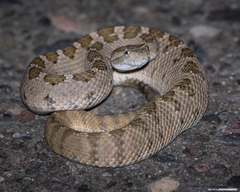
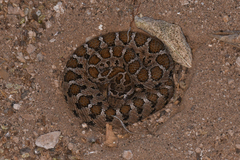
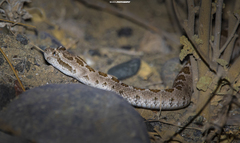
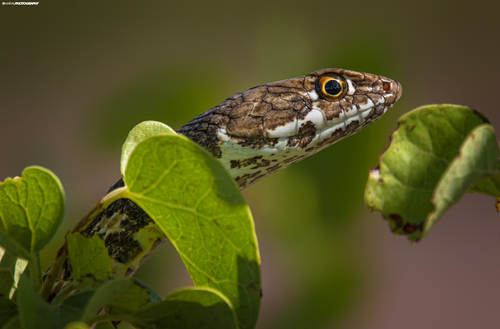
Crotalus enyo, commonly known as the Baja California rattlesnake or Lower California rattlesnake, is a pit viper species native to the coast and islands of northwestern Mexico. Like all other pit vipers, it is venomous. Three subspecies are currently recognized, including the nominate subspecies described here.

The maximum reported length of this species is 89.8 cm (35.4 in) (Klauber, 1972). It is sexually dimorphic, with the males typically being larger than the females. The head is remarkably small and narrow, while the eyes are proportionately large.

In western Mexico in the north, it is found in the Baja California Peninsula from around Río San Telmo on the west coast and from opposite Isla Angel de la Guarda on the gulf coast, south to Cabo San Lucas. It is also found in the Gulf of California on the islands of San Marcos, Carmen, San José, San Francisco, Partida del Sur, Espírita Santo and Cerralvo. Off the Pacific coast, it is also found on the island of San Margarita. The type locality is "Cape San Lucas, Baja California Sur".

It prefers desert, but in the northwestern part of its range, it can be found in chaparral country... Wikipedia →

Global Distribution

Parks Where Found

# Park Country Daily sighting probability
1 El Vizcaíno Biosphere Reserve 🇲🇽 Mexico
~20%

More parks will be added in future updates.

Zoos & Centres Where Found

# Zoo / Centre Country
1 Arizona-Sonora Desert Museum 🇺🇸 United States In captivity

Before you go

What are the chances of seeing a Lower California Rattlesnake in El Vizcaíno Biosphere Reserve?

Possible

About 20% of wildlife watchers report a Lower California Rattlesnake sighting in El Vizcaíno Biosphere Reserve on a given day, based on 11 verified sightings from GBIF citizen-science data from 2019 to 2026. It is the 8th most-seen of the 20 reptiles we can rate there. Over three days the chance rises to about 40%, and over a week to about 70%, if each day is a fresh chance.

When is the best time to see a Lower California Rattlesnake in El Vizcaíno Biosphere Reserve?

September and October

In those months about 40% of wildlife watchers report a Lower California Rattlesnake in El Vizcaíno Biosphere Reserve on a given day, against under 5% in January–February, April–May and November, the lowest months.

What time of day is best to see a Lower California Rattlesnake?

Between 7 and 10 pm

Across all the parks we cover, that three-hour window holds the most Lower California Rattlesnake sightings with a recorded time, and about half of them come between 6 pm and 6 am: it is seen both by day and at night.

Where else can you see a Lower California Rattlesnake?

Only El Vizcaíno Biosphere Reserve, in our data

El Vizcaíno Biosphere Reserve is the only park on Wallace's Line with enough records to rate Lower California Rattlesnake sightings: about 20% of wildlife watchers there report one on a given day.

Which relatives of the Lower California Rattlesnake live in El Vizcaíno Biosphere Reserve?

Same genus: Crotalus

The closest relatives of the Lower California Rattlesnake that you can see in El Vizcaíno Biosphere Reserve (genus Crotalus, Rattlesnakes) are Red Diamond Rattlesnake (about 30%) and Speckled Rattlesnake (about 10%), with each one's daily chance of a sighting.

Where does the Lower California Rattlesnake sighting chance come from?

GBIF citizen-science records

It is estimated from how often the Lower California Rattlesnake is recorded against all the reptiles logged in El Vizcaíno Biosphere Reserve (11 verified sightings from 2019 to 2026), calibrated against known sighting rates. Figures are rounded to the nearest 10% because citizen-science data supports honest approximations, not decimals, and months with records from fewer than five people show "—". How it works.

← Back to El Vizcaíno Biosphere Reserve