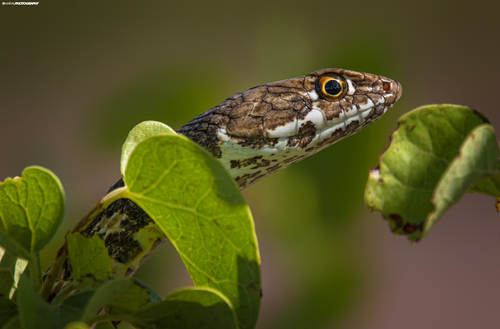
Red Diamond Rattlesnake

Red Diamond Rattlesnake

Crotalus ruber

Silhouette: Bill Bouton (source photo) & T. Michael Keesey (vectorization) · PhyloPic

LCLeast ConcernNTVUENCR
Daily sighting probability ~30% · Possible
at El Vizcaíno Biosphere Reserve

In 3 days ~70% in a week ~90%

29 Verified sightings at El Vizcaíno Biosphere Reserve From 2019 to 2026
57 In all 4 parks
April Best month
☀️🌙 Day & Night When it's spotted

About the Red Diamond Rattlesnake

Common names: red diamond rattlesnake, red rattlesnake, red diamond snake, more Crotalus ruber is a venomous pit viper species found in southwestern California in the United States and Baja California in Mexico. Three subspecies are currently recognized, including the nominate subspecies described here.

Common names include: red diamond rattlesnake, red rattlesnake, red diamond snake, red diamond-backed rattlesnake, red rattler, and western diamond rattlesnake. The form found on Cedros Island, previously described as C. exsul, was referred to as the Cedros Island diamond rattlesnake, or Cedros Island rattlesnake.

Not enough genetic and morphological diversity exists between C. exsul from Cedros Island and C. ruber from the mainland to warrant the recognition of both species. In response, Smith et al. (1998) petitioned the ICZN to validate ruber over exsul in the interest of nomenclatural stability. Wikipedia →

Sounds

Recording0:08

United States · 2020

© Jeremey Freely · iNaturalist · CC BY-NC 4.0

Recording0:24

Mexico · 2026

© Sean Daniels · iNaturalist · CC BY-NC 4.0

Recording0:07

United States · 2021

© casjessi · iNaturalist · CC BY-NC 4.0

Global Distribution

Parks Where Found

# Park Country Daily sighting probability
1 El Vizcaíno Biosphere Reserve 🇲🇽 Mexico
~30%
2 Cabo Pulmo National Park 🇲🇽 Mexico
~20%
3 Bahía de Loreto National Park 🇲🇽 Mexico
~10%
4 Joshua Tree National Park 🇺🇸 United States
~10%

Cities Where Found

# City Country Daily sighting probability
1 San Diego 🇺🇸 United States
~10%
2 Los Angeles 🇺🇸 United States
<5%

Zoos & Centres Where Found

# Zoo / Centre Country
1 San Diego Zoo 🇺🇸 United States In captivity
2 Moscow Zoo 🇷🇺 Russia In captivity
3 Los Angeles Zoo 🇺🇸 United States In captivity
4 Zoológico "Parque del niño" Jersey 🇲🇽 Mexico In captivity
5 Burgers' Ocean 🇳🇱 Netherlands In captivity
6 Royal Burgers' Zoo 🇳🇱 Netherlands In captivity
7 Arizona-Sonora Desert Museum 🇺🇸 United States In captivity
8 Philadelphia Zoo 🇺🇸 United States In captivity
9 Riverbanks Zoo 🇺🇸 United States In captivity
10 California Living Museum 🇺🇸 United States In captivity
11 Reptile Gardens 🇺🇸 United States In captivity
12 Cherkasy Zoo 🇺🇦 Ukraine In captivity
13 Orange County Zoo 🇺🇸 United States In captivity

Closest Relatives at El Vizcaíno Biosphere Reserve

Before you go

What are the chances of seeing a Red Diamond Rattlesnake in El Vizcaíno Biosphere Reserve?

Possible

About 30% of wildlife watchers report a Red Diamond Rattlesnake sighting in El Vizcaíno Biosphere Reserve on a given day, based on 29 verified sightings from GBIF citizen-science data from 2019 to 2026. It is the 3rd most-seen of the 20 reptiles we can rate there. Over three days the chance rises to about 70%, and over a week to about 90%, if each day is a fresh chance.

When is the best time to see a Red Diamond Rattlesnake in El Vizcaíno Biosphere Reserve?

April, July and October–November

In those months about 40% of wildlife watchers report a Red Diamond Rattlesnake in El Vizcaíno Biosphere Reserve on a given day, against under 5% in February, May and December, the lowest months.

What time of day is best to see a Red Diamond Rattlesnake?

Between 7 and 10 pm

Across all the parks we cover, that three-hour window holds the most Red Diamond Rattlesnake sightings with a recorded time, and about half of them come between 6 am and 6 pm: it is seen both by day and at night.

Is El Vizcaíno Biosphere Reserve the best place to see a Red Diamond Rattlesnake?

Yes

Of the 4 parks where we can rate Red Diamond Rattlesnake sightings, El Vizcaíno Biosphere Reserve has the highest daily chance: about 30%. Next come Cabo Pulmo National Park (Mexico, about 20%) and Bahía de Loreto National Park (Mexico, about 10%).

Which relatives of the Red Diamond Rattlesnake live in El Vizcaíno Biosphere Reserve?

Same genus: Crotalus

The closest relatives of the Red Diamond Rattlesnake that you can see in El Vizcaíno Biosphere Reserve (genus Crotalus, Rattlesnakes) are Lower California Rattlesnake (about 20%) and Speckled Rattlesnake (about 10%), with each one's daily chance of a sighting.

Where does the Red Diamond Rattlesnake sighting chance come from?

GBIF citizen-science records

It is estimated from how often the Red Diamond Rattlesnake is recorded against all the reptiles logged in El Vizcaíno Biosphere Reserve (29 verified sightings from 2019 to 2026), calibrated against known sighting rates. Figures are rounded to the nearest 10% because citizen-science data supports honest approximations, not decimals, and months with records from fewer than five people show "—". How it works.

← Back to El Vizcaíno Biosphere Reserve