


Completed


American Bison
Bison bison
Silhouette: Tracy A. Heath · PhyloPic
- KingdomAnimalia (Animals)
- PhylumChordata (Chordates)
- ClassMammalia (Mammals)
- OrderArtiodactyla (Even-toed Ungulates and Cetaceans)
- FamilyBovidae (Bovids)
- GenusBison
- SpeciesBison bison (American Bison)
750 Verified sightings at Elk Island National Park From 2019 to 2026
7,021 In all 7 parks
October Best month
🌅 Crepuscular When it's spotted


Completed

Completed
About the American Bison
The American bison (Bison bison; pl.: bison), commonly known as the American buffalo, or simply buffalo (not to be confused with true buffalo), is a species of bison that is endemic to North America. It is one of two extant species of bison, along with the European bison. Its historical range circa 9000 BC is referred to as the great bison belt, a tract of rich grassland spanning from Alaska south to the Gulf of Mexico, and east to the Atlantic Seaboard (nearly to the Atlantic tidewater in some areas), as far north as New York, south to Georgia, and according to some sources, further south to northern Florida, with sightings in North Carolina near Buffalo Ford on the Catawba River as late as 1750.
The wood bison is one of the largest wild species of extant bovid in the world, surpassed only by the Asian gaur. With wild animals weighing up to 1,270 kg (2,800 lb), the bison is among the heaviest extant land animals in North America and the heaviest herbivore.
Once roaming in vast herds, the species nearly became extinct by a combination of commercial hunting and slaughter in the 19th century and introduction of bovine diseases from domestic cattle. With an estimated population of 60 million in the late 18th century, the species was reduced to 541 animals by 1889 as part of the genocide of the Native Americans, because the American bison was a major resource for their traditional way of life (food source, hides for clothing and shelter, and horns and bones for tools). Recovery efforts expanded in the mid-20th century, with a resurgence to roughly 31,000 wild bison as of March 2019. For many years, the population was primarily found in a few national parks and reserves. As a result of multiple reintroductions, the species freely roams wild in several regions in the United States, Canada and Mexico. Others are kept in smaller natural areas as conservation herds, while some are also kept in private commercial herds. The American bison has also been introduced in Russia, with a population established in Ingilor Nature Park in Yakutia.
Spanning back millennia, Indigenous peoples of the Great Plains have had cultural and spiritual connections to the American bison. Wikipedia →
Sounds
Recording0:13
United States · 2024
© Stella · iNaturalist · CC BY-NC 4.0
Recording0:10
United States · 2026
© rhoads · iNaturalist · CC BY-NC 4.0
Recording0:24
United States · 2021
© Gregg Gorton · iNaturalist · CC BY-NC 4.0
Recent sightings of American Bison in Elk Island National Park
LIVEiNaturalistGlobal Distribution
Parks Where Found
| # | Park | Country | Daily sighting probability |
|---|---|---|---|
| 1 | Badlands National Park | 🇺🇸 United States | |
| 2 | Elk Island National Park | 🇨🇦 Canada | |
| 3 | Yellowstone National Park | 🇺🇸 United States | |
| 4 | Wood Buffalo National Park | 🇨🇦 Canada | |
| 5 | Grand Teton National Park | 🇺🇸 United States | |
| 6 | Grand Canyon National Park | 🇺🇸 United States | |
| 7 | Riding Mountain National Park | 🇨🇦 Canada |
Zoos & Centres Where Found
Closest Relatives at Elk Island National Park






Before you go
What are the chances of seeing an American Bison in Elk Island National Park?
Very likely
About 90% of wildlife watchers report an American Bison sighting in Elk Island National Park on a given day, based on 750 verified sightings from GBIF citizen-science data from 2019 to 2026. It is the most-seen of the 15 mammals we can rate there.
When is the best time to see an American Bison in Elk Island National Park?
October
In that month over 90% of wildlife watchers report an American Bison in Elk Island National Park on a given day, against about 90% in November to September, the lowest months.
What time of day is best to see an American Bison?
Between 6 and 9 pm
Across all the parks we cover, that three-hour window holds the most American Bison sightings with a recorded time, and about 7 in 10 of them come between 6 am and 6 pm: it is most active around dawn and dusk.
Is Elk Island National Park the best place to see an American Bison?
Among the best
Of the 7 parks where we can rate American Bison sightings, Elk Island National Park ranks 2nd at about 90%, level with the leaders once rounded. The best odds are in Badlands National Park (United States, about 90%). All parks ranked.
Which relatives of the American Bison live in Elk Island National Park?
Same order: Artiodactyla
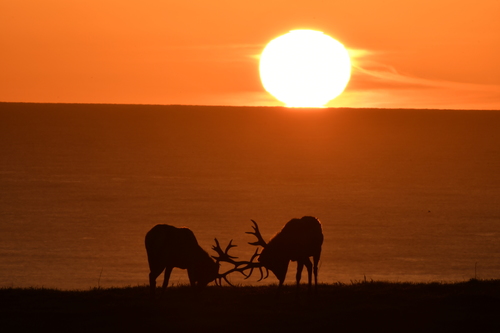
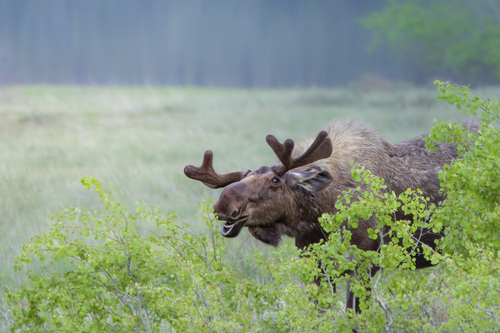
The closest relatives of the American Bison that you can see in Elk Island National Park (order Artiodactyla, Even-toed Ungulates and Cetaceans) are Elk (wapiti) (about 70%), Moose (about 50%) and Mule Deer (about 30%), with each one's daily chance of a sighting.
Where does the American Bison sighting chance come from?
GBIF citizen-science records
It is estimated from how often the American Bison is recorded against all the mammals logged in Elk Island National Park (750 verified sightings from 2019 to 2026), calibrated against known sighting rates. Figures are rounded to the nearest 10% because citizen-science data supports honest approximations, not decimals, and months with records from fewer than five people show "—". How it works.
