Brazilian Green Racer

Brazilian Green Racer

Philodryas aestiva

Silhouette: Alex Slavenko · PhyloPic

LCLeast ConcernNTVUENCR
Daily sighting probability ~30% · Possible
at Emas National Park

In 3 days ~60% in a week ~90%

14 Verified sightings at Emas National Park From 2019 to 2026
14 In 1 park
February Best month
☀️ Diurnal When it's spotted

About the Brazilian Green Racer

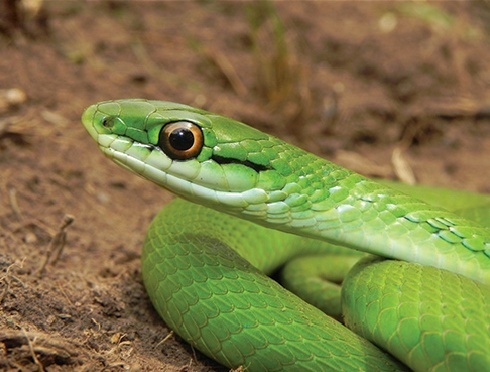
Philodryas aestiva is a species of snake of the family Colubridae. It is commonly known as the Brazilian green racer and the common green racer. The genus Philodryas, Philo which is Greek means "loving" or "fond of" and dryas also Greek means "tree" or "oak," also used for "tree nymph" in mythology. Philodryas can be interpreted as "tree-loving" or "fond of trees." The species name aestiva comes from the Latin aestīvus and means "of the summer" or "summery" which could refer to its active season or its green coloration. If you put the name together, Philodryas aestiva roughly means "summer-loving tree snake" or "summery tree-dweller", hinting at its habitat and activity patterns.

Philodryas aestiva inhabits a wide range of environments in southwestern Brazil, northern Argentina, Paraguay, Bolivia, and Uruguay. They prefer open forests and savannahs (such as the Cerrado biome in Brazil) but are sometimes found in semi-urban or rural areas.

Philodryas aestiva is a highly agile snake. Its slender body and large eyes contribute not only to its swift movement but also to its climbing ability. It is diurnal meaning it actively... Wikipedia →
Global Distribution

Parks Where Found

# Park Country Daily sighting probability
1 Emas National Park 🇧🇷 Brazil
~30%

More parks will be added in future updates.

Before you go

What are the chances of seeing a Brazilian Green Racer in Emas National Park?

Possible

About 30% of wildlife watchers report a Brazilian Green Racer sighting in Emas National Park on a given day, based on 14 verified sightings from GBIF citizen-science data from 2019 to 2026. It is the 7th most-seen of the 11 reptiles we can rate there. Over three days the chance rises to about 60%, and over a week to about 90%, if each day is a fresh chance.

When is the best time to see a Brazilian Green Racer in Emas National Park?

February

In that month about 50% of wildlife watchers report a Brazilian Green Racer in Emas National Park on a given day, against under 5% in March to July, the lowest months. That is one of Emas National Park's wettest months, with about 170 mm of rain against almost none in July.

What time of day is best to see a Brazilian Green Racer?

Between 10 am and 1 pm

Across all the parks we cover, that three-hour window holds the most Brazilian Green Racer sightings with a recorded time, and about 9 in 10 of them come between 6 am and 6 pm: it is a daytime animal.

Where else can you see a Brazilian Green Racer?

Only Emas National Park, in our data

Emas National Park is the only park on Wallace's Line with enough records to rate Brazilian Green Racer sightings: about 30% of wildlife watchers there report one on a given day.

Where does the Brazilian Green Racer sighting chance come from?

GBIF citizen-science records

It is estimated from how often the Brazilian Green Racer is recorded against all the reptiles logged in Emas National Park (14 verified sightings from 2019 to 2026), calibrated against known sighting rates. Figures are rounded to the nearest 10% because citizen-science data supports honest approximations, not decimals, and months with records from fewer than five people show "—". How it works.

← Back to Emas National Park