The black-necked swan (Cygnus melancoryphus) is a species of waterfowl in the tribe Cygnini of the subfamily Anserinae. It is found in Argentina, Brazil, Chile, Uruguay, and the Falkland Islands. The black-necked swan has occasionally been placed by itself in the genus Sthenelides. Its closest relatives are the black swan (C. atratus) and mute swan (C. olor). It is monotypic.
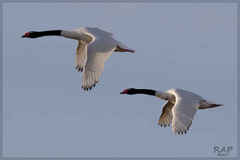
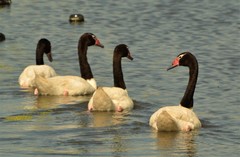
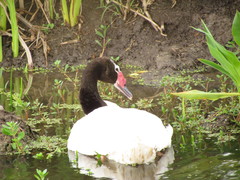
The black-necked swan is the only member of its genus that breeds in the neotropics and is the largest waterfowl native to South America. Adults are 102 to 124 cm (40 to 49 in) in length. Its wingspan in winter averages 160 cm (5.2 ft), less at 136 cm (4.46 ft) in spring, due to loss of some primary feathers while moulting. Males weigh 4.6 to 8.7 kg (10 to 19 lb) and females 3.5 to 4.4 kg (7.7 to 9.7 lb). The black-necked swan is the lightest true swan on average. The sexes are alike. Adults' body plumage is white and the neck and head black; the latter usually has a white stripe behind the eye. They have a prominent red knob at the base of their bill. Juveniles are grayish rather than white and lack the knob until their third or fourth year.