Cobb's Wren

Cobb's Wren

Troglodytes cobbi

LCLeast ConcernNTVUENCR Endemic
Daily sighting probability ~20% · Possible
at Falkland Islands

In 3 days ~50% in a week ~80%

339 Verified sightings at Falkland Islands From 2019 to 2026
339 In 1 park
April Best month
☀️ Diurnal When it's spotted

About the Cobb's Wren

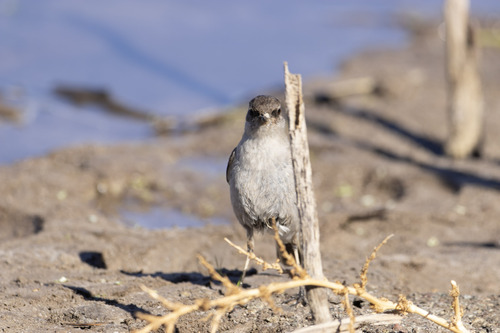
Cobb's wren (Troglodytes cobbi) is a fairly small (12-13.5 cm) wren which is endemic to the Falkland Islands. It was formerly classified as a subspecies of the southern house wren but is now commonly considered to be a separate species due to differences in plumage, voice, ecology and morphology.

The scientific and common names commemorate Arthur Cobb, an author from the Falkland Islands. The plumage is brown, greyer on the head and breast and more rufous on the tail. There are dark bars on the flight feathers and tail. The bill is long, blackish and slightly curved. The main confusion species is the grass wren which is smaller with a shorter bill, buff eyestripe and dark streaks on the back and head. Cobb's wrens have a number of buzzing calls, and their song is a series of jumbled trills and whistles. The song can be heard from August to February and varies between individuals, with different males having different song patterns.

The birds typically inhabit dense stands of tussac grass near the coast. They are often found on beaches, searching among kelp and debris to find small invertebrates such as insects and amphipods. They are tame and can often...

Wikipedia →

Global Distribution

Parks Where Found

# Park Country Daily sighting probability
1 Falkland Islands 🇫🇰 Falkland Islands
~20%

More parks will be added in future updates.

Before you go

What are the chances of seeing a Cobb's Wren in Falkland Islands?

Possible

About 20% of wildlife watchers report a Cobb's Wren sighting in Falkland Islands on a given day, based on 339 verified sightings from GBIF citizen-science data from 2019 to 2026. It is the 41st most-seen of the 79 birds we can rate there. Over three days the chance rises to about 50%, and over a week to about 80%, if each day is a fresh chance.

When is the best time to see a Cobb's Wren in Falkland Islands?

April–May and August

In those months about 30% of wildlife watchers report a Cobb's Wren in Falkland Islands on a given day, against about 10% in March and October, the lowest months.

What time of day is best to see a Cobb's Wren?

Between 9 am and noon

Across all the parks we cover, that three-hour window holds the most Cobb's Wren sightings with a recorded time, and about 8 in 10 of them come between 6 am and 6 pm: it is a daytime animal.

Where else can you see a Cobb's Wren?

Only Falkland Islands, in our data

Falkland Islands is the only park on Wallace's Line with enough records to rate Cobb's Wren sightings: about 20% of wildlife watchers there report one on a given day.

Where does the Cobb's Wren sighting chance come from?

GBIF citizen-science records

It is estimated from how often the Cobb's Wren is recorded against all the birds logged in Falkland Islands (339 verified sightings from 2019 to 2026), calibrated against known sighting rates. Figures are rounded to the nearest 10% because citizen-science data supports honest approximations, not decimals, and months with records from fewer than five people show "—". How it works.

← Back to Falkland Islands