Long-tailed Meadowlark

Long-tailed Meadowlark

Sturnella loyca

Silhouette: Matt Wilkins · PhyloPic

LCLeast ConcernNTVUENCR
Daily sighting probability ~50% · Likely
at Falkland Islands

In 3 days ~90% in a week >90%

998 Verified sightings at Falkland Islands From 2019 to 2026
2,384 In all 4 parks
November Best month
☀️ Diurnal When it's spotted

About the Long-tailed Meadowlark

The long-tailed meadowlark (Leistes loyca) is a passerine bird in the family Icteridae, the oropendolas, New World orioles, and New World blackbirds. It is found in Argentina, Chile, and the Falkland Islands. The long-tailed meadowlark has a complicated taxonomic history. It was formally described in 1782 with the binomial Sturnus Loyca [sic]. In the 1800s it was assigned to genus Sturnella, and for a time it and two other species were separated in genus Pezites. This genus was later again merged into Sturnella. In 2016 BirdLife International's Handbook of the Birds of the World assigned it to its current genus Leistes that had been erected in 1825. By 2019 the IOC, the Clements taxonomy, and the South American Classification Committee had also made the reassignment.

The long-tailed meadowlark has these four subspecies: Males weigh an average of 112 g (4.0 oz) and females 97 g (3.4 oz). Adult males of the nominate subspecies L. l. loyca have a...

Wikipedia →

Sounds

Recording0:12

Chile · 2026

© Sebastian Morales · iNaturalist · CC BY-NC 4.0

Recording0:17

Chile · 2025

© Chris · iNaturalist · CC BY-NC 4.0

Recording0:24

Argentina · 2022

© Nicolas Olejnik · iNaturalist · CC BY 4.0

Global Distribution

Parks Where Found

# Park Country Daily sighting probability
1 Península Valdés 🇦🇷 Argentina
~50%
2 Falkland Islands 🇫🇰 Falkland Islands
~50%
3 Torres del Paine National Park 🇨🇱 Chile
~40%
4 Nahuel Huapi National Park 🇦🇷 Argentina
~30%

Cities Where Found

# City Country Daily sighting probability
1 Santiago 🇨🇱 Chile
~30%
2 Mendoza 🇦🇷 Argentina
<5%

Before you go

What are the chances of seeing a Long-tailed Meadowlark in Falkland Islands?

Likely

About 50% of wildlife watchers report a Long-tailed Meadowlark sighting in Falkland Islands on a given day, based on 998 verified sightings from GBIF citizen-science data from 2019 to 2026. It is the 18th most-seen of the 79 birds we can rate there. Over three days the chance rises to about 90%, and over a week to over 90%, if each day is a fresh chance.

When is the best time to see a Long-tailed Meadowlark in Falkland Islands?

November

In that month about 70% of wildlife watchers report a Long-tailed Meadowlark in Falkland Islands on a given day, against about 20% in April and May, the lowest months.

What time of day is best to see a Long-tailed Meadowlark?

Between 2 and 5 pm

Across all the parks we cover, that three-hour window holds the most Long-tailed Meadowlark sightings with a recorded time, and about 9 in 10 of them come between 6 am and 6 pm: it is a daytime animal.

Is Falkland Islands the best place to see a Long-tailed Meadowlark?

Among the best

Of the 4 parks where we can rate Long-tailed Meadowlark sightings, Falkland Islands ranks 2nd at about 50%, level with the leaders once rounded. The best odds are in Península Valdés (Argentina, about 50%). All parks ranked.

Which relatives of the Long-tailed Meadowlark live in Falkland Islands?

Same order: Passeriformes

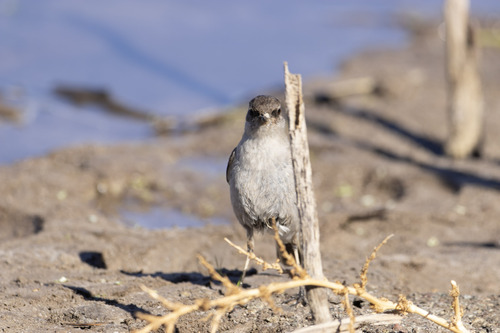
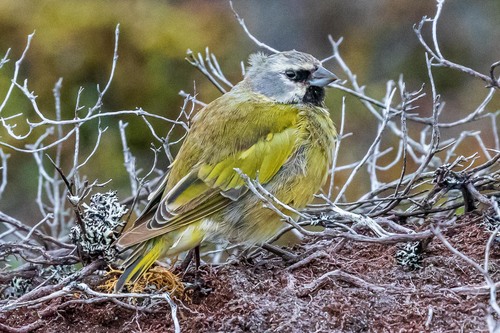
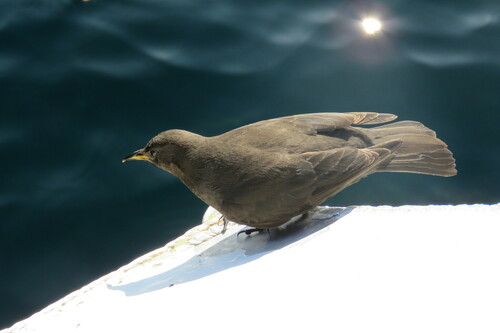
The closest relatives of the Long-tailed Meadowlark that you can see in Falkland Islands (order Passeriformes, Perching Birds) are Austral Thrush (about 70%), Dark-faced Ground-Tyrant (about 60%) and White-bridled Finch (about 50%), with each one's daily chance of a sighting.

Where does the Long-tailed Meadowlark sighting chance come from?

GBIF citizen-science records

It is estimated from how often the Long-tailed Meadowlark is recorded against all the birds logged in Falkland Islands (998 verified sightings from 2019 to 2026), calibrated against known sighting rates. Figures are rounded to the nearest 10% because citizen-science data supports honest approximations, not decimals, and months with records from fewer than five people show "—". How it works.

← Back to Falkland Islands